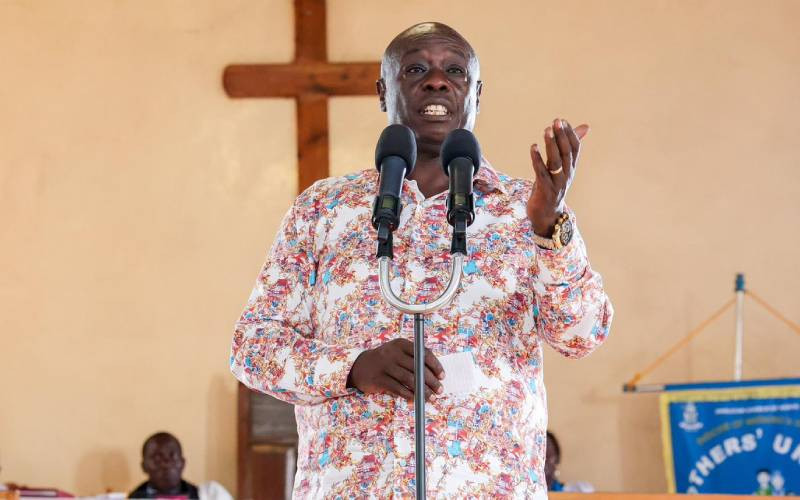





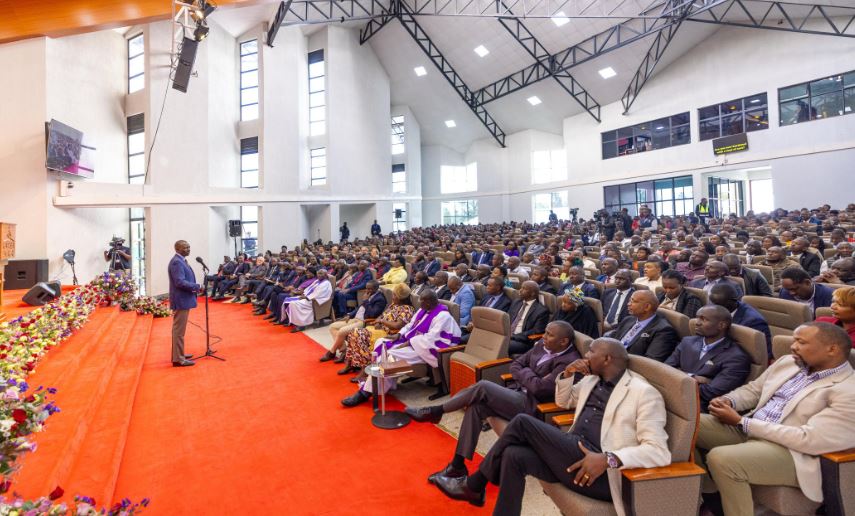

President William Ruto has clarified the disparity between fuel prices in Kenya and those of neighboring nations, attributing the gap to Kenya’s specific tax structure and its status as a middle-income economy. During a Sunday service at the Karen Africa Gospel Church on April 19, 2026, the president suggested that public comparisons with neighboring states often fail to account for critical economic nuances.
“I know many people in Kenya keep asking, you know, why is it that sometimes prices of fuel are different in Kenya from our neighbours? Sometimes maybe it’s good to let them know, because it’s important for people to know,” he told the congregation.
The president identified Kenya’s economic classification as the primary factor behind the pricing difference. He noted that while Kenya operates as a middle-income country, many of its neighbors remain classified as least-developed nations, a distinction that fundamentally alters their fiscal capabilities and energy subsidies.
“Kenya is a middle-income country. Our neighbours are least developed countries. There is a big difference,” he remarked.
Notably, The World Bank classifies Kenya as a Lower-Middle-Income country, whereas neighbors like Uganda, Rwanda, Ethiopia, and South Sudan are classified as Least Developed Countries (LDCs).
President Ruto suggested that citizens should only evaluate Kenya’s fuel costs against nations at a similar stage of economic development. He maintained that such a comparison would show that Kenya’s pricing is consistent with, or even lower than, other middle-income peers.
“If you want to compare Kenya fairly with others, compare Kenya with other middle-income countries. That is how you will get the figures right. Middle-income countries like Kenya possibly have higher prices than Kenya or the same,” he noted.
The President further connected fuel pricing to the nation’s aggressive infrastructure agenda and the tax revenue required to sustain it. He argued that fuel levies directly fund a transport network that far outpaces regional standards. According to Ruto, Kenya currently manages more than 20,000 kilometers of paved roads and is actively expanding the network by another 6,000 kilometers.
“20,000 kilometers of tarmac to maintain here in Kenya is actually the same for the other six or seven East African countries combined,” he claimed. He highlighted the scale of current projects, asserting that the 6,000 kilometers under construction matches the entire road-building output achieved by one neighboring country over the last six decades.
“The 6,000 kilometres we are constructing at the moment in Kenya is equivalent to all the tarmacs in our neighbouring country, which has been built for 60 years,” the President said.
President Ruto also cited an ambitious vision for the country’s infrastructure, revealing plans to significantly expand the road network over the next decade.
“We want to do another 28,000 kilometres of tarmac in the next seven years,” he stated, framing the expansion as a key pillar of his administration’s long-term strategy.
The president also addressed the impact of global volatility on the local economy, specifically pointing to Middle Eastern tensions as a primary driver of rising costs. He noted that these conflicts disrupt international logistics and transport routes, which inevitably pushes prices higher at the pump.
“As we go into the future, we will continue to manage situations. I know there are situations like the one happening in the Middle East that affect transport routes and logistics, escalating prices,” he explained.
To mitigate these external pressures, Ruto praised the legislature for its rapid response to his proposed fiscal adjustments. He commended Parliament for its efficiency in passing tax reforms designed to provide immediate relief to consumers.
“I want to thank Parliament for stepping in when I proposed changes to our tax structure. They did it expeditiously. The passage of the law was done in an hour and 20 minutes,” he noted.
The centerpiece of these reforms was the reduction of Value Added Tax (VAT) on fuel from 16% to 8%, a shift the government credits with stabilizing pump prices. “And that has significantly adjusted the prices downwards. We are going to monitor the situation to see how this goes forward,” the president stated.