



 Parents can now verify the registration status of this year’s Grade Six, Grade Nine, and Form Four candidates through a newly launched SMS service.
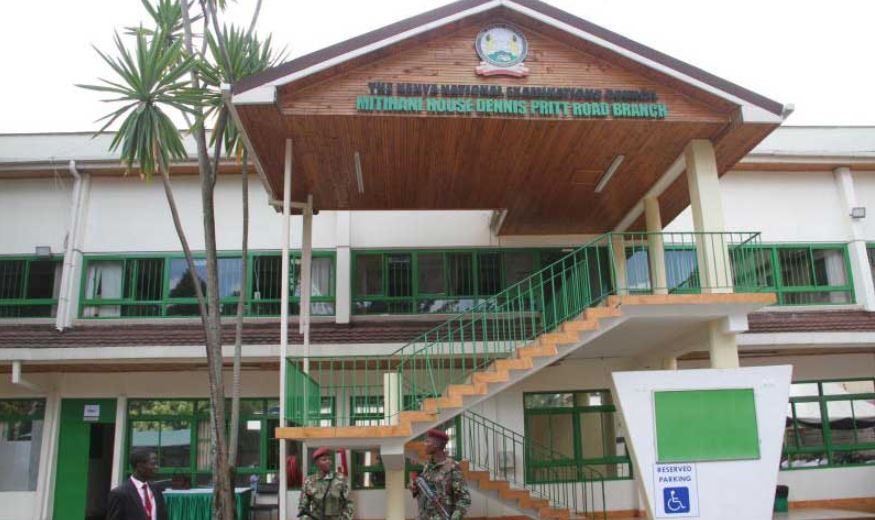
The Kenya National Examinations Council (Knec) introduced the platform to allow families to double-check crucial information for the Kenya Primary School Education Assessment (KPSEA), Kenya Junior School Education Assessment (KJSEA), and the Kenya Certificate of Secondary Education (KCSE). To access these details, guardians simply need to send the student’s assessment or index number to the code 20076.
Knec Chief Executive Officer Dr. David Njengere noted that maintaining clean and accurate data is essential for the seamless delivery of examination materials.
“This is especially more critical for Knec to implement personalised question papers, which in turn helps to anonymise the answer scripts during marking. Parents need to help confirm their children’s registration data by either calling the school or using the provided SMS platform,” he said.
Dr. Njengere urged all stakeholders to take personal responsibility for the process to ensure no learner is locked out of the upcoming assessments.
The council designed this early verification service to catch errors in names, subject choices, and school codes well before the exam season begins. By providing this transparency, Knec aims to streamline the administrative process for both schools and families.
“Confirm the registration status of your child for the 2026 KPSEA, KJSEA or KCSE examination by sending the assessment number or index number to 20076. Details to confirm include the spelling and order of names, gender, date of birth, school registered in, and citizenship status,” Knec shared on its social media platforms.
The council has also urged parents to verify specific subject entries for their children. For those sitting the KPSEA and KJSEA, families must confirm whether the learner is registered for Kiswahili or Kiswahili sign language, alongside the correct Religious Education option – CRE, IRE, or HRE.
Meanwhile, KCSE parents must confirm all optional subjects before the April 30, 2026, deadline. Knec advises parents to contact school heads immediately to resolve any discrepancies.
While KPSEA monitors learning progress as students transition from Grade Six to Junior School, it does not determine school placement. These learners face assessments in five key areas: Mathematics, English, Integrated Science, and Kiswahili. In contrast, the KJSEA serves as the final assessment for Grade Nine students, marking the completion of their Junior School journey.
Dr. Njengere noted that 2025 was a landmark year, as the council successfully managed the inaugural KJSEA for more than 1.13 million candidates. He attributed the current surge in KCSE enrollment to a high number of repeat candidates eager to improve their grades before the 8-4-4 system concludes. Since the 2027 KCSE will be the final examination under the old curriculum, the 2026 sitting represents a vital opportunity for those looking to secure better results.
Knec has launched a public awareness campaign, encouraging Kenyans to utilize this remaining two-year window to finalize their secondary education and obtain their certificates before the country fully adopts the Competency-Based Education (CBE) system. Dr. Njengere called on all eligible candidates, including repeaters, to adhere strictly to the registration timelines.
With the final 8-4-4 cohort currently in Form Three, the council reminded the public that only two chances remain to sit the traditional national exam.
“This is the second last opportunity to sit KCSE. All eligible candidates, including those who wish to resit one or two subjects, should register within the time frame Knec has set out in the circular to sub county directors and heads of institutions,” Dr. Njengere said.