




 The Taxpayers Association of Kenya has called out matatu operators for raising fares to levels that far exceed the recent fuel price adjustments. Speaking on Monday, April 20, the group warned Public Service Vehicle (PSV) owners that these steep hikes are unfairly hurting ordinary Kenyans.
The association pointed out that while fuel prices did go up, the actual increase in running costs for a standard 14-seater matatu is relatively small. They argued that the aggressive fare hikes seen on many routes simply don’t match the math of the fuel review.
“This is uncalled for, and we should not continue to really rob Kenyans in broad daylight. So we are calling all the associations to observe this despite the economic challenges that come with the fuel shocks,” they stated in a statement.
The group urged transport associations to check their members and stop the “daylight robbery,” insisting that operators should remain fair to commuters despite the current economic pressures.
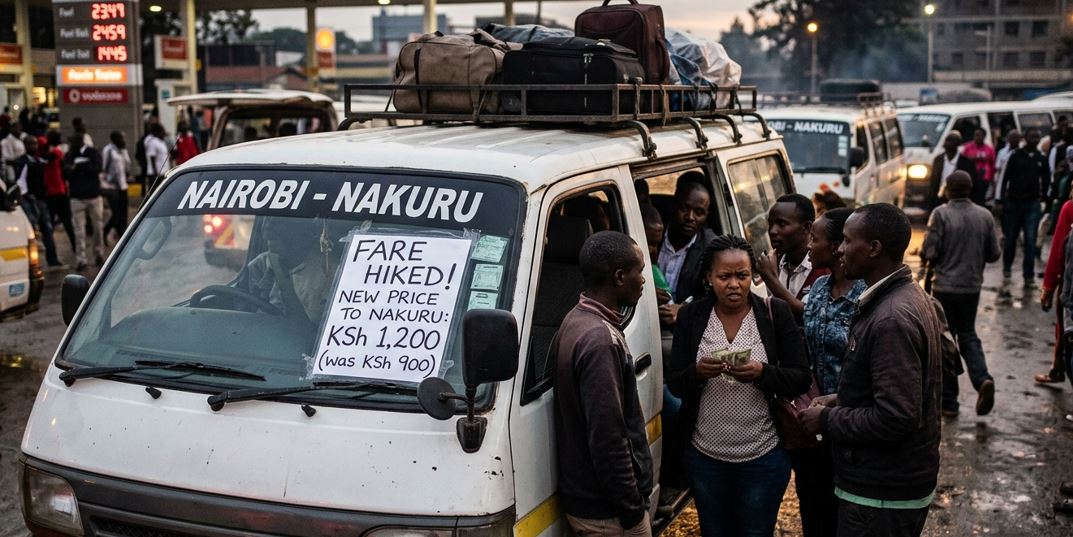
The association used the Nairobi-Nakuru route to show how operators are pulling in massive profits while blaming fuel prices. They broke down the math to prove their point: a standard 14-seater diesel matatu traveling the 160-kilometer stretch between the two cities uses about 32 liters for a round trip, assuming it gets 10 kilometers per liter.
Since diesel jumped by KSh 18.35 per liter (moving from KSh 178 to KSh 196.63), the driver only pays an extra KSh 587 in fuel for that entire journey. Despite this small increase, the association found that some operators have hiked fares by KSh 300 per person. With a full load of 14 passengers, that matatu collects an extra KSh 4,200 per trip – nearly eight times the actual rise in fuel costs.
“If you do your mathematics rightly, Matatus are making exorbitant profits, and this is we don’t think as a taxpayer association we want to encourage this,” they added.
The association’s outcry follows a trend where matatu operators hiked fares by more than 25% after fuel prices initially surged. Even though EPRA later lowered prices following a VAT cut from 13% to 8%, transport owners conveniently kept their fares at the higher rates.
The lobby group insists that while price adjustments during fuel shocks make sense, they must reflect the actual increase in running costs. They argued that operators shouldn’t turn a national economic struggle into a chance to squeeze extra profit from commuters who are already struggling to make ends meet.
The association also pointed out a puzzling trend: electric bus operators are raising their fares too, despite having zero reliance on diesel.
Furthermore, the group challenged matatu saccos to show their math and publicly justify these hikes with real fuel data. They warned that if the industry refuses to police itself, the government might have to step in with stricter regulations.
“Operators should adjust fares upward only within the recovery margin, not beyond it,” the association said.