




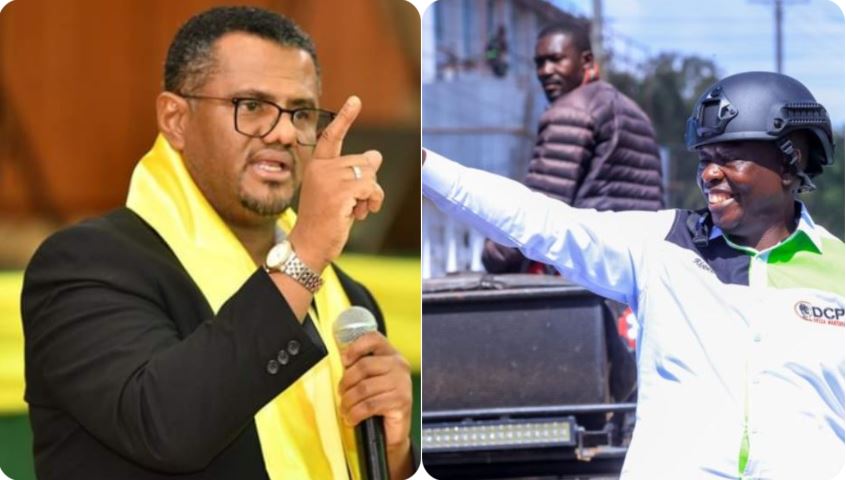
 The ruling United Democratic Alliance (UDA) has countered the opposition’s recent allegations concerning the fuel price hike, dismissing the criticism as a collection of falsehoods designed to mislead the public.
UDA Secretary General Hassan Omar Hassan argued that the surge is primarily driven by global shocks, specifically the ongoing Middle East conflict, rather than domestic policy failures. He rejected the opposition’s narrative, characterizing their recent press conference as a “misleading” misrepresentation of the global energy crisis.
Omar stood by the government’s efforts to shield citizens from the full impact of these international price hikes, highlighting the release of Ksh6.2 billion from the Petroleum Development Levy Fund as a key stabilization measure. Additionally, he noted that the government has slashed VAT on fuel from 16 percent to 8 percent to help lower costs at the pump.
According to the Secretary General, these interventions have significantly moderated prices. He cited the latest rates as petrol at Ksh197.60, diesel at Ksh193.63, and kerosene at Ksh153.68, arguing that without state action, the figures would be much higher. Omar pledged that the administration would continue to counter opposition misinformation with transparent progress reports on the economy.
Omar reiterated that the current fuel situation is “driven by global factors, especially the conflict in the Middle East,” maintaining that the opposition’s claims of a locally manufactured crisis are unfounded. He defended the government-to-government (G2G) fuel import arrangement, asserting that the deal has secured a steady fuel supply, alleviated pressure on the US dollar, and played a vital role in stabilizing the national economy.
The UDA official further noted that certain opposition figures now attacking the G2G framework had actually supported and approved the deal in 2023. He contrasted this established system with a recent attempt to import fuel outside the G2G framework, which he described as illegal, pricier, and involving substandard fuel.
According to Omar, this unauthorized shipment would have driven costs much higher for the average consumer. He argued that had the importation proceeded, petrol would have hit approximately Ksh236 and diesel around Ksh260.
“We cancelled that import to protect Kenyans,” he added, citing the government’s intervention as a necessary step to keep prices from spiraling out of reach.
The UDA official dismissed calls for mass action, labeling the protests misguided since global market forces primarily dictate fuel pricing. He also criticized proposals to eliminate the housing levy, NSSF contributions, and infrastructure funding, arguing that such moves would dismantle the foundation of national development.
Omar further claimed that Kenya pays more for fuel than some of its neighbors due to its classification as a middle-income country, unlike nations such as Tanzania. It is worth noting, however, that the World Bank currently classifies both Kenya and Tanzania as lower-middle-income economies, suggesting that price differences often stem from varying tax structures and transport expenses rather than a difference in economic status.
Omar further took a swipe at the opposition, saying:
“If you look at the face of the opposition when they give a press conference, it is the ugliest representation of past regimes… the ugliest face of everything that is wrong about Kenyan politics is reflected in that opposition.”