



The government has stepped up efforts to integrate nuclear energy into Kenya’s power mix, as part of a broader strategy to accelerate industrialization, with plans for the country’s first nuclear plant in Siaya County gaining momentum.
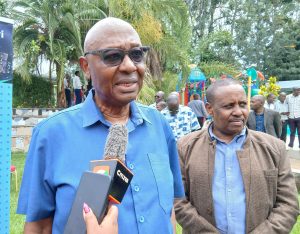
Speaking in Kisumu during an induction workshop for Siaya County leaders, Nuclear Power and Energy Agency (NuPEA) Chairman, Eng. Lawrence Gumbe, said the proposed plant will play a critical role in bridging the country’s electricity deficit and supporting industrial growth.
Gumbe noted that Kenya currently produces about 3,000 megawatts against a projected demand of at least 60,000 megawatts needed to achieve its industrialisation targets under Vision 2030.
He said the country’s per capita electricity consumption stands at about 190 kilowatt-hours—far below the 3,000 to 7,000 kilowatt-hours recorded in industrialized economies underscoring the urgency of scaling up generation.
“The proposed nuclear power plant in Siaya can generate up to 6,000 megawatts within a short period, more than doubling the current supply and providing stable, round-the-clock power for industries,” he said.
While acknowledging the role of renewable energy, Gumbe said sources such as wind, hydro and solar are intermittent, making nuclear energy essential for providing a reliable base load.
He further assured that safety remains a top priority, noting that Kenya is aligning itself with international standards, including the ratification of key nuclear safety conventions.
“There is no risk-free development, but nuclear energy is among the safest based on global data. We must work together with all stakeholders to ensure its success,” he said.
Gumbe added that the momentum towards nuclear energy is growing across the continent, with countries such as Egypt, South Africa, Ethiopia and Rwanda at various stages of developing nuclear power programmes.
Beyond electricity generation, he said the Siaya project will include a nuclear research reactor to support medical, agricultural and engineering applications, reducing reliance on foreign facilities for specialised services such as cancer diagnostics.
He revealed that NuPEA is already in discussions with Jaramogi Oginga Odinga University of Science and Technology (JOOUST), Masinde Muliro University of Science and Technology (MMUST) and Kisumu National Polytechnic to develop training and research capacity in nuclear science and technology.
The planned project, estimated to cost about Sh1 trillion, is expected to break ground in March 2027, with NuPEA identifying several potential sites in Siaya County along the shores of Lake Victoria.
Siaya Governor James Orengo backed the project, describing it as a transformative investment that could redefine the county’s economic trajectory.
He said the plant is likely to be the single largest investment in Kenya’s history, with far-reaching impacts beyond energy, including infrastructure development and industrial growth.
“I have this belief that if Siaya gets a primary investor that can help lift our economy, which is largely subsistence, then Siaya is going to be a different place,” said Orengo.
The governor said host communities could benefit from concessionary electricity tariffs, a move expected to attract investors seeking lower production costs.
He, however, emphasised that the success of the project will depend on sustained public engagement and the consent of host communities.
“Consultation will not be a one-off thing. It must be continuous, with public participation before, during and after implementation,” he said.
Orengo also sought to allay fears over environmental risks, citing his visit to a decades-old nuclear plant in Hungary where surrounding communities continue to rely on fish from nearby water bodies.
“We must listen to science and facts instead of rumours,” he said.
At the same time, he warned that Kenya risks falling behind regional and global peers if it fails to invest in large-scale energy projects, noting that countries such as Egypt, Ethiopia and South Africa are already ahead in electricity generation capacity.
KenGen Managing Director Eng. Peter Njenga, said the utility was set to take up the owner-operator role of the plant following its appointment by the government.
Njenga said nuclear power development requires long-term planning, strict regulatory compliance and specialised skills, adding that KenGen is investing in human resource development to build the necessary expertise.
“We are building the capacity and working closely with relevant agencies to ensure Kenya is ready to safely operate and manage nuclear energy infrastructure,” he said.
KenGen board member Umuru Wario, underscored the importance of transparency and stakeholder engagement in delivering the project.
“A nuclear power plant is not just an energy project—it is a long-term investment that requires trust, dialogue and access to accurate information,” he said.
Wario added that successful nuclear projects globally are those where host communities are treated as partners, with continuous engagement and access to credible information.
The project was initially proposed for Kilifi County but was relocated to Siaya following resistance from local communities, highlighting the critical role of public trust in major infrastructure projects.
The workshop brought together the governor, Members of the County Assembly and other top county officials, most of whom backed the project but called for intensified public sensitisation to address concerns and dispel misinformation surrounding nuclear energy.
by Chris Mahandara