





Education stakeholders have been urged to move away from traditional teaching approaches and embrace innovative, technology-driven methods to effectively support Competency-Based Education (CBE) and Science, Technology, Engineering, and Mathematics (STEM) learning in schools.
The call comes at a time when the education sector is grappling with rapid technological changes, increasing learner needs, and the challenge of maintaining quality standards amid a growing teaching workforce.
Experts warn that without significant reforms in curriculum delivery and teacher training, the country risks falling behind in preparing learners for a dynamic, skills-driven global economy.
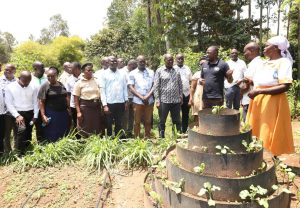
Speaking during the closing session of a three-day workshop for In-Service Education and Training (INSET) of Centre Principals and County Trainers held at the Centre for Mathematics, Science and Technology Education in Africa (CEMASTEA) in Karen, Member of the Board of Governors at CEMASTEA, Allan Sitima, emphasized the urgent need to rethink how teachers are trained and supported.
Sitima noted that the current teacher training model is inadequate to meet the demands of the Competency-Based Curriculum (CBC), particularly in STEM subjects, given the country’s large teaching population.
“I am speaking on the need to adopt new and effective methods of curriculum delivery, including alternative approaches that can reach more teachers efficiently,” he said.
He pointed out that with Kenya’s teacher population estimated at nearly 450,000, conventional face-to-face training methods are no longer sustainable or scalable.
“The traditional ways are no longer sufficient. For these trainings to be effective, we must develop innovations at all levels that will enable us to reach a critical mass of teachers across the country,” he added.
Sitima challenged education stakeholders to develop locally relevant innovations and maximize the use of Information and Communication Technology (ICT) to enhance teaching and learning processes. He highlighted the growing role of digital tools and platforms in improving classroom delivery, collaboration, and learner engagement.
“Embrace ICT to support teaching processes, especially in enhancing delivery and learning outcomes,” he urged, noting that emerging technologies are already being used to promote gender-responsive pedagogy and modern classroom practices.
He further underscored the importance of aligning education policies and legislative frameworks with contemporary issues such as gender equity, inclusivity, and equality in education. According to him, these elements are critical in ensuring that all learners benefit equally from educational opportunities.
“These are very key issues. We must instil the right attitudes, correct gender imbalances, promote equality, and ensure that every learner benefits from quality education,” he said.
Sitima also reaffirmed the central role of CEMASTEA in advancing STEM education in Kenya, describing the institution as a critical pillar in the successful implementation of the Competency-Based Education system.
“If there was ever a moment when CEMASTEA was crucial, it is now. The centre stage of the new education system is STEM,” he stated.
He called on participants to act as ambassadors of CEMASTEA in their respective counties and institutions by supporting the expansion of STEM-focused training programmes and curriculum reforms.
“Please help us deliver on the learning outcomes, especially those relating to STEM. I invite each of you to become ambassadors of CEMASTEA and share the important role we play in education and learning,” he said.
The workshop, themed “Enhancing management of CEMASTEA activities at the county level for effective implementation of STEM education”, focused on strengthening participants’ capacity to manage and coordinate CEMASTEA programmes more effectively.
During the training, participants were introduced to Communities of Practice through lesson study approaches, where teachers collaboratively identify and address gaps in teaching and learning. This model encourages peer learning, continuous improvement, and the sharing of best practices among educators.
They were also trained on how to support teachers not only as administrators but also as instructional leaders, ensuring effective curriculum implementation at the school level.
In addition, participants explored their roles within the Teacher Professional Development (TPD) framework, which guides the delivery and monitoring of CEMASTEA activities across counties. The framework aims to ensure that teachers continuously upgrade their skills to meet evolving educational demands.
The workshop also covered key aspects of financial management, including accountability and auditing processes. Participants reviewed reports from the National Audit Board for the 2024/2025 financial year, enabling them to identify strengths, gaps, and areas requiring improvement in the management of CEMASTEA resources.
Further sessions focused on procurement procedures, as well as stores and asset management, equipping participants with the necessary skills to ensure proper handling and utilization of resources at their respective centres.
Acting Director in charge of STEM Training at CEMASTEA, Makanda John Livingstone, urged participants to put into practice the knowledge and skills gained during the workshop.
“For the sake of our children, we have learned a great deal during this training. I urge you, when you return to your stations, to implement what we have discussed so that we can improve both CEMASTEA activities and learning outcomes,” he said.
He emphasized the importance of commitment and collaboration among educators in driving meaningful change in the education sector.
The remarks come as Kenya intensifies efforts to strengthen the implementation of Competency-Based Education through innovative training models, integration of ICT, and expanded teacher capacity development programmes.
By Ian Chepkuto