





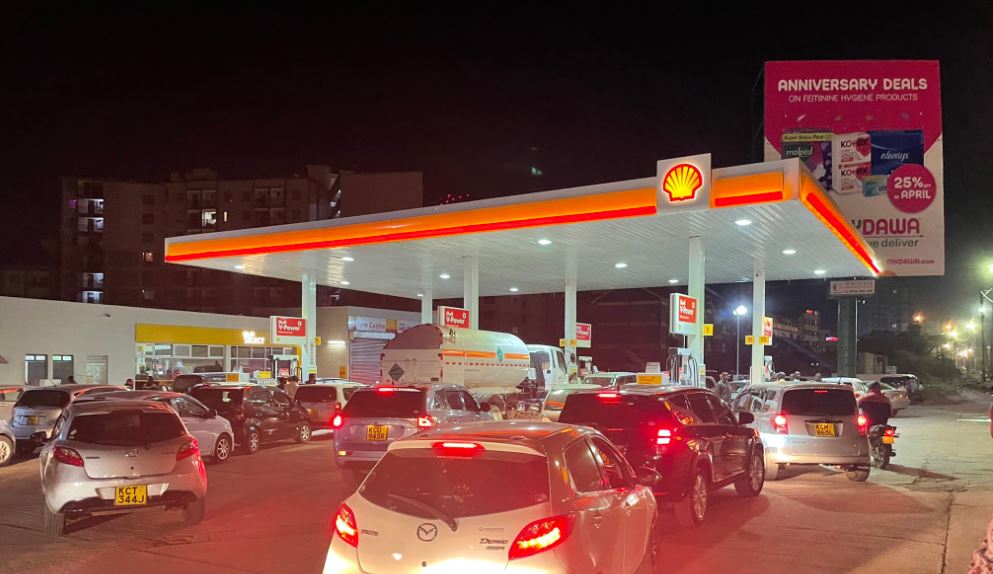
 The Kenya Pipeline Corporation (KPC) moved to calm public anxiety today, disclosing that the country holds enough petrol stocks to last over 20 days. The announcement follows recent reports of “dry pumps” at several filling stations, sparking fears of a looming fuel crisis.
Appearing before the Senate Energy Committee, KPC Acting Managing Director Pius Mwendwa assured lawmakers that fuel levels at the source remain stable. He noted that while isolated retail outlets might report supply gaps, the national inventory remains healthy.
“I again repeat that there is no shortage, and we are not privy as to why there are shortages in some stations,” Mwendwa stated.
To support his claim, Mwendwa provided specific data on current reserves. He revealed that KPC currently holds approximately 162.8 million litres of Motor Spirit Premium (petrol). According to the corporation’s internal analysis, this volume covers about 26 days of national daily consumption.
Mwendwa reported that the current inventory holds 169.1 million litres of Automotive Gas Oil (diesel). While this represents a larger physical volume than petrol, the country’s heavy reliance on diesel for transport and industry creates a tighter supply margin. National demand for diesel hits about 9.1 million litres daily, compared to the 6.3 million litres required for petrol.
In the aviation sector, stocks of Gas Turbine Fuel (GTF) stand at 83.7 million litres. Although this is the smallest volume of the three primary fuels, the lower daily consumption rate of 2.5 million litres provides the country with its most robust cushion, lasting 33 days.
To give the committee a full picture of the energy landscape, Mwendwa broke down the numbers clearly:
“As of today, we have 162.8 million litres of petrol in the system, which covers us very well. We also have 169.1 million litres of diesel and 83.7 million litres of Jet A1 fuel. Those are the current stock levels, and we are still receiving additional cargo,” Mwendwa said.
He noted that with more tankers currently offloading at the Port of Mombasa, the corporation expects these stock levels to remain stable, further insulating the country against potential shocks in the global energy market.
Simultaneously, the National Assembly Committee on Energy conducted an onsite inspection of fuel stocks at the KPC headquarters in Nairobi this Tuesday. The lawmakers confirmed that the corporation maintains sufficient petroleum products across all five of its national depots.
Following the review, Committee Chairperson David Gikaria expressed satisfaction with the current inventory levels. He turned his attention to the private sector, urging oil marketing companies to expedite the collection of these products from KPC facilities to replenish local service stations.
“We are pleased to confirm that we reviewed the figures in real time and, based on what we saw, there are indeed sufficient petroleum products across all KPC depots,” Gikaria stated.
The chairperson noted that with the government and KPC having fulfilled their role in securing and storing the fuel, the responsibility now shifts to marketers to ensure these supplies reach the Kenyan consumer without further delay.