





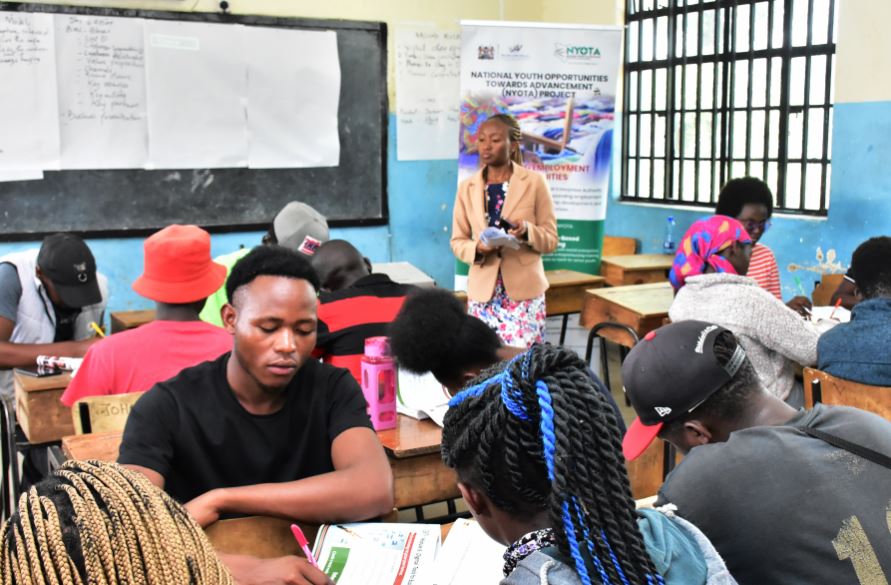
 The government has rolled out the second phase of its classroom-based business skills training under the Nyota Project, with sessions running across all 290 constituencies.
A media statement released on Monday indicated that the program has rolled out in 454 designated centers nationwide.
“The second mandatory classroom training of the Nyota Project business support component has officially kicked off this morning, with sessions taking place in 454 mapped centers in all the 290 constituencies across the country,” the statement said.
To facilitate these sessions, the government has deployed a team of over 6,000 trainers to reach beneficiaries who have already transitioned through the program’s initial mentorship phase. This mandatory training provides participants with practical tools and knowledge designed to help them strengthen their existing enterprises and pursue sustainable growth.
Officials confirmed that the current trainees include only those who successfully navigated the initial mentorship phase, where experts helped them identify specific gaps in their business models. This new round of training tackles those weaknesses directly, giving participants the tools they need to manage their operations with greater precision and confidence.
To keep their place in the project, participants must attend every session. Full attendance remains a strict requirement for moving to the next stage, which unlocks critical resources for the business owners.
Specifically, completing this phase makes entrepreneurs eligible for the second installment of their start-up capital and secures their spot in a follow-up mentorship program. The project continues to build on the foundations of its first phase, which paired direct financial aid with structured professional guidance.
During the initial phase, beneficiaries received their first installment of start-up capital and joined a mentorship program designed to guide them through the hurdles of launching and managing a business. Data from the project reveals impressive participation levels, showing that the youth have embraced the opportunity with high energy.
The latest figures highlight this success: 97 percent of those who received initial funding actively participated in the mentorship sessions. Even more encouragingly, 99 percent of those engaged in the mentorship period have already established their businesses, signaling that the program is meeting its early implementation goals.
The mentorship phase prioritized practical support, covering essential areas like business planning, financial management, and market access. This approach helped participants transform their seed funding into functional, viable enterprises. Officials noted that the insights gathered during those sessions helped shape the current training, ensuring the curriculum directly tackles the real-world challenges young entrepreneurs face.
The Nyota Project serves as a cornerstone of the government’s broader strategy to combat youth unemployment by fostering self-employment and enterprise development. By blending financial aid with professional training, the program aims to build sustainable businesses capable of generating both income and new jobs.
This second phase of training targets the long-term resilience of these startups, focusing on sharper decision-making and better business skills to help them thrive in competitive markets.
Government officials maintain that following all program requirements is the only way for beneficiaries to reap the full rewards of the initiative. Looking ahead, the next phase will introduce additional funding and ongoing mentorship to support the permanent growth and sustainability of youth-led businesses nationwide.