




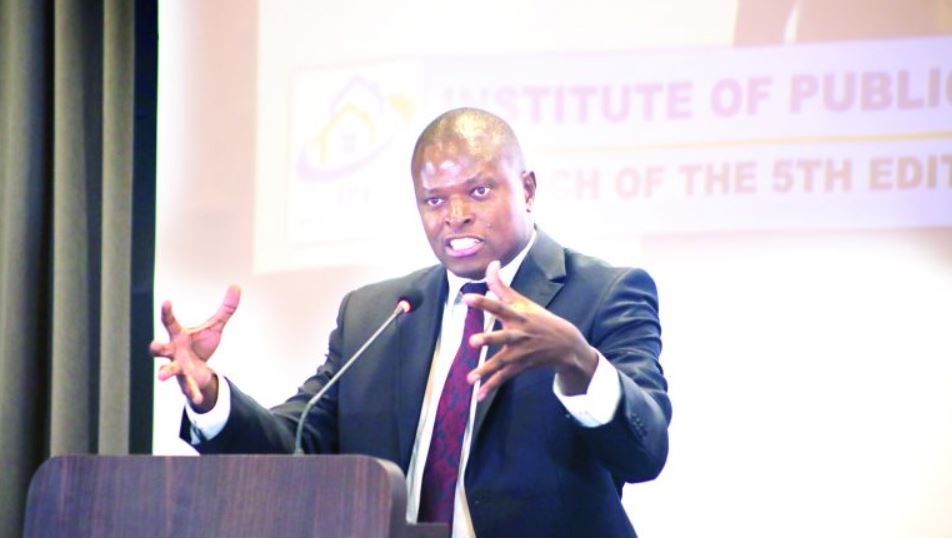
 Kiharu Member of Parliament Ndindi Nyoro has stepped forward with a series of proposals he claims could slash fuel prices by at least KSh27 per liter. Addressing the media on Wednesday, the lawmaker accused the government of failing to address the fuel crisis and labeled the latest price hikes as “unacceptable.”
Nyoro pointed out a glaring inconsistency in current market trends, noting that Kenyans are paying record highs at the pump despite global oil prices being significantly lower than they were two years ago. He questioned the logic behind the current pricing structure, comparing today’s rates to the mid-2022 period when international crude topped $115 per barrel.
“Kenyans take note of the fact that global oil prices were higher in 2022, topping $115 per barrel in May 2022, yet pump prices never exceeded Ksh.160 per litre of petrol… Global oil prices are cheaper now… Why are Kenyans being made to pay more?” he posed.
The MP further cautioned that the government’s lack of transparency regarding fuel price components could backfire. He warned that if the state fails to provide clear communication, it risks triggering artificial shortages through hoarding within the supply chain. Nyoro argued that the administration has shown a lack of commitment to solving a crisis that has been looming since late February, demanding an immediate and more compassionate reduction in pump prices.
“It has been laid bare and apparent that the government has never been keen or committed to providing a solution to the crisis that has been imminent since the end of February. The drastic increment in fuel prices is unacceptable; a more humane variation must be made by reducing the pump prices now,” he said.
“Failure of the government to communicate clearly about the composition of the pricing may likely lead to supply chain hoarding, as dealers are not sure who is paying how much and for what.”
The MP dismissed the current KSh6.5 billion fuel subsidy allocation as inadequate and urged the government to significantly scale up intervention measures. He called for a minimum injection of KSh10 billion from the Fuel Stabilisation Fund to ease pressure on consumers. He noted that the fund currently holds about KSh20 billion and argued that authorities should deploy it more decisively to reduce fuel costs in the period leading up to May 14.
“The amount given for subsidies is too little… The government must commit at least Ksh.10 billion into subsidies in the month up to May 14th,” he stated.
On taxation, the legislator rejected the proposed VAT adjustments from 16% to 13%, describing them as insufficient to address the ongoing fuel crisis. He called for a full VAT exemption on petroleum products during the current period instead of incremental reductions. He further pushed for a return to the 8% VAT rate that existed before 2023 as an initial step toward broader relief for consumers.
The lawmaker also criticized the KSh7 fuel levy introduced in 2024, arguing that its removal, combined with deeper VAT cuts and higher subsidies, would significantly lower pump prices.
“The VAT reduction of 3% is a dry joke taken too far. Fuel products must be VAT-exempt during the intervening period. The government must immediately revert the VAT to 8% as it was before 2023,” he said.
Notably, President Ruto on Wednesday announced that his administration would slash the VAT further to 8 percent for the next three months.
Ndindi Nyoro also broke down his proposal in numerical terms, arguing that the combined reforms would reduce fuel prices by about KSh27 per litre for consumers. He attributed the expected savings to the removal of the 2024 fuel levy, additional VAT reductions, and increased subsidy allocation.
“Reduce Ksh.7 from the fuel levy that was added in 2024. Reduce VAT by an additional 5% immediately, which will be approximately Ksh.8 per litre. Grant an additional Ksh.5 billion in subsidies… which will be approximately Ksh.12 per litre. This should translate to a reduction by Ksh.7 + 8 + 12 = Ksh.27.”
Nyoro further cast doubt on the government-to-government (G2G) fuel importation framework, openly questioning its transparency. He demanded an immediate review of fuel prices, warning that any delay would only deepen the strain on the national economy. The lawmaker characterized the current arrangement as a scheme designed to benefit those in power at the expense of ordinary citizens.
“The arrangement is a scam and a profit machine for leaders. They must explain to Kenyans why they are profiting while Kenyans are bearing the pain,” he said.
With the economy heavily dependent on energy costs, Nyoro rejected the idea of waiting for the next scheduled price review. He insisted that the government must act now to lower costs at the pump to prevent further financial damage to Kenyan households and businesses.
“Kenyans cannot wait for another month for the revision to be done. Reduction in fuel prices must be done now without delays. Time is of the essence. Our economy runs on fuel.”