




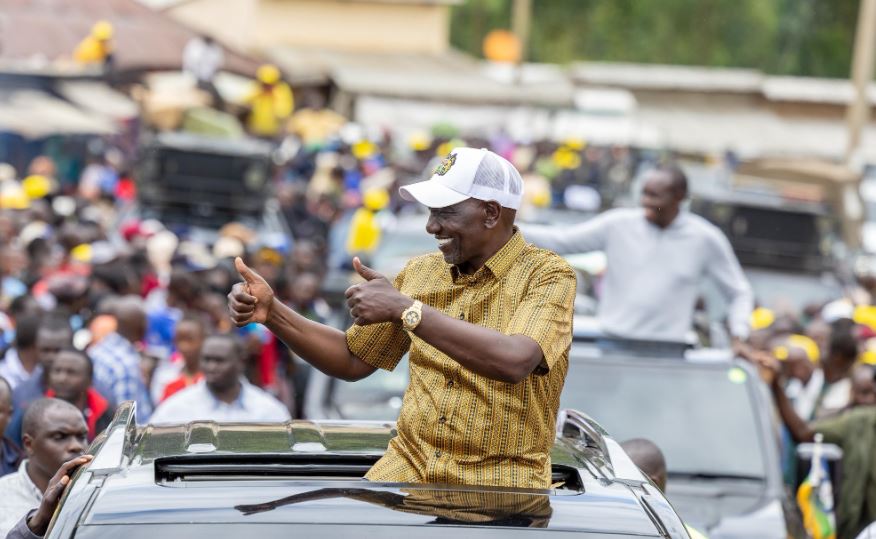
 President William Ruto has assured Kenyans that the government will implement measures to cushion them from rising fuel costs despite a volatile global market. Speaking on Wednesday during the groundbreaking ceremony for the Mochengo–Ayora–Maroo Road in Kisii County, the president acknowledged the significant economic pressure households face due to the latest price hikes.
The president defended the government-to-government (G-to-G) fuel import arrangement, describing it as a vital tool that has stabilized the country’s supply chain. He argued that this framework has protected Kenya from the more severe shortages seen in neighboring countries.
“There are many challenges facing the country right now, including fuel prices. We adopted the G-to-G arrangement, which helped stabilize our country at a time when many others were going through very difficult circumstances,” he said.
Ruto attributed the sharp local price increases to external factors, specifically ongoing tensions and supply disruptions in the Middle East. However, he insisted that the impact would have been far worse without state intervention, such as the KSh6.5 billion subsidy and an initial reduction in VAT from 16% to 13%.
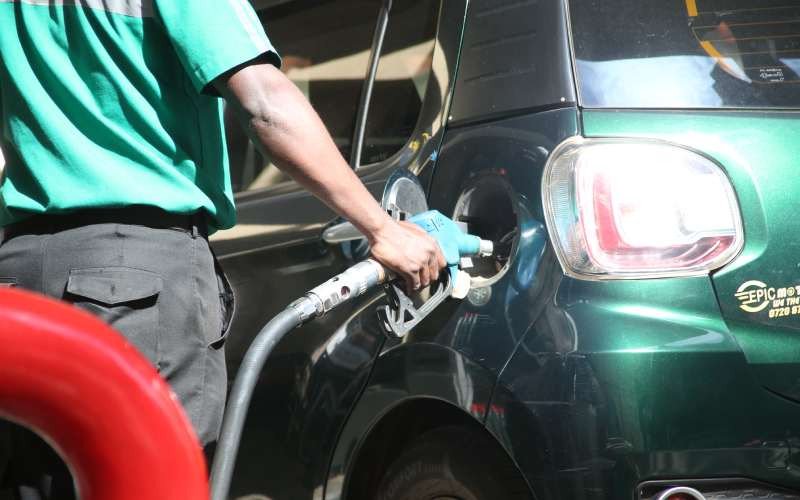
“Prices have gone up globally, but we have put in place measures to ensure they do not rise too high locally. As we speak, some countries do not have fuel at their pumps, but here in Kenya we have enough,” he said.
The president maintained that Kenya is currently better positioned to manage these global shocks, assuring the public that the government remains committed to containing costs and ensuring a steady supply of petroleum products across the nation.
“We have allocated Sh6.5 billion for fuel subsidy and reduced VAT to moderate prices,” Ruto said.
Reaffirming the government’s commitment to energy affordability, Ruto said his administration will exhaust all available options to manage the crisis and keep fuel within reach for ordinary Kenyans.
“I want to assure Kenyans that the government will do everything possible to contain fuel prices,” he said.
The president also highlighted Kenya’s current stock levels as a sign of successful planning, contrasting the local situation with other nations currently facing empty pumps. He credited the G-to-G model for this stability, arguing that the arrangement has not only secured the country’s supply but also boosted its competitive edge within the region.
“As we speak, some countries do not have fuel at their pumps, but here in Kenya we have enough. The arrangement has made Kenya more competitive. There are countries in the region without fuel, but we have ensured stable supply,” he added.
At the same time, Ruto announced that the government will slash the value-added tax on fuel further from 16 percent to 8 percent for the next three months. This temporary measure aims to provide immediate relief to consumers as the country navigates the current economic cycle.
“We are going to bring down VAT from 16% to 8% for the next three months until we make sure we make it through this phase,” he stated.
In a separate address, Energy and Petroleum Cabinet Secretary Opiyo Wandayi revealed that President William Ruto issued a specific directive to keep kerosene prices steady, despite the sharp hikes in petrol and diesel. Speaking in Siaya County on Wednesday, April 15, Wandayi urged Kenyans to remain calm, noting that the administration has already taken intentional steps to protect consumers from the full impact of the new price schedule.
While leading a voter registration and sensitization exercise in Ugunja, the Cabinet Secretary reassured the public that the government is actively managing the situation.
“Yesterday you saw the hike in fuel prices, but I want to tell you, do not have any worry,” he said.
According to Wandayi, the president also ordered a Ksh6.2 billion fuel subsidy to head off an even more drastic price surge. He explained that without this intervention, the cost at the pump would have reached much higher levels, and the subsidy served as a vital tool to moderate the burden on taxpayers.
“The prices could have gone up much more, but because the head of state directed us to put a subsidy, the rise was moderated,” Wandayi explained.
Wandayi noted that the Head of State specifically ordered the government to freeze kerosene prices to protect low-income households. Since many families rely heavily on the commodity for cooking and lighting, the directive ensures that the most vulnerable citizens do not face an additional burden during this cycle.
The Cabinet Secretary linked the recent surge in petrol and diesel costs directly to the conflict in the Middle East. He offered a hopeful outlook, promising that fuel prices will drop once these geopolitical tensions subside.
“The president also told me that, despite the rise in petrol and diesel prices, kerosene should not be raised. So if the U.S./Israel-Iran war ends, fuel prices will go down,” he added.