





 Choosing the right material for bathroom furniture has become one of the most important decisions in modern home design. In 2026, bathrooms are no longer purely functional spaces; they are designed as long-lasting, moisture-resistant environments where durability, aesthetics, and performance must align.
Materials that fail under humidity, temperature changes, and daily use quickly lead to damage, repairs, and unnecessary costs.
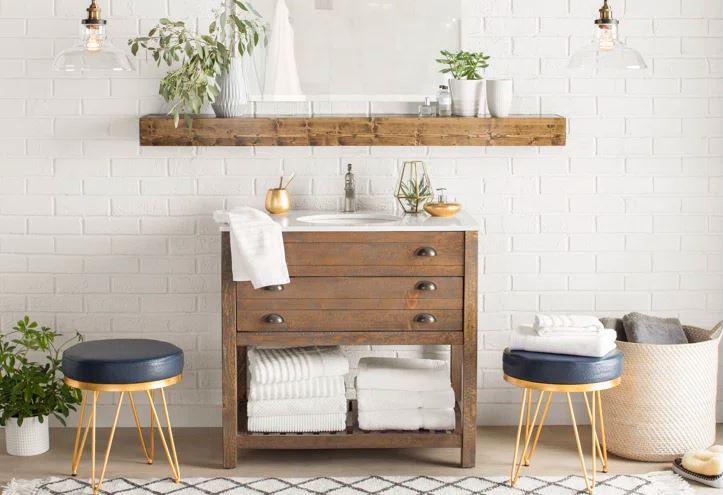
One of the most discussed options today is the solid wood bathroom vanity, which represents the premium end of the market. It combines natural aesthetics with long-term durability, but its performance depends heavily on proper sealing and construction.
In contrast, engineered materials like MDF and plywood offer different advantages, particularly in terms of stability and moisture resistance, making the choice less obvious than it might seem.
Understanding which material is best requires looking beyond appearance. Bathroom environments are unique because of constant humidity, water exposure, and temperature fluctuations. Materials react differently under these conditions. Some expand, some absorb moisture, and others remain completely unaffected.
The best material in 2026 is not simply the most expensive one, but the one that performs consistently over time in these conditions.
Solid wood remains one of the most desirable materials for bathroom furniture, especially for visible elements such as doors and frames. It offers a natural grain, premium feel, and the ability to be refinished over time. However, it is not without limitations. Wood expands and contracts with humidity, and without proper sealing it can warp or crack.
This is why high-quality solid wood vanities are typically treated with protective coatings and combined with stable internal structures.
Plywood has become one of the most recommended materials for bathroom furniture in recent years. Its layered construction gives it excellent resistance to moisture and structural deformation. Unlike solid wood, plywood maintains its shape even in high humidity environments, making it ideal for cabinet boxes and internal components.
Many experts consider waterproof or marine-grade plywood to be one of the best overall materials for long-term durability in bathrooms.
Medium-density fiberboard, commonly known as MDF, dominates the mid-range segment of the market. It is engineered to have a smooth, uniform surface, which makes it ideal for painted finishes.
Moisture-resistant MDF performs well when properly sealed, but lower-quality versions can absorb water and deteriorate quickly. This makes quality and manufacturing standards extremely important when choosing MDF-based furniture.
Metal, particularly aluminum, is gaining popularity in modern bathroom furniture design. It offers complete resistance to moisture, meaning it will not warp, swell, or degrade over time. This makes it one of the most durable materials available.
However, its aesthetic is more limited, often leaning toward industrial or contemporary styles, which may not suit every interior.
Another emerging category includes composite and engineered materials, such as laminate, thermofoil, and mineral-based surfaces. These materials are designed to replicate the look of wood or stone while offering improved resistance to moisture and wear.
Their performance depends heavily on manufacturing quality, but they are increasingly used in modern bathrooms due to their affordability and low maintenance requirements.
When comparing materials, it becomes clear that there is no single universal solution. Each option serves a different purpose depending on budget, design goals, and environmental conditions. The best approach is to combine materials strategically. For example, a vanity might use solid wood for doors, plywood for the structure, and engineered materials for finishes.
The most effective way to understand material performance is to break it down into key factors such as durability, moisture resistance, maintenance, and cost. This helps create a clearer picture of which material performs best in real-world conditions.
- Solid wood delivers premium aesthetics and long-term durability but requires proper sealing and maintenance to prevent warping in humid environments.
- Plywood offers the best balance between strength and moisture resistance, making it one of the most reliable materials for bathroom furniture structures.
- Moisture-resistant MDF provides a smooth finish and affordability but must be properly sealed to avoid swelling or damage.
- Aluminum and metal materials provide maximum water resistance and minimal maintenance, though they are more limited in style.
- Engineered composites offer versatility and cost efficiency but vary widely in quality depending on manufacturing standards.
In 2026, the trend is shifting toward hybrid construction. Manufacturers increasingly combine multiple materials to optimize performance. For example, a high-quality vanity might use solid wood for visible surfaces, plywood for internal framing, and moisture-resistant coatings for protection. This layered approach allows each material to perform where it is strongest.
Another important consideration is longevity. Bathroom furniture is not replaced frequently, so the material must withstand years of exposure to moisture and daily use.
Plywood and properly treated solid wood tend to have the longest lifespan, while lower-grade MDF or particleboard products often fail much sooner if exposed to water.
Maintenance is also a critical factor. Solid wood requires occasional care, including resealing or refinishing. MDF and engineered materials typically require less maintenance but are less forgiving if damaged. Metal and aluminum require the least maintenance but may not provide the same warmth or design flexibility.
Design trends in 2026 also influence material choices. There is a growing preference for natural textures and warm tones, which has increased the popularity of wood-based materials. At the same time, modern minimalist interiors continue to favor smooth, painted surfaces and engineered finishes.
This creates a balance between traditional craftsmanship and modern functionality.
Sustainability is becoming another key factor. Many manufacturers now focus on responsibly sourced wood and environmentally friendly production processes. Engineered materials are also evolving, with improved formulations that reduce environmental impact while maintaining performance.
Ultimately, the best material for bathroom furniture in 2026 depends on the specific priorities of the space. For premium design and long-term value, solid wood combined with proper sealing remains a top choice.
For maximum durability and resistance to moisture, plywood stands out as the most practical solution. For affordability and modern finishes, MDF and engineered materials provide a viable alternative.
The most effective approach is not choosing a single material but selecting the right combination. Bathrooms demand materials that can handle moisture, maintain structural integrity, and preserve their appearance over time.
When these factors are balanced correctly, the result is furniture that performs reliably and enhances the overall design of the space for years to come.