



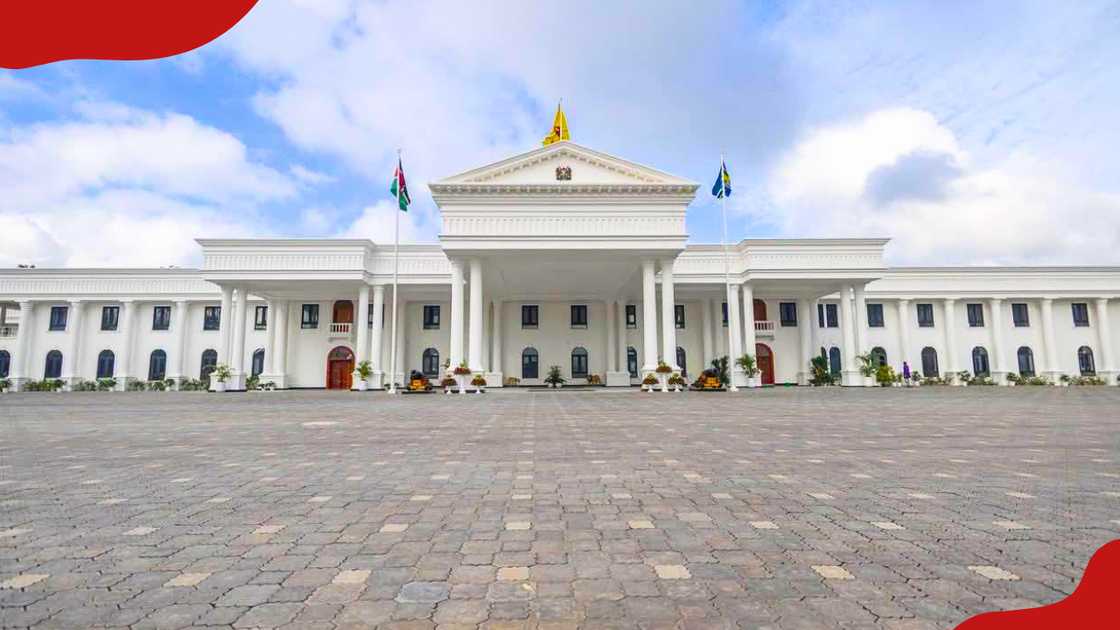
- President William Ruto ordered the demolition of part of the White House wall after it was discovered that it was built on a watercourse
- The instructions followed a notice issued by the multi-agency team that enforces environmental laws along the Big Kirichwa River
- Ruto linked the move to the Nairobi floods, warning that tough decisions, including demolition, are inevitable
Nairobi: President William Ruto he has ordered part of the border wall of the Palace to be demolished after it was found that it was built on the land of the river bank reserve.
Source: Facebook
Addressing the Nairobi County Assembly on Thursday, April 9, the head of state revealed that the multi-agency team that is patrolling the river reserves issued a notice identifying the encroachment.
Which part of Nairobi’s State House will be demolished? The affected area is located along the Big Kirichwa River and must be removed to comply with environmental regulations.
Ruto made it clear that the order will be implemented, stressing that even the White House will not be above the law.

Also read
William Ruto, Rigathi Gachagua create spark, each post photos of the other: “No Love Lost”
“By the way, I have received a notice that a part of the boundary wall of the Palace along the Kirichwa River is inside the river bank reserve. And it must be demolished,” he said.
He further explained that regulations require an area of at least 15 meters from the high water level, meaning that the wall must be repaired to meet the legal standard.
The move is part of the government’s broader efforts to restore river reserve lands and address environmental and flood issues in urban areas, especially Nairobi.
The President also pointed to the broader challenge facing the nation, noting that many Kenyans, especially residents of Nairobi, demand better systems such as improved drainage and flood control, but are often unwilling to support the tough measures needed to achieve that.
He stressed that dealing with frequent floods in the city will involve tough measures, including evacuating people and demolishing buildings built on riverbanks.
“Some difficult decisions will have to be made. We cannot demand world-class infrastructure while defending the violation of the law. We cannot complain about floods and then oppose drainage works. We cannot complain about congestion and then oppose road expansion. We cannot demand cleanliness while protecting illegal waste dumping. We cannot ask for order while opposing every step necessary to bring that order,” said Ruto.
Source: TUKO.co.ke