





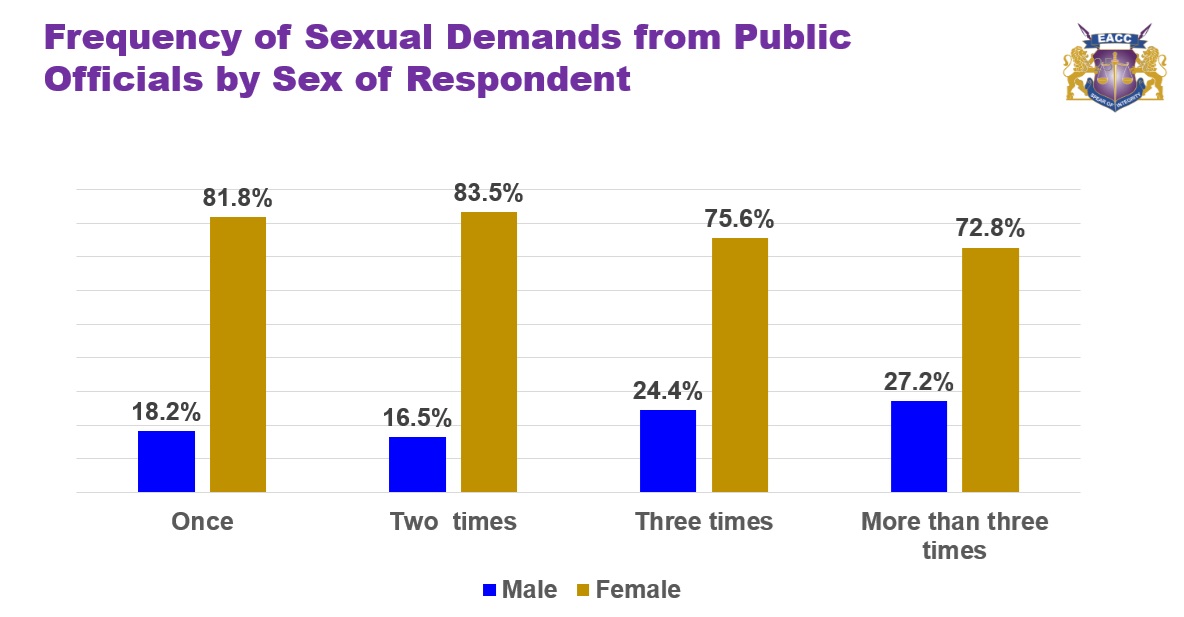
The demand for sexual favours in exchange for services by public officials continues to persist, with women disproportionately affected.
The National Gender and Corruption Survey 2025 reveals the frequency of such demands, with 72.8% of women surveyed reporting having been asked for sexual favours more than three times. Men have also been affected, with 24.4% of male respondents reporting similar experiences.
The survey released Thursday by EACC highlights the gendered dimensions of corruption, showing how sextortion impacts men and women differently. Overall, 8.4% of adult Kenyans have been indirectly affected, with women (9.3%) slightly more affected than men (7.4%).
The survey also examined bribe trends, showing that men paid an average bribe of Ksh 6,748, compared to Ksh 6,702 for women—an increase from the 2024 report, which recorded an average bribe of Ksh 6,724, up from Ksh 4,878.
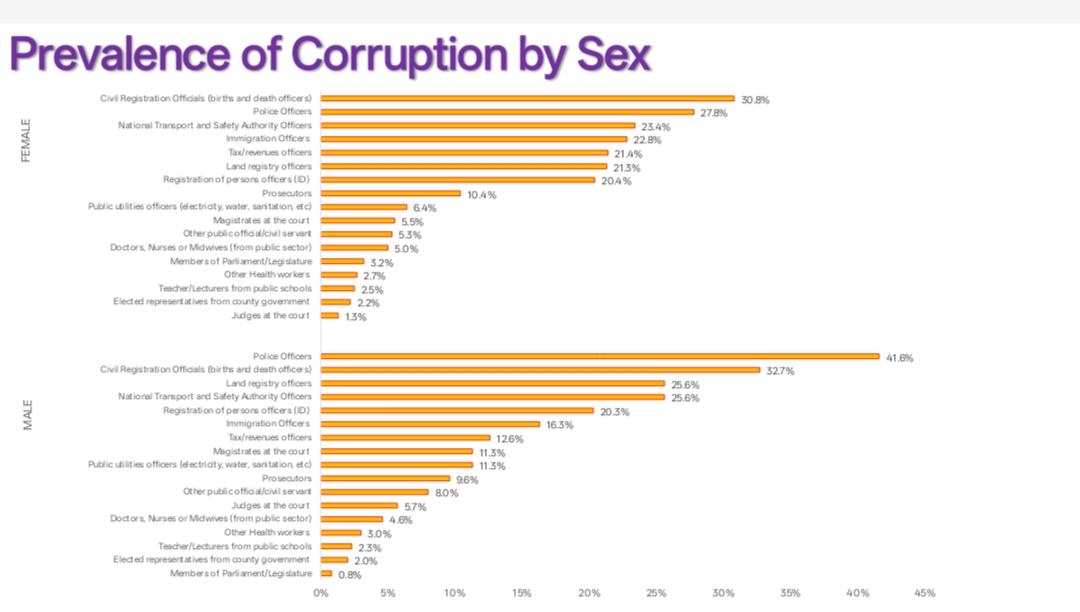
Generally, the prevalence is high among police officers (35.5%), civil registration officials (30), NTSA officers (25.4) land registry officials (23.3) and registration of persons officials (21.2).
The leading form of bribe to public officials remains cash at 72.2%, followed by money transfers at 10.5% and animals at 2.2%. Valuables such as gold, jewellery, phones, and other goods accounted for 2.2%, while exchanges for another service or favour, as well as food and drink, were reported at 1.1% each.
Additionally, reporting of bribery incidents is higher among women (57.2%) than men (42.8%)
Interventions
Some of the recommended measures to protect women who majorly face distinct corruption vulnerabilities, particularly regarding sextortion and access to health services, include developing targeted programs that address the specific risks.
The report also calls for tailored anti-corruption messages to reach women effectively.
“Ensure anti-corruption messaging reaches women through their preferred information channels, including places of worship and community health programs”, the report highlights.
Below are some of the proposed emergency sextortion intervention protocols:
- Train all public service supervisors to recognize signs of sextortion and establish clear disciplinary procedures
- Link victims to support services for, including psychological counselling and legal assistance.
- Prioritize protection for young women seeking employment and medical services, the groups most vulnerable to sexual coercion.
The report is a joint initiative between the EACC and several organisations such as UNODC (under the Programme for Legal Empowerment and Aid Delivery PLEAD II), KNBS, NGEC and TI Kenya.