





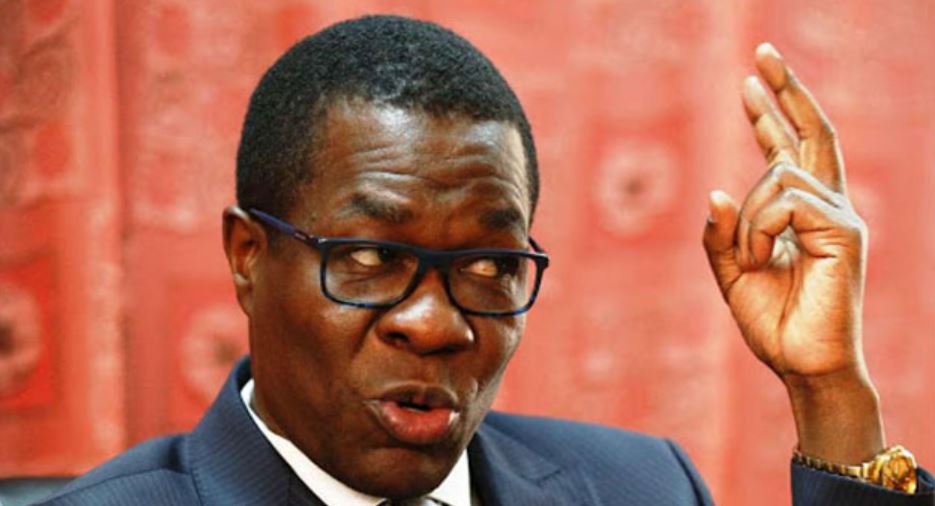
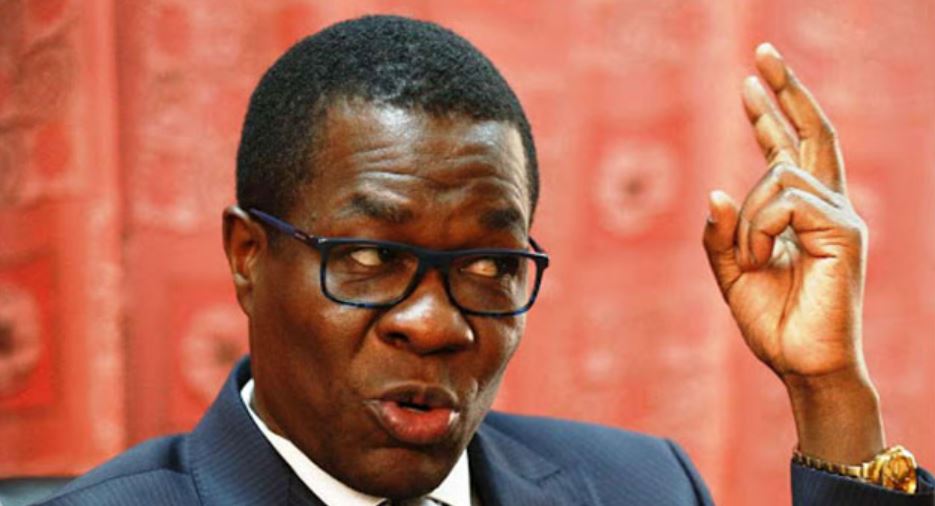
 Energy Cabinet Secretary Opiyo Wandayi announced that the government blocked the arrival of a second fuel shipment after discovering irregularities linked to a cargo currently under investigation. He explained the decision in a statement released Sunday, April 5, 2026, noting that the ministry took swift action to protect the public interest once the full details regarding the suspicious shipment came to light.
Wandayi acknowledged recent turbulence within the petroleum sector, including the resignation of high-ranking officials across the ministry and its affiliated agencies. Despite these personnel shifts, he maintained that the government holds the situation firmly in hand and retains ample petroleum stocks to satisfy local and regional demand.
“When full information about the fuel shipment that is the subject of investigations emerged, we stopped the delivery of a second cargo under similar circumstances, thus protecting and securing public interest,” Wandayi said.
To ensure long-term stability, the Cabinet Secretary affirmed the government’s commitment to maintaining an uninterrupted, high-quality fuel supply. He characterized the government-to-government procurement framework as “stable and resilient” and confirmed that the ministry has initiated a rigorous internal review. This audit aims to overhaul management systems and processes, strengthening transparency and securing the integrity of the entire supply chain.
CS Wandayi urged the public to remain patient as official investigations proceed, while he cautioned against a campaign of disinformation led by certain political figures. He pledged that the government will dismantle cartels, profiteers, and extortionists attempting to exploit market uncertainty caused by the ongoing conflict in the Middle East.
To demonstrate the cost-effectiveness of the current procurement model, Wandayi highlighted a stark discrepancy between two recent shipments. He noted that invoices for the MT Paloma cargo from One Petroleum indicated a landed, in-tank price of Ksh198,855 per metric ton for petrol. Conversely, the government-to-government (G-to-G) arrangement involving MT FOS Mercury through Gulf Energy recorded a landed, in-tank price of only Ksh140,111 per metric ton.
This price difference amounts to Ksh58,744 per metric ton, which translates to a saving of Ksh43.4 per liter for the G-to-G cargo.
Furthermore, Wandayi clarified that Stabex International does not hold a nomination from the International Oil Companies under the G-to-G framework. He promised to release additional updates as the ministry continues its internal review.