



 Leaders from the Orange Democratic Movement (ODM) recently voiced their frustration regarding the United Democratic Alliance (UDA) party’s intention to field candidates in regions traditionally considered ODM strongholds.
This disagreement over political zoning has created visible friction as both parties begin pre-election negotiations ahead of the 2027 General Election. While the ruling UDA party seeks to expand its footprint nationwide, the Orange party maintains that any meaningful coalition agreement must prioritize the protection of its established electoral bases.
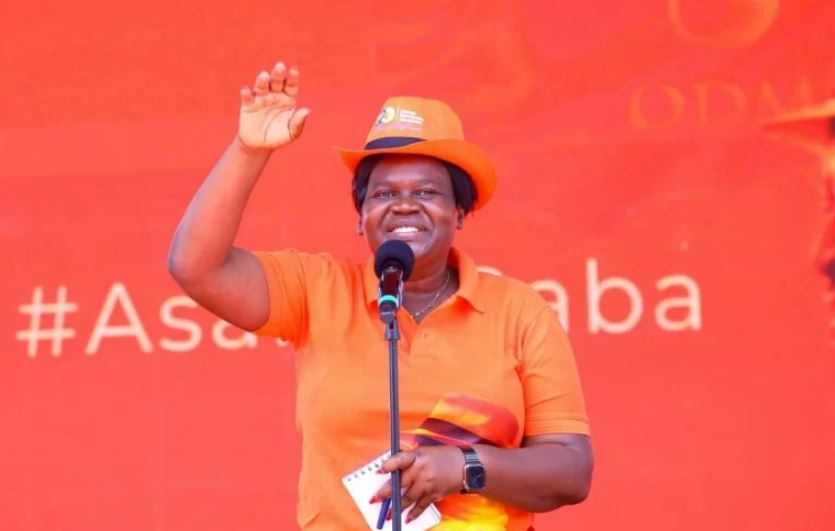
Speaking in Kisumu on Sunday, April 6, 2026, ODM leaders, led by party chairperson Gladys Wanga, argued that regional zoning remains a non-negotiable requirement for any future partnership with President William Ruto’s party. They cautioned that they will not accept a subordinate role in the upcoming political arrangement.
“If we are going for negotiations, we are going as equal partners, not as a weaker party,” Wanga stated.
The two parties currently appear to be operating with competing strategies. While UDA continues to ramp up its national presence through aggressive grassroots recruitment and candidate registration, ODM leaders insist that they will not cede control of their political heartlands, signaling a complex path forward for any potential pre-election coalition.
Several ODM Members of Parliament echoed Chairperson Wanga’s stance, vowing to block UDA from fielding candidates in the party’s traditional heartlands. The lawmakers signaled that they would not offer unconditional loyalty to their potential partners if the Orange party’s influence is sidelined during coalition talks.
“And we are not going to sing songs of praise to anybody if they are not going to know that on that table, ODM is very strong, and ODM can field everybody everywhere,” stated Kisumu County woman representative Ruth Odinga.
Alego Usonga MP Samuel Atandi went further, dismissing the possibility of compromise on the issue. He insisted that UDA must respect the geographical boundaries of ODM’s political territory and stay out of areas like Muhoroni.
“There is no negotiation when it comes to zoning. Because we are not going to allow UDA to plant candidates here in Muhoroni. All our party strongholds, all those strongholds are reserved for ODM,” he said.
However, the UDA leadership has flatly rejected these demands. Speaking in Kilifi on Saturday, April 4, 2026, UDA Secretary General Hassan Omar dismissed the calls for zoning as an attempt to stifle democratic competition. He argued that every political party possesses the right to seek votes in any corner of the country, regardless of historical voting patterns.
“ODM is saying the Coast is their stronghold and it should be left to them. I want to tell them that the Coast region belongs to its residents. They should allow us to compete fairly,” Omar said.
Omar challenged his counterparts to trust in their own popularity rather than seeking to lock out opponents through administrative agreements.
“If you believe this is your stronghold, then why are you worried? Come, campaign, and win. There is no problem,” he added.
Kileleshwa MCA Robert Alai also voiced a sharp dissent against proposals to zone the Nyanza region exclusively for the Orange Democratic Movement (ODM), branding the strategy as both selfish and ill-advised. Alai argued that such a move, championed by a specific faction of ODM leadership, offers no strategic value to President William Ruto should he enter a pre-election pact with the party.
In Alai’s view, zoning serves as a tool for powerful leaders to exploit the party’s regional influence, allowing them to handpick preferred candidates while denying others a fair chance to compete. The process typically involves informal agreements within coalitions to allocate specific constituencies or counties to certain allies, effectively stifling internal competition to consolidate power.
“Anyone zoning Nyanza as an ODM-only stronghold is trying to be a broker and reducing competition while not helping President Ruto in any way.”
Alai further suggested that those pushing for exclusivity are more interested in establishing personal dynasties than in genuine political cooperation. He cautioned against using party dominance to force relatives or cronies onto the electorate, calling instead for open and free competition.
“It’s foolish to zone Nyanza as an ODM-only stronghold when you are also trying to create a dynasty in the same Nyanza through ODM domination. Do not force your relatives on the electorate. Allow free competition. Zoning benefits brokers desperate to create their own dynasties,” he stated.
ODM National Chairperson Gladys Wanga has proposed zoning as a natural extension of the “broad-based government” spirit, citing the successful collaboration between UDA and ODM during the joint endorsements seen in the November 27, 2025, by-elections.