




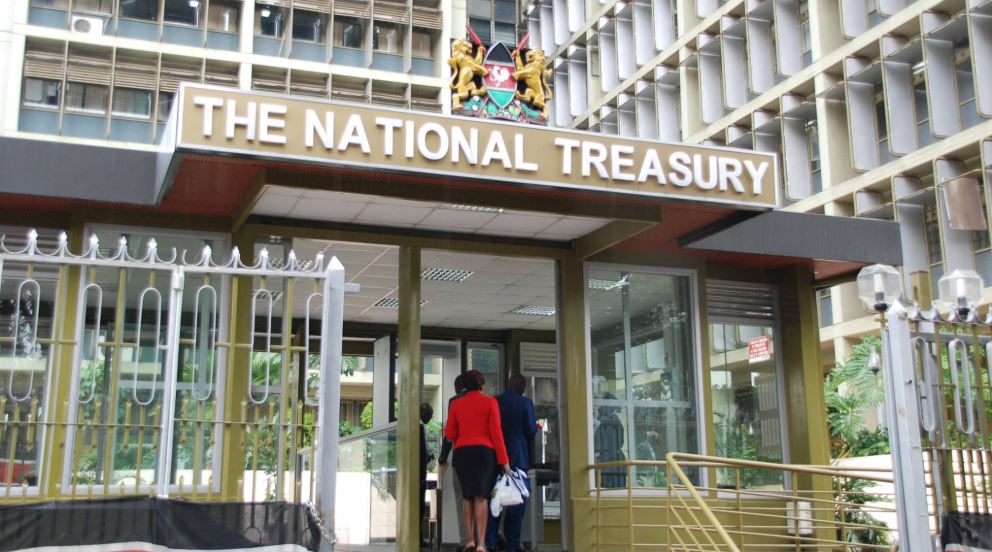
 A new international report has exposed how weak oversight, poor coordination among watchdogs, and a lack of technology allow billions of shillings to leak from Kenya’s public coffers through messy procurement.
The study, titled Peer Reviews of Competition Law and Policy: Kenya, was published by the Organisation for Economic Co-operation and Development (OECD) on Tuesday, March 17, 2026. It describes a system that is easy prey for cartels, price gouging, and offenders who rarely face consequences.
The report highlights that public procurement is one of the government’s biggest spending avenues, meaning any waste hits taxpayers incredibly hard.
“Public procurement accounts for approximately 60 percent of the government’s annual budget,” the report reads in part.
Weak enforcement sits at the heart of the problem. While Kenya has solid laws against collusion and bid-rigging, authorities rarely apply penalties. The review found that enforcement of these rules has been “limited” lately, despite the robust legal framework.
The report warns that this gap between the law and reality creates the perfect environment for price-fixing cartels. These groups inflate costs while providing low-quality services. A major failure highlighted in the report is the poor teamwork between the agencies that police procurement and competition. The Competition Authority of Kenya (CAK) and the Public Procurement Regulatory Authority (PPRA) mostly work in isolation, even though their responsibilities overlap.
The OECD suggests that these two agencies must collaborate much more closely and build shared tools to detect bid-rigging. Without this teamwork, suspicious bidding patterns continue to go unnoticed. To make matters worse, prosecution authorities play a limited role. The review notes that the CAK sometimes relies on other state bodies to enforce penalties, which slows down or even kills cases. When prosecution is weak, it becomes hard to collect fines, essentially protecting those who break the law.
Transparency in procurement remains out of reach. Only a small number of public agencies use centralized electronic systems, meaning most tenders escape real-time oversight.
The OECD has called on Kenya to expand digital tools that can automatically flag suspicious bidding or high-risk tenders before officials award any contracts. International experts use these systems to catch cartel activity early.
“Screening tools or audits of past tender procedures” could identify markets prone to collusion, the report advises.
Even when watchdogs catch wrongdoers, institutional gaps weaken enforcement. The Competition Authority of Kenya (CAK), the nation’s lead overseer, operates with far less money and staff than similar agencies around the world. In 2024, its total budget was roughly Ksh472 million, with only a fraction of that used for competition enforcement. The report warns that these budget cuts and staffing limits make it nearly impossible to dismantle complex procurement cartels that use sophisticated networks.
Staffing shortages further worsen the problem. The authority has just over 30 people working on competition issues – a number the OECD says falls far below what similar agencies in other countries have.
The combined impact of poor coordination, weak enforcement, technological gaps, and under-funded regulators has created a procurement system that is far too easy to manipulate. When cartels inflate contracts, the government pays more but gets less, stripping away money meant for vital services like health, roads, and schools.
The OECD warns that without quick reforms, Kenya could end up with a culture where collusion is the norm rather than the exception. Priority fixes include:
-
Strengthening teamwork between different government agencies.
-
Boosting funding and staff for enforcement teams.
-
Increasing transparency by using more digital tools.
-
Ensuring penalties are tough enough to actually scare off would-be offenders.
In the end, the report argues that fixing how the government buys goods and services isn’t just about good rules – it’s an economic necessity. A fair and competitive system could save taxpayers billions, providing a massive boost to national development and public welfare. Until those protections are solid, however, the country’s biggest spending tap will likely remain its biggest leak.