





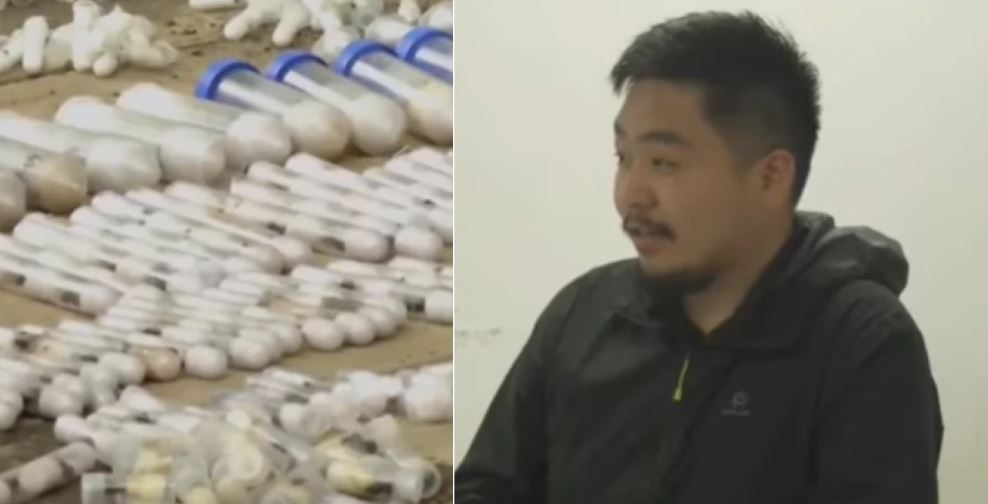
 Authorities at Jomo Kenyatta International Airport (JKIA) arrested a Chinese national on Wednesday, March 11, for attempting to smuggle queen garden ants out of Kenya.
Officials identified the suspect as the leader of an international ant-trafficking ring. Following his arrest, the court ordered his detention to provide investigators more time to build their case.
Kenya Wildlife Service (KWS) agents intercepted Zhang Kequn early Tuesday morning. He was attempting to transport nearly 2,000 queen garden ants destined for China. The suspect had packed some of the ants into specialized test tubes and hidden another 300 live ants inside rolls of tissue paper in his luggage.
“His personal search, and within that luggage, 1,948 garden ants were packed in specialized test tubes. A further 300 live ants were also recovered, which were again concealed in three rolls of tissue,” stated Allen Mulama, prosecutor at JKIA Law Courts.
This arrest follows a similar case from April 2025, where authorities at the same airport intercepted 5,000 giant African harvester ants. In that instance, police arrested two Belgians, a Vietnamese courier, and a Kenyan broker who intended to ship the insects to China.
Investigators now link those previous arrests to the same trafficking network they believe Kequn coordinates.
The suspect appeared before Magistrate Njeri Thuku, who granted prosecutors five days to detain him. This period allows detectives to perform forensic analysis on his seized iPhone and MacBook.
Additionally, detectives have expanded their search to Nakuru, Naivasha, and other towns where they suspect the group harvests these ants for the illegal market.
Under Kenya’s current legal framework, including the recently signed Wildlife Conservation and Management Act 2025, Zhang Kequn faces severe penalties. Kenyan courts have increasingly categorized insect smuggling as a high-stakes crime due to its impact on biodiversity and its links to international “biopiracy.”
Why are these ants being smuggled?
-
Exotic Pet Trade: Collectors in Asia and Europe pay high prices (up to $233 per queen) to keep them in transparent habitats called formicariums.
-
Biopiracy: This involves stealing biological resources without a country’s consent or fair compensation.
-
Ecological Risk: These ants are vital for soil health and seed dispersal; removing them harms the local environment.
Here is a breakdown of the potential legal consequences:
1. Trafficking and Illegal Export
KWS investigators have charged the suspect under sections of the law that prohibit dealing in wildlife species without a permit. For “ordinary” (non-endangered) species like garden ants, the law now carries the following:
-
Fines: Up to Sh20 million ($150,000+).
-
Imprisonment: Up to 10 years in jail.
-
Both: The court can impose both the fine and the prison term.
2. Biopiracy (The Nagoya Protocol)
Because the suspect allegedly leads a global syndicate, prosecutors often include charges of biopiracy. This involves the illegal extraction of biological resources for commercial gain without a benefit-sharing agreement with the host country.
-
If the court classifies these ants as an “endangered” or “threatened” species during forensic analysis, the fine can jump to Sh100 million, with a prison sentence of up to 20 years.
3. Recent Precedents
The Kenyan judiciary is establishing a strict “zero tolerance” approach towards these cases.
-
April 2025 Case: Magistrate Njeri Thuku (the same magistrate in the current case) fined four traffickers Sh1 million each or one year in jail for smuggling harvester ants. She famously noted, “No species is too small to protect.”
-
Escalation: Since Kequn is identified as the mastermind and a repeat offender (linked to previous foiled attempts), the prosecution will likely push for much harsher sentencing than the 2025 case to serve as a deterrent.
What happens next?
-
Forensic Audit: Detectives are currently analyzing Kequn’s electronics to trace the money trail and identify local harvesters in Nakuru and Naivasha.
-
Plea Hearing: After his five-day detention ends, he will return to the JKIA Law Courts to enter a formal plea.