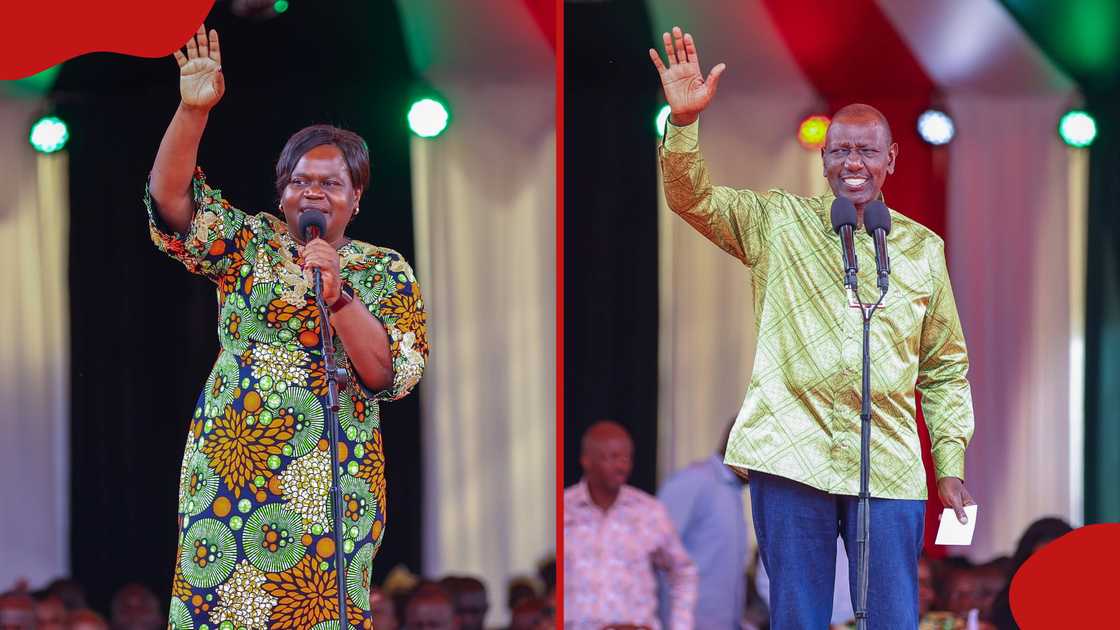






 A bold campaign to recall Nairobi Woman Representative Esther Muthoni Passaris is now officially in motion.
Four young Kenyans – Shakira Wafula, Mavin Mabonga, Dominic Omondi, and Sichei Soet – walked into the IEBC offices in Nairobi on Monday, July 28, and filed a written petition requesting that the two-term member be ejected from office. The message was clear: Nairobi requires responsible leadership, and Passaris has failed to meet the challenge.
The IEBC received the petition and began examining it to determine if it meets the requirements of being pursued under the law. Filed under Article 104 of the Constitution, which says that the people have a right to recall MPs after two years of service and not during the final year of serving, the move may prove to be historic. No Kenyan MP has ever been successfully recalled using this mechanism.
On social media, Kenyans on Twitter have been driving the recall push via the hashtag, #ByeByePassaris.
Why the Petitioners Want Passaris Out
Passaris is accused by the petitioners of having turned against the people to whom she was elected to represent, most notably women, and claiming that she has joined a regime that continues to suppress civil freedoms and to undermine public dissent.
One of their key grievances is that she has been supporting a contentious bill being debated in Parliament that would require protesters to seek permission in advance before holding demonstrations. The petitioners assert that this bill violates the constitutional guarantee of freedom of peaceful assembly and that Passaris’ endorsement of such an action is evidence of complicity in curtailing freedoms rather than protecting them.
Their petition also condemns Passaris for failing to stand with Nairobi residents during recent anti-government protests, which were brutally dispersed by police. Protesters, who were mainly women, were brutalized and in some cases allegedly subjected to sexual violence by security forces. During this time, Passaris, the elected official mandated to represent and defend women’s rights in Nairobi, allegedly remained publicly silent.
Questions Over NGAAF Funds
In addition to her stated positions, the petitioners also raise alarm regarding Passaris’ management of the National Government Affirmative Action Fund (NGAAF), intended to benefit vulnerable populations such as women, youth, and persons living with disability. They allege she has steadfastly declined to present audited financial statements or even basic information on how the funds have been distributed or spent.
This lack of transparency, according to petitioners, is a reason for grave concern about accountability and abuse of public funds during her term in office.
In addition, the petition accuses Passaris of disseminating false information and exaggerating her achievements in the public eye, further muddling the difference between her public image and performance.. They say this pattern of behavior reflects a disregard for truth and accountability, key pillars of ethical leadership.
The petition cites several constitutional provisions they believe the Woman Representative has breached, including:
- Article 10 – National values and principles of governance
- Article 35 – Access to information
- Article 73 and 75 – Ethical conduct of state officers
- Article 95 – Role of Members of Parliament
- Article 232 – Values and principles of public service
The group further refers to Chapter Six of the Constitution, which talks about leadership and integrity, and insists that Passaris’ actions do not meet the ethical and moral requirements that elected leaders must uphold when in office.
The petitioners view their campaign as considerably more than a constitutional exercise. They describe it as a civic and symbolic cause to restore power to ordinary Kenyans and to reassert public accountability.
The Recall Process Explained
If the IEBC approves the petition, the next phase will involve collecting at least 750,000 valid signatures – equivalent to 30 percent of Nairobi’s 2.5 million registered voters. Additionally, the signatures must include support from at least 15 percent of voters in at least half of Nairobi’s 85 wards.
After the signatures are filed, the IEBC will have 30 days to authenticate them. If successful, the Commission is required to inform the Speaker of the National Assembly, who is required by law to issue a call for a recall election within 90 days.
But the threshold for success is still high: 50 percent of registered Nairobi voters need to come out and vote, and the majority need to cast their votes in favor of the recall for it to succeed.
Despite the high legal and logistical hurdles to be surmounted, the petitioners are upbeat. They believe this movement can revive a culture of active citizenship and accountability and perhaps mark the start of a fresh era where politicians no longer take their seats for granted.
“I’m actually very confident that when we start collecting signatures, it will be possible to get more than one million. Despite filing the petition under my name, I represent many voices – people in social justice networks, online communities, and our neighbourhoods. We have the numbers. What I am more concerned about is the murkiness of the recall process itself,” said lead petitioner Ms Wafula.