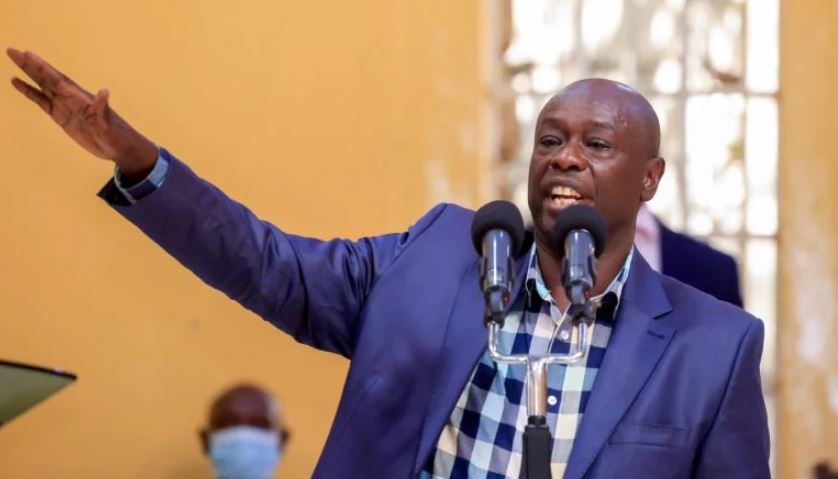





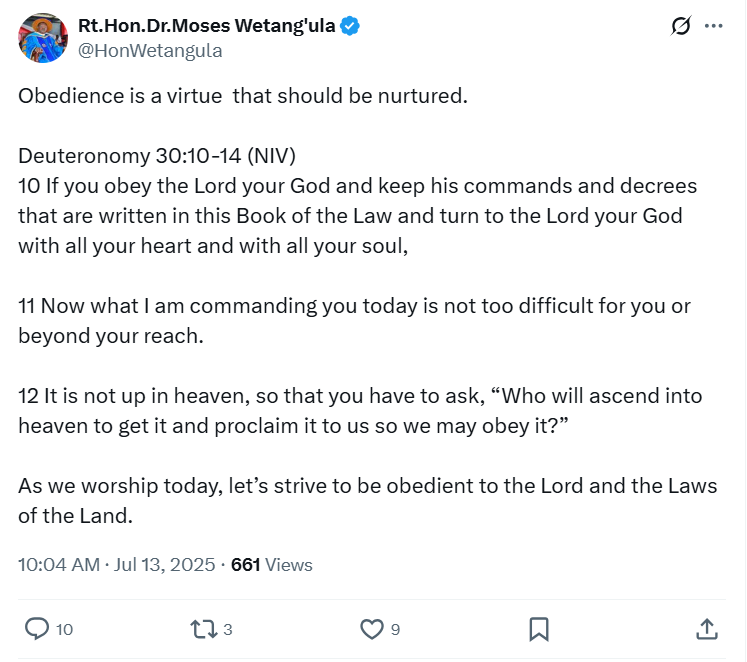
As Kenya grapples with escalating unrest, National Assembly Speaker Moses Wetang’ula has called on citizens to embrace obedience to both divine commandments and the laws of the land.
In a post on X on July 13, 2025, Wetang’ula quoted Deuteronomy 30:10-14, urging Kenyans to align with God’s will and national legal frameworks as they worship this Sunday.
His message comes at a time when the country is reeling from weeks of deadly protests that have exposed deep frustrations with the government.
The protests, on and off since mid-2024, intensified after a controversial tax bill sparked widespread outrage. The latest wave, marking the Saba Saba movement on July 7, 2025, saw demonstrations erupt in 17 of Kenya’s 47 counties, with protesters chanting “Ruto must go” and “wantam”.
The protesters, a youth-led group, accuse President William Ruto’s administration of economic mismanagement, rising taxation, and state-sponsored violence.
The unrest reached a peak on June 25, when protests in Nairobi turned deadly, leaving at least eight people dead and over 400 injured. Rights groups believe the actual toll may be higher, with the Kenya National Commission on Human Rights (KNCHR) raising concerns over the rising casualties and alleged extrajudicial killings.
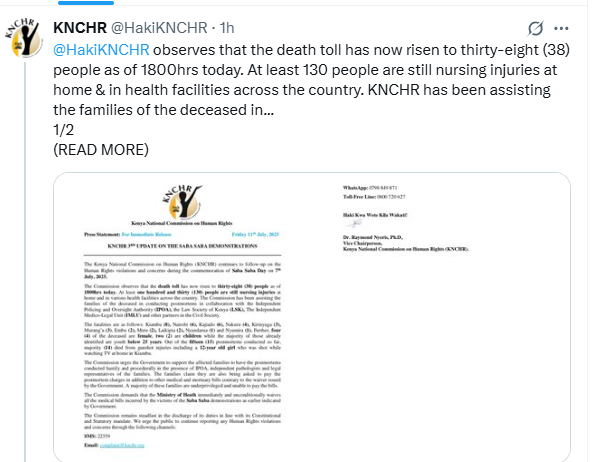
The Kenya National Commission on Human Rights (KNCHR) has confirmed that the death toll from the Saba Saba demonstrations has risen to 38, with at least 130 more people injured across the country.
In a press statement released Friday evening, July 11, 2025, the commission condemned the excessive use of force and called on the government to urgently address the mounting human rights violations.
According to KNCHR, the fatalities span several counties, with Kiambu recording the highest number at eight deaths, followed by Nairobi and Kajiado with six each.
“The Commission observes that the death toll has now risen to thirty-eight (38) people as of 1800 hrs today,” KNCHR stated. At least one hundred and thirty (130) people are still nursing injuries at home and in various health facilities across the country,” the statement read.
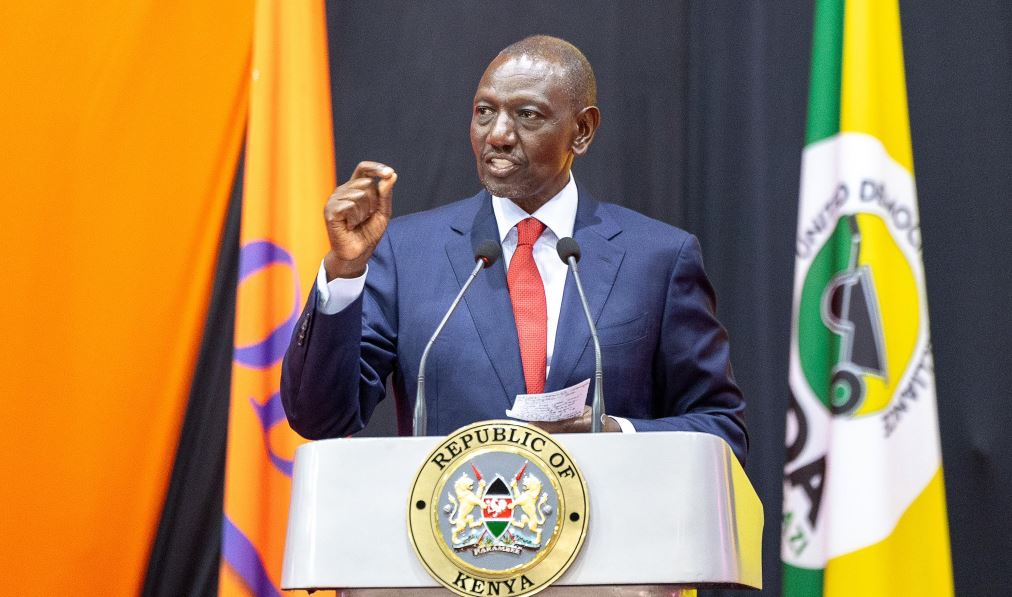
President Ruto has responded with a hardline stance. On July 9, he instructed police to shoot protesters targeting businesses in the legs to incapacitate them, rather than kill them. He defended the move as necessary, calling attacks on police officers a “declaration of war” and branding the protests “terrorism disguised as dissent”. His Interior CS, Kipchumba Murkomen, echoed these sentiments, blaming demonstrators for the violence.
Wetang’ula’s call for obedience appears to bolster Ruto’s narrative, urging compliance amid a crisis that has severely tested Kenya’s democratic fabric. With 85% of Kenyans identifying as Christian, according to the 2019 census, Wetang’ula’s biblical framing may resonate with many.
However, critics argue it risks alienating citizens who view the government’s actions as oppressive. As tensions persist, the country waits to see whether calls for law and order will calm the storm—or deepen divisions.