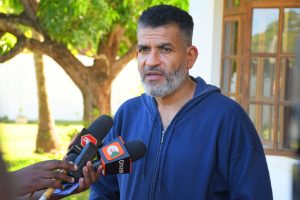
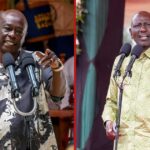

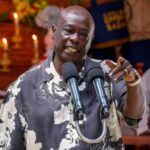

Political activist Fanya Mambo Kinuthia has urged young people to refrain from taking part in the upcoming Saba Saba protests, which are just around the corner.
Speaking on a popular podcast on July 2, Fanya Mambo warned that the protests are likely to turn bloody, as has been the case in the past, with many young people losing their lives on the streets.
According to him, he foresees a situation similar to that of June 25, where peaceful protests were infiltrated by goons.
He believes the Saba Saba protests might be even worse, with goons hired by business owners to guard their premises, others by the state, and police equipped with anti-riot gear ready to confront protesters.
He said such a situation will not be favourable for any young person genuinely taking part in the demonstrations.
“I will not tell you if it is worth going to the streets or not, but I will paint a picture of how our streets are going to look: one, there will be innocent Gen Zs with flags and water on the streets; two, there will be a collection of horrible goons brought by politicians, as they are always doing, to come and beat up innocent demonstrators.
“The shop owners have decided that enough is enough; they have decided to arm their own. Ask yourself as a young person, Where do you fit in?” Fanya Mambo said.
Personal decisions
He added that, in the past, he has always been at the forefront, protesting and standing with young people in their cause.
However, for Saba Saba, he will not attend or take part in the protests, as he expects the scenes to be too ugly to witness and has therefore decided to completely refrain.
“I have made a personal decision as Fanya Mambo. I won’t be there, and the reason I won’t be there is that there will be so much blood. The government has succeeded in making the young people see these protests as violent and keep off, but they have not succeeded in dealing with the reasons that are making them not go to the streets,” he added.
He also pointed out that the state has succeeded in instilling fear among young people, making them view protests as violent and dangerous, but has failed to address the very issues that are driving them to the streets.
According to Kinuthia, he does not encourage any young person to take part in the protests since the original intention of the demos has been tarnished.
Origin of Saba Saba protests
On July 7, 1990, Kenya’s Saba Saba protests marked a turning point in the fight for multiparty democracy.
Under Daniel arap Moi’s regime, a 1982 constitutional amendment had entrenched KANU’s one-party rule, stifling dissent. Economic hardship, corruption, and the murder of Foreign Minister Robert Ouko fuelled public anger.

Activists like Kenneth Matiba and Charles Rubia planned a pro-democracy rally at Nairobi’s Kamukunji Grounds, demanding political reform. Despite government bans and the arrests of key organisers, thousands gathered on July 7, sparking nationwide protests. Police responded with tear gas, batons, and live bullets, killing over 20 people and injuring thousands.
The four-day unrest, which spread to Nakuru and Nyeri, highlighted widespread discontent. The Saba Saba protests forced Moi to repeal Section 2A in 1991, restoring multiparty politics. This ‘Second Liberation’ movement laid the groundwork for Kenya’s democratic reforms, though challenges like police brutality persist during annual commemorations.