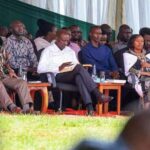





Former Interior Cabinet Secretary Fred Matiang’i has denied any responsibility in the Ruaraka land saga that has cast a bleak shadow on his stint in public service.
Speaking during an interview on Tuesday, July 1, 2025, Matiang’i revealed that he only played a perfunctory role as the then-cabinet secretary for education at the time of the sale of the land.
“Under the law today, the compulsory acquisition of any public land can only be done by the National Land Commission (NLC). No cabinet secretary can orchestrate the compulsory acquisition of public land,” Matiang’i narrated.
Due diligence
“So, the process is very simple: NLC does the due diligence, and the Minister for Education has no land records to ascertain whether or not land belongs to the public or private individuals. This is the responsibility of the NLC.”
“What the chairman of NLC asked the PS, not even me, actually, is to present a document signed by me to confirm public interest in that school. That is a school that receives teachers from the Teachers Service Commission (TSC) and capitation from the government,” he explained.
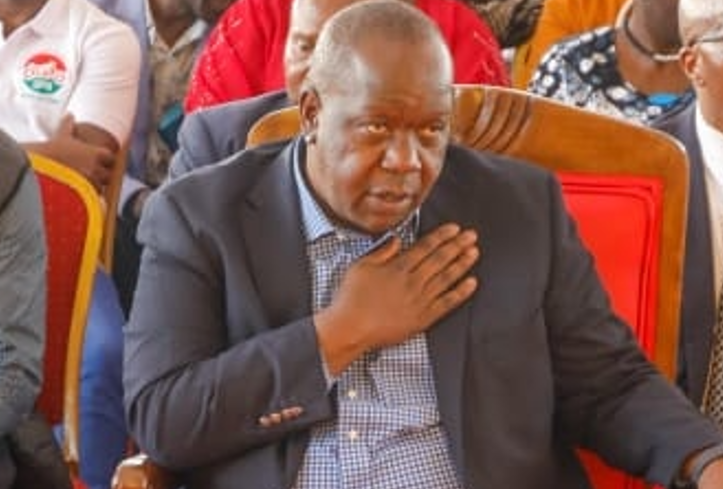
“That is the public interest that we confirmed in the school; the process of acquisition and everything else was a matter of the NLC. Even then, we did not have a budget in the Ministry of Education to buy the land.”
“My role was less than peripheral in the matter. To this day, I wonder why my detractors and everyone who wants to insult me come up and call me Ruaraka land thief,” Matiang’i observed.
The Ruaraka land saga
At the heart of the matter is the alleged fraudulent acquisition of land housing Ruaraka High School and Drive Inn Primary School, for which the government purportedly paid Ksh1.5 billion, despite a High Court ruling affirming it as public land.
Matiang’i, who served as the Cabinet Secretary for Education at the time the payment was initiated, found himself at the centre of the storm.
Allegations against him primarily revolve around his purported disregard for a Quality Assurance and Standards Investigative Report.
This report, compiled by a committee he himself constituted, had concluded that the land had already been surrendered as a public utility, and therefore, no basis existed for compensation.
Critics accuse Matiang’i of proceeding with the payment despite this crucial finding, leading to the loss of public funds.