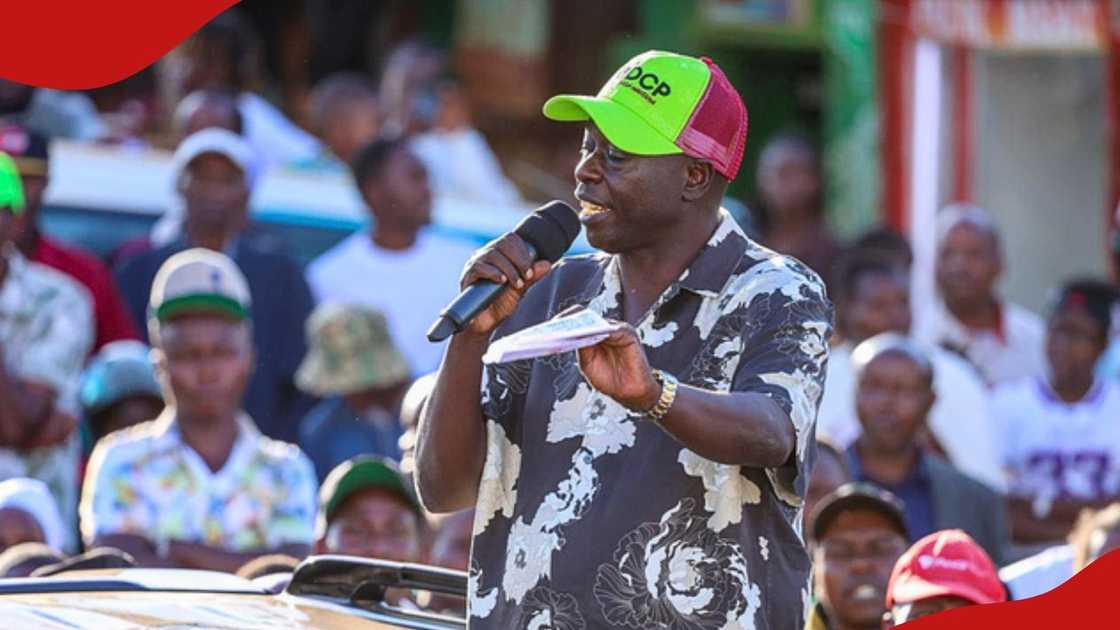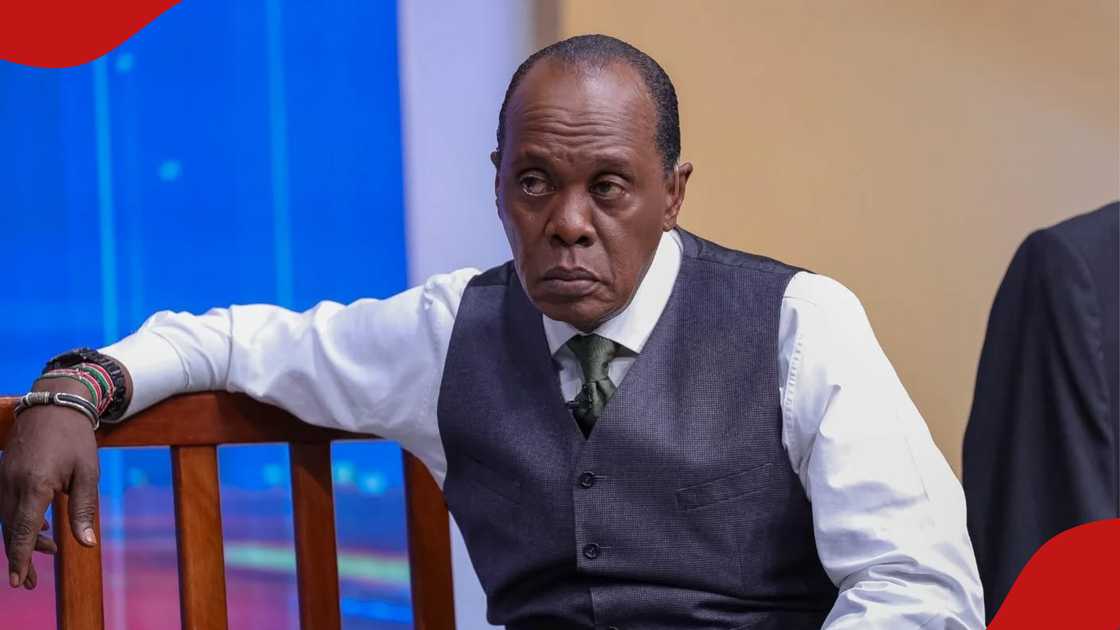





Kenyan rapper and activist Octopizzo has taken aim at Interior Cabinet Secretary Kipchumba Murkomen over newly announced police reforms, accusing him of offering cosmetic changes in the face of deep-rooted brutality within the police service.
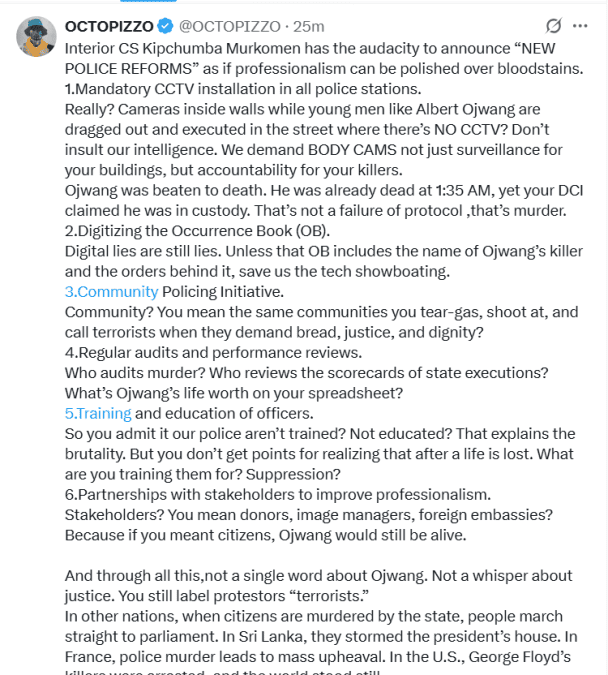
In a strongly worded post on X on Monday, June 16, 2025, Octopizzo described the reforms as an attempt to apply polish over bloodstains, citing the killing of Homa Bay-based teacher and blogger Albert Ojwang as a glaring example of impunity within the system.
Murkomen’s plan, unveiled during a State of the Nation address, includes the installation of CCTV cameras in all 1,209 police stations, digitisation of the Occurrence Book (OB), and enhanced officer training. But for Octopizzo, these measures fall far short of delivering justice.
“Cameras inside walls while young men like Albert Ojwang are dragged out and executed in the streets where there’s no CCTV? Don’t insult our intelligence,” the rapper posted, calling for body cameras and public accountability for officers involved in human rights abuses.
Ojwang’, a secondary school teacher, was arrested on June 6, 2025, for criticising a senior police officer online. Days later, he was confirmed dead in police custody. While officers initially claimed he died by suicide, medical reports revealed he had been severely beaten, fuelling nationwide outrage and calls for justice.
Octopizzo’s criticism has amplified growing pressure on the government, especially as only one officer, Constable James Mukhwana, has so far been arrested in connection to the death.
The rapper accused the government of shielding senior officials, including Deputy Inspector General Eliud Lagat, from accountability.
“Not a single word about Ojwang. Not a whisper about justice,” Octopizzo wrote, adding that Kenyans must push beyond reforms and demand accountability, just as citizens did in the wake of George Floyd’s 2020 death in the U.S.
Octopizzo concluded his post by urging the government to name, prosecute, and jail those responsible.
“The blood has already dried. The country has seen it. And we will not forget.”
As public anger mounts, pressure is now on the state to act decisively and restore trust.