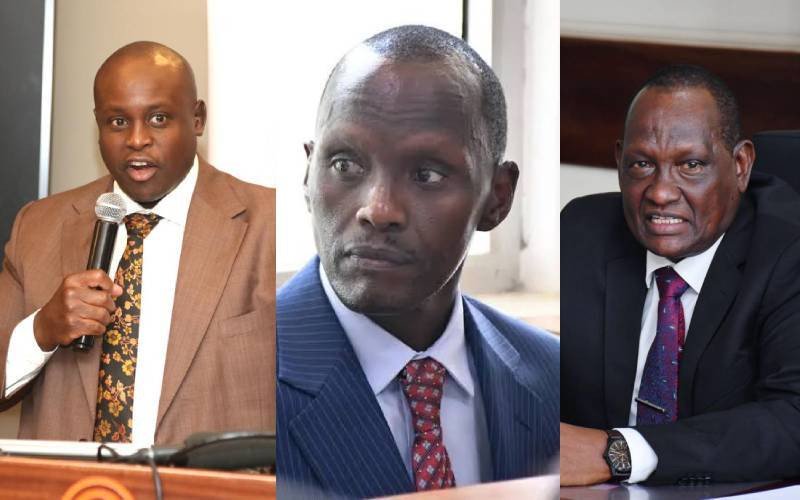

 The death of teacher Albert Ojwang in police custody has escalated into a national crisis that is now tugging directly at the future of Deputy Inspector-General (DIG) Eliud Lagat.
Police version of Ojwang fatally injuring himself in a Nairobi cell, quickly fell apart after an autopsy ruled the death a strangulation homicide; prompting street protests, parliamentary outrage, a presidential rebuke, and loud calls for Lagat’s removal.
The DIG was after all the complainant, and the officers were supposedly acting on his orders, breaking multiple procedures and perhaps a few laws on the processing of suspects.
Kenyan law makes a DIG’s removal surprisingly simple: under Section 17 of the National Police Service Act, the President alone may “remove, retire or redeploy” a DIG at any time before retirement age.
Whether President William Ruto will wield that power, or allow criminal or parliamentary processes to run first, now defines the stakes of this fast-moving saga.
Calls for his resignation or removal from office are growing louder, including from members of the president’s own party. Kericho Senator Aaron Cheruiyot being the latest to urge his ‘friend’ Lagat to step aside.
Sen. @Aaroncheruiyot (Kericho): I advise the Deputy Inspector General of Police, Mr Lagat, who is my friend, that nobody has said that you’re guilty but for the country to appreciate what really happened that he steps aside until investigations are concluded. #SenateLive pic.twitter.com/FkFBbbvWih
— Senate of Kenya (@Senate_KE) June 11, 2025
A Tweet, an Arrest, a Death
On 4 June 2025 Ojwang used his X account to claim that DIG Lagat faced a corruption probe, a post the National Police Service labeled “false and defamatory.”
Three days later plain-clothes officers arrested the blogger in Homa Bay, bundled him into a vehicle, and drove him nearly 400 kilometres to Nairobi Central Police Station. Fellow activists say he arrived bloodied and disoriented.
At dawn on 8 June officers reported that Ojwang had “banged his head against the wall and succumbed to injuries,” calling the death a suicide.
A post-mortem led by pathologist Dr Bernard Midia found neck compression, severe head trauma and multiple soft-tissue injuries “consistent with assault from a third party,” ruling out self-harm.
The Independent Policing Oversight Authority (IPOA) has since disclosed that key CCTV cameras inside the station were “interfered with,” deepening suspicion of a cover-up.
Public anger spilled into Nairobi’s streets on 9 June; police responded with tear gas. Inside Parliament, Migori Senator Eddy Oketch formally sought a Senate probe while Kakamega Senator Boni Khalwale demanded Lagat’s immediate arrest.
Manyatta MP Gitonga Mukunji and Nairobi Woman Representative Esther Passaris issued starkly different reactions—Mukunji called for the jailing of every officer on duty, while Passaris urged calm but later apologised for misstating facts in an online post.
President William Ruto broke his silence on 11 June, terming the death “heart-breaking and unacceptable” and ordering the police service to cooperate fully with IPOA detectives.
How the Law Allows a Swift Exit for a DIG
Kenya’s Constitution guards the Inspector-General with a tribunal-based removal process, but deputies enjoy no such shield.
Section 17 of the National Police Service Act states plainly: “The President may remove, retire or redeploy a Deputy Inspector-General at any time before the Deputy Inspector-General attains the age of retirement.”
What that means in practice:
- Presidential instrument: A brief Gazette notice citing Section 17 is enough; no tribunal, no parliamentary vote.
- Vacancy rule: Within 14 days the President must appoint a new DIG on the recommendation of the National Police Service Commission, but Parliament cannot veto either decision.
- Court challenge: A fired DIG may seek judicial review under Article 47 (fair administrative action). Kenyan judges have tended to award damages, not reinstatement, in similar senior-security disputes. (No case filed yet.)
Parallel routes remain possible: the Inspector-General or the Director of Public Prosecutions could first suspend and charge Lagat with the offences in question, allowing criminal law to supersede administrative removal.
What Comes Next?
- Petitioners are expected to file a private prosecution against the DIG, but court processes are long.
- The DIG may bow to pressure and step aside to allow for investigations.
- President Ruto wields his power and dismisses the DIG