





PHOTO/@CBKKenya/X
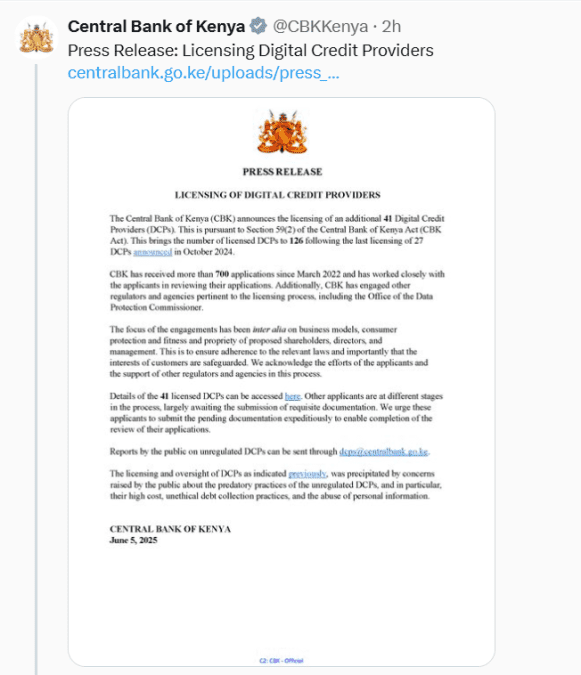
The Central Bank of Kenya (CBK) has licensed 41 additional Digital Credit Providers (DCPs), raising the total number of licensed operators to 126 in a bid to curb predatory lending practices.
This marks a significant step in the CBK’s ongoing efforts to regulate Kenya’s digital lending sector and protect borrowers from predatory practices.
“The focus of the engagements has been, inter alia, on business models, consumer protection, fitness, and propriety of proposed shareholders, directors, and management,” part of a post on their official X dated June 5, 2025, read.
The rise of digital lending in Kenya has made credit easily accessible via mobile apps, but this growth has also fuelled reports of predatory practices. Concerns have included high interest rates, aggressive debt collection, and misuse of borrower data.
In response, CBK introduced the Digital Credit Providers Regulations in 2022, aiming to enforce better corporate governance and ethical practices within the sector.
CBK in the post noted that they received more than 700 applications since March 2022 and worked closely with the applicants in reviewing their applications; they also engaged other regulators and agencies pertinent to the licensing process, including the Office of the Data Protection Commissioner.
The licensing is guided by the Central Bank of Kenya (Amendment) Act 2021, which took effect in December 2021. This act gave CBK the authority to oversee previously unregulated DCPs, responding to persistent public concerns about exploitative lending practices.
CBK noted that the licensing process has been rigorous, involving close collaboration with applicants and other regulators, including the Office of the Data Protection Commissioner. The vetting process focuses on evaluating business models, ensuring consumer protection, and verifying the fitness of proposed shareholders, directors, and management.
“This is to ensure adherence to relevant laws and, importantly, that the interests of customers are safeguarded,” the CBK stated.
Previous CBK interventions, such as Gazette Notice No. 55 of April 2020, tackled these issues by removing negative credit listings for loans under Ksh 1,000 and preventing non-bank DCPs from sharing credit information.
The current licensing push builds on these reforms, seeking to create a safer and more transparent digital lending environment.
CBK has urged the public to report unregulated digital lenders via email at [email protected]. The regulator also noted that some applicants are at different stages of the licensing process, awaiting the submission of required documentation. CBK has called on these applicants to expedite their submissions.
The details of the newly licensed digital lenders have been made publicly available on the CBK’s website. This move aims to foster transparency and enable consumers to make informed decisions when accessing digital credit.
As Kenya continues to embrace digital financial services, CBK’s regulatory efforts are expected to build trust in the sector while safeguarding consumers. For millions of Kenyans, these measures offer hope for a more equitable and responsible digital lending landscape.
You might also like