






The National Assembly has introduced a bill that seeks to decriminalise attempted suicide and shift the national approach from punishment to mental health support.
According to a statement by the National Assembly, the Penal Code (Amendment) Bill, 2024 (National Assembly Bill No. 53), sponsored by Anthony Oluoch (Mathare MP), was read for the first time in parliament on Wednesday, June 4, 2025.
The bill proposes to delete Section 226 of the Penal Code, which currently criminalises attempted suicide.
Section 226 of the Penal Code states that any person who attempts suicide is guilty of a misdemeanour and liable to imprisonment of up to two years, a fine, or both.
“Sponsored by Anthony Oluoch, the proposed amendment will decriminalise suicide and enable attempted suicide to be seen as a serious problem requiring mental health interventions and not be treated as a criminal offence,” read the statement.

If passed, the law will represent a major shift in Kenya’s legal and public health landscape, aligning the country with global efforts to address mental health more humanely and effectively.
The World Health Organisation (WHO) and the United Nations Sustainable Development Goals (SDGs) both urge countries to decriminalise suicide as part of their commitment to reduce the global suicide rate by one-third by 2030.
According to the WHO, criminalising suicide discourages individuals from seeking help and compounds stigma, making interventions harder to access at critical moments.
The agency notes that at least 23 countries still treat suicide or suicide attempts as criminal offences, a significant barrier to effective suicide prevention.
High Court ruling
This follows a High Court ruling that decriminalised attempted suicide in Kenya in January 2025, ruling that the provision in the Penal Code which criminalises the act is unconstitutional.
The ruling was issued by Justice Lawrence Mugambi, who declared that Section 226 of the Penal Code violates fundamental human rights enshrined in the Constitution.
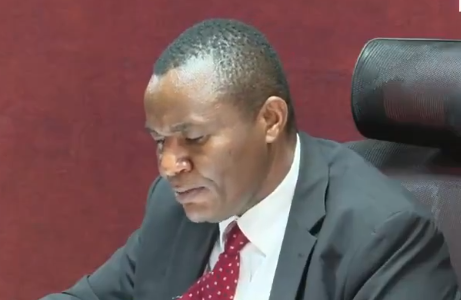
Mugambi ruled that the provision contravenes Articles 27 (equality and freedom from discrimination), 28 (human dignity), and 43 (the right to health) of the Constitution.
“It is my finding that applying the purpose and effect principle of constitutional interpretation, Section 226 of the Penal Code offends Article 27 of the Constitution by criminalising a mental health issue, thereby endorsing discrimination on the basis of health, which is unconstitutional,” he ruled.
“It also indignifies and disgraces victims of suicide ideation in the eyes of the community for actions that are beyond their mental control, which is a violation of Article 28, The existence of Section 226 exposes the survivors of suicide and potential victims with suicide ideation to possible reprisals, thereby eroding the right to have the highest attainable standard of health.”