



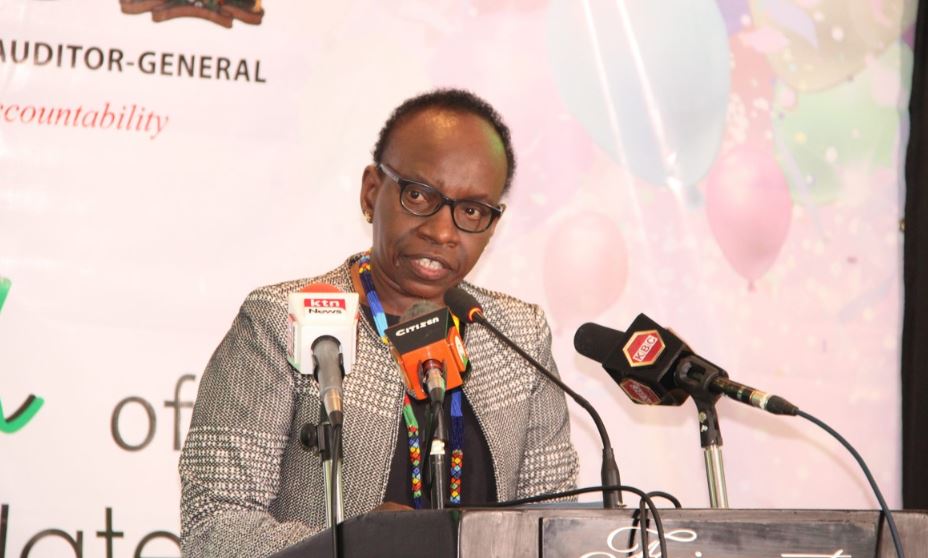
 An audit report tabled before the National Assembly on February 26 has exposed a massive financial mystery involving billions of shillings intended for the medical care of Kenya’s public workers. Auditors revealed they cannot trace, reconcile, or account for the vast sums allocated to the Public Officers Medical Scheme Fund (POMSF), raising serious questions about the management of the state-backed initiative.
Auditor-General Nancy Gathungu has issued a formal warning regarding the fund’s financial health for the year ending June 30, 2025, stating that the books are so riddled with gaps that their accuracy is completely unreliable. Her findings describe a system operating in a vacuum of internal controls, characterized by mystery payments and a disturbing absence of records.
The report highlights a staggering Sh2.6 billion in benefit payouts that lack even the most basic documentation. The fund failed to provide essential details for these transactions, such as:
-
Member Identification: SHA numbers, names, and employer details of beneficiaries.
-
Medical Data: Types of medical interventions, admission dates, and discharge dates.
-
Financial Tracking: Specific claim amounts and formal approval records.
Furthermore, the audit noted that payment schedules omitted the names and classification levels of the healthcare facilities involved, violating Kenya Medical Practitioners and Dentists Council (KMPDC) standards.
The records also failed to clarify whether any public officers received treatment overseas or which specific facilities had been contracted to provide such high-end services. This lack of transparency makes it impossible to verify if the billions of shillings actually reached the civil servants they were intended to help.
The Auditor-General’s report delivered a staggering blow to the Public Officers Medical Scheme Fund, declaring that the accuracy and completeness of Sh6.3 billion in benefit expenses simply cannot be confirmed. The audit uncovered a chaotic financial landscape where the vast majority of the fund’s reported income – roughly Sh5.32 billion, or over 80 percent – lacks any supporting documentation. While the fund’s books claim a total income of Sh6.53 billion, the only verifiable transaction is a single payment of Sh1.2 billion received from the Public Service in February 2025.
The discrepancies extend beyond income to the fund’s purported assets. Gathungu flagged Sh5.2 billion in trade receivables – money allegedly owed to the fund – that appears to exist only on paper. Management provided no ledgers or schedules to identify the debtors or prove that these funds are even collectible.
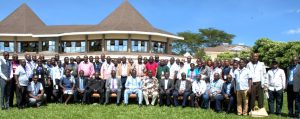
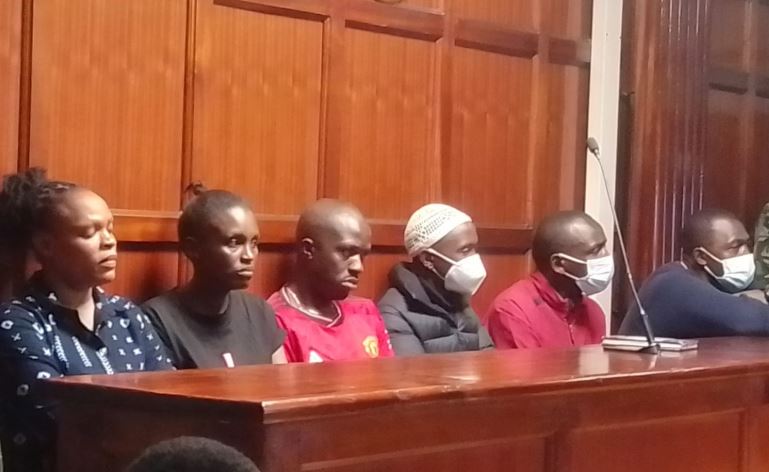
At the center of this administrative breakdown was a management team led by CEO Mercy Mwangangi and six directors. The gravity of the situation was underscored by the October 2025 arrest of Robert Mbarani Ingasira, the Director of Funds and Finance Management, who faced charges of conspiracy to defraud the SHA through fraudulent medical claims.
Gathungu’s conclusion, reached under the Public Audit Act, highlights two catastrophic governance failures:
-
Lack of Policy Framework: The fund operates without a formal policy document, meaning there are no established rules for decision-making, implementation, or the protection of public money.
-
Missing Employer Contracts: Management failed to produce a list of contributing employers or their signed contracts. These documents are vital, as they should detail premium amounts, employee counts, and specific medical packages.
Without these foundational elements, the Auditor-General noted that it is impossible to verify if any internal controls exist to prevent fraud.
Consequently, the report ended with a grim assessment: “In the circumstances, the effectiveness of internal controls over management of the Public Officers Medical Scheme Fund could not be confirmed.”