



Kakamega County has recorded the highest average bribe in Kenya, according to the Kenya National Gender and Corruption Survey 2025 released on Thursday.
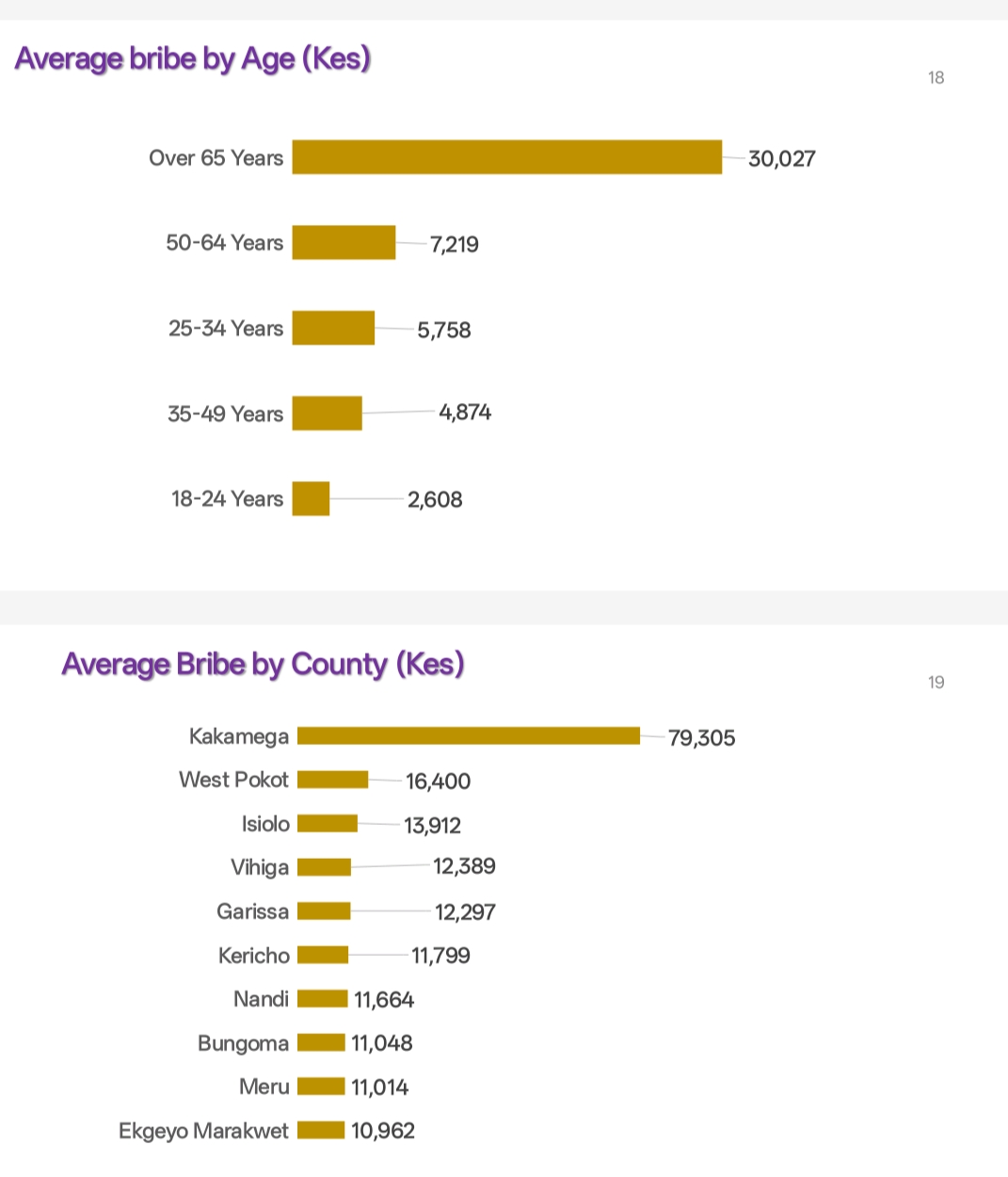
The study, which provides the first-ever comprehensive, gender-disaggregated insights into how corruption manifests, places Kakamega at the top with an average bribe of Ksh 79,305. It is followed by West Pokot (Ksh 16,400), Isiolo (Ksh 13,912), Vihiga (Ksh 12,309), and Garissa (Ksh 12,297).
Other counties in the top 10 include Kericho (Ksh 11,799), Nandi (Ksh 11,664), Bungoma (Ksh 11,048), Meru (Ksh 11,014), and Elgeyo Marakwet (Ksh 10,962).
According to the anti-graft commission, the findings reveal an upward trend in the national average bribe, which increased significantly from Ksh 4,878 in 2024 to Ksh 6,724 in 2025.
“This upward trend, coupled with the fact that 74.2% of Kenyans now rate corruption as high, underscores the urgency of our mission,” said the EACC CEO during the launch.
The report identified law enforcement, licensing, and land administration as the sectors with the highest incidences of bribery.
“Interestingly, these high-corruption sectors—such as NTSA (92.9% male) and the Police (88.8% male)—are overwhelmingly dominated by male officers”, he said while calling for concerted efforts to curb the menace.
The report, which highlights significant disparities in bribe amounts, puts the Judiciary in the spotlight, with magistrates receiving the highest average bribes at Ksh 164,367, followed by land registry officials (Ksh 17,996).
MCAs receive an average of Ksh 13,038, followed by immigration officers (Ksh 12,102) and prosecutors (Ksh 11,809), while police officers receive the lowest average bribes at Ksh 4,656.
The Commission said it will immediately deploy undercover integrity testing and enhanced monitoring in high-bribery sectors.
“We have set a clear target: to reduce bribery prevalence in these identified areas by at least 20 percent within the next six months”, Mohamud stated.
Further, the survey found that senior citizens pay higher bribes.
Respondents aged over 65 reported the highest average bribes at Ksh 30,027, compared to Ksh 7,219 among those aged 50–64, while those aged 18–24 paid the lowest, at Ksh 2,608.
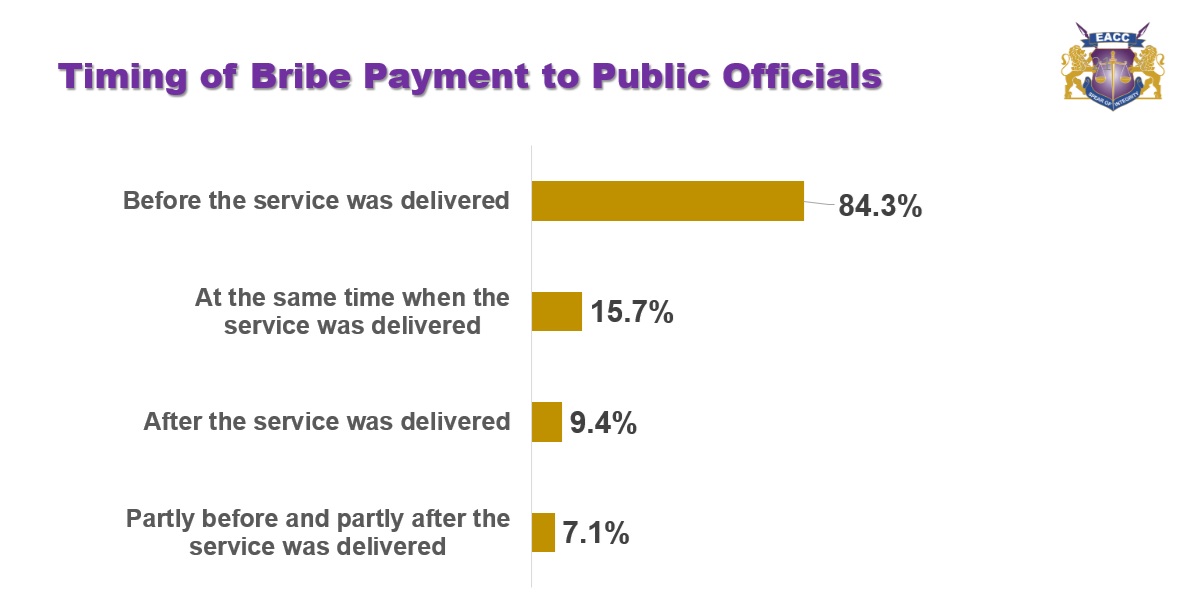
The study also captures the timing of bribe payments, with 84.3% of respondents paying before services were delivered, while 7.1% reported paying partly before and after receiving the service.
Meanwhile, the commission decried the low rate of reporting bribery incidents.
“Only a small fraction of those who encounter corruption actually report it, often due to a lack of secure channels or fear of retaliation. We must bridge this gap by establishing confidential, digital reporting platforms that protect whistleblowers”, Mohamud says.
It is also advocating for mandatory adoption of electronic fee payments for all high-risk services, including the issuance of IDs, passports, and court processes, among other interventions.