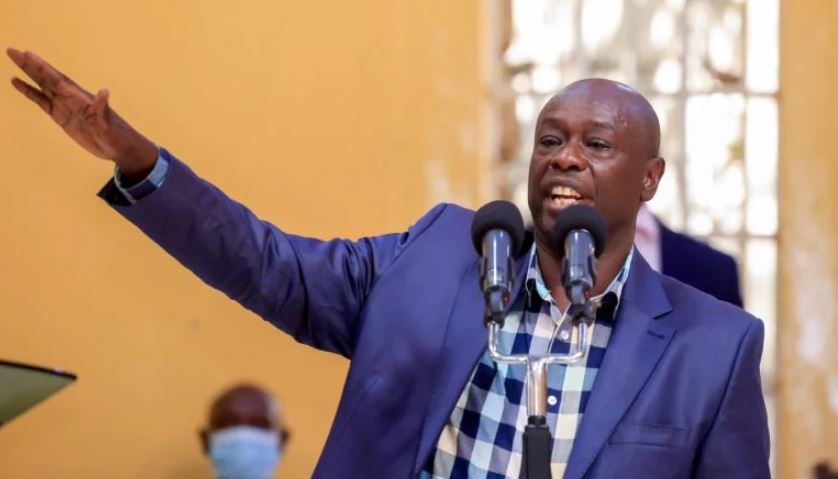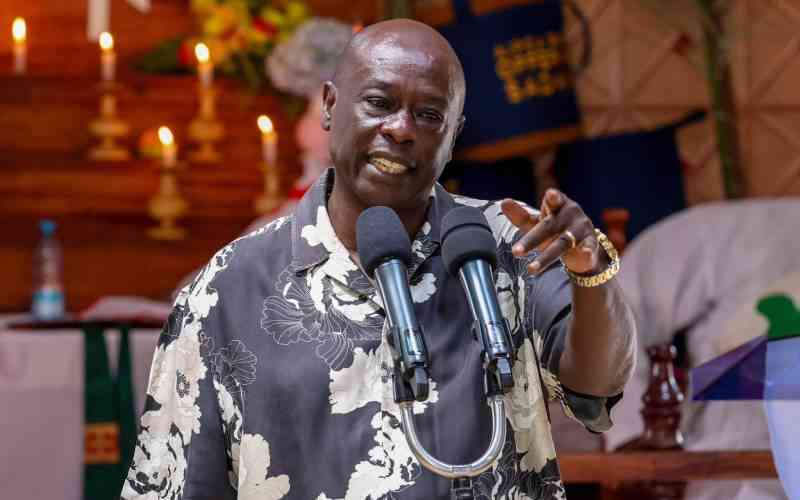




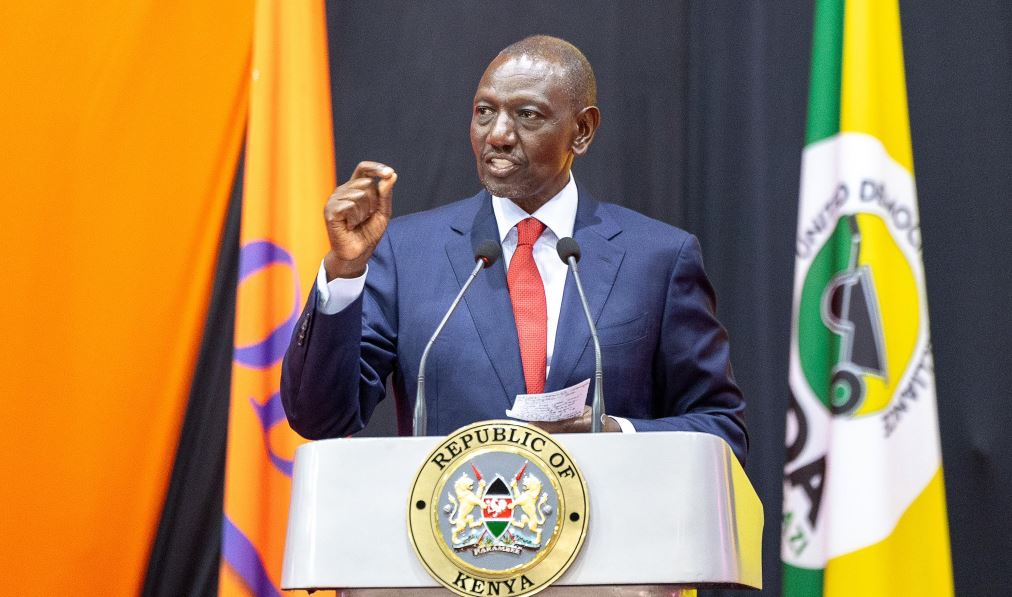
 President William Ruto has issued a stern warning to cartels operating within the petroleum industry, vowing severe punishment for any actors attempting to profit from the ongoing crisis in the Middle East. During a church service in Kilgoris Constituency, Narok County, on Sunday, the president declared that his administration will not allow a handful of opportunists to exploit Kenyans through corruption in the energy sector.
The President pledged that the government will purge the industry of all profiteers and organized interests, promising decisive action against those undermining the nation’s economic stability.
“We will deal firmly, decisively and conclusively with all the cartels in the oil sector,” he said.
President Ruto also asserted that all individuals entrusted with public responsibility within the petroleum ministry and its agencies must remain fully accountable for their actions. He drew parallels between the current crackdown and his administration’s previous efforts to dismantle entrenched interests in the agricultural sector, noting that the government successfully marginalized the groups that had historically exploited tea, coffee, and sugar farmers for decades.
“We are committed to the fight against impunity. We have stopped cartels in the sugar, coffee, and tea sectors, and we will similarly stop those in the petroleum sector,” he said.
President Ruto also confirmed that his administration has taken disciplinary action against cartels involved in the distribution of substandard and counterfeit fertilizer. He cited these efforts as part of a broader mandate to purge systemic corruption across key economic sectors.
Simultaneously, the president urged citizens to reject ethnic politics, characterizing such divisions as outdated and harmful to national progress. He called for a unified approach to development, noting that political discourse based on hatred or seclusion only stalls the country’s potential.
“We must reject divisive politics, hatred and tribalism and work together in ensuring shared prosperity for all,” the president said. “If we want our nation to be truly blessed, we should work in unity.”
By focusing on shared prosperity, Ruto suggested that Kenyans can better navigate current economic challenges. His remarks signaled a clear push to move the national conversation away from identity-based grievances and toward structural economic reform.
President Ruto at the same time assured Kenyans that the national economy remains stable, highlighting key indicators such as reduced inflation and a steady exchange rate. The president reported that inflation has dropped to 4.3 percent and that the exchange rate has held firm at approximately Ksh. 129 per U.S. dollar for the past 18 months. He also noted that foreign exchange reserves have reached a historic high of $14.6 billion.
“I can confidently tell you that we have stabilized our economy,” Ruto said.
Beyond these macroeconomic indicators, the president highlighted significant achievements in his administration’s agenda, particularly in education. He pointed to the construction of 23,000 new classrooms and the recruitment of 100,000 teachers over the last three years, alongside improvements in higher education financing. In Narok County specifically, he announced the establishment of two major sugar companies designed to bolster local farming.
Regarding universal healthcare, the President reported that 415,000 residents in Narok County have registered with the Social Health Authority (SHA), and he encouraged those who have not yet enrolled to do so to take full advantage of these services.
The event also featured insights from Prime Cabinet Secretary Musalia Mudavadi, who contextualized the ongoing global petroleum challenges. He suggested that the current volatility in the energy sector serves as a powerful reminder for the country to prioritize the adoption of electric vehicles to build long-term transport resilience.