


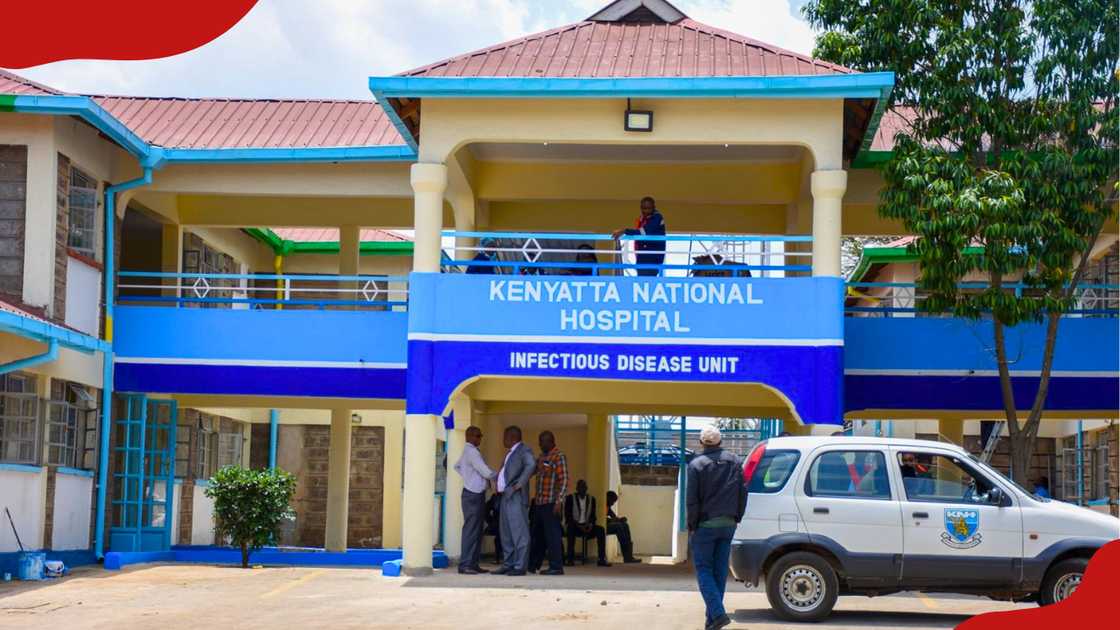
- Kenyatta National Hospital gave 7 days notice to families to collect 480 bodies that have been stored there for a long time
- Most of the bodies are children, with the hospital warning that it may seek court approval for burial if the deadline passes.
- The legal system and recent court decisions may affect how long the bodies can stay in morgues and what happens if they are not claimed.
The Kenyatta National Hospital (KNH) has put hundreds of unclaimed bodies at risk of burying them within a few days as the date is fast approaching.
Source: Facebook
KNH gave a seven-day notice to the public to identify and collect the remains of 480 people who lay in its Farewell Home mortuary.
In a public notice written on Monday, March 23, the hospital warned that failure to act within the stipulated period would force it to seek legal permission to dispose of the bodies.
Details of 480 bodies not claimed by relatives at Kenyatta National Hospital

According to the hospital, the unclaimed remains include 102 adults and 378 children. Among the adult bodies, 85 are of men while 17 are of women.
The hospital asked families who may have lost relatives to come forward quickly and help with identification and collection.
According to KNH, the order is based on the Kenyan law governing public mortuaries. Under the Public Health (Public Mortuaries) Act 1991, bodies should not remain in such facilities for more than 10 days.
If the body stays longer than this period, a daily penalty is imposed, exacerbating the situation for families who are already facing financial problems.
The law also describes procedures for dealing with unclaimed remains. Typically, authorities can proceed with disposal after two to three weeks, provided a court order is obtained and public notices are issued.
In cases where the delay is caused by legal issues, the relatives are required to officially notify the Health Officer of Health, who then decides the next step.
What decision did the court make regarding the detention of bodies in hospitals due to medical bills?

Therefore, hospitals are allowed, under exceptional circumstances, to seek court approval to dispose of bodies that have not been collected for a long time. This procedure is often used when all reasonable efforts to locate next of kin have failed.
The Supreme Court’s decision in September 2025 brought about a major change in the way such cases are handled.
The court declared it illegal for hospitals to detain bodies due to unpaid medical bills, a practice that had previously contributed to overcrowding in morgues.
To improve identification and accountability, new guidelines now require each body to be stored in an individual bag, with DNA samples recorded and fingerprints submitted to the National Registry Office. These measures aim to help families find missing relatives even after long periods of time.
Read ENGLISH VERSION
Do you have an exciting story that you would like us to publish? Please contact us via news@tuko.co.ke or WhatsApp: 0732482690.
Source: TUKO.co.ke