




 The High Court has temporarily suspended the National Transport and Safety Authority (NTSA) from implementing its newly launched automated Instant Fines Traffic Management System, halting the issuance of SMS-based traffic penalties across the country.
In a ruling delivered on Thursday, March 12, Justice Bahati Mwamuye of the Milimani Law Courts issued a conservatory order barring the NTSA, the State Law Office, and their agents from generating, demanding, or enforcing any traffic penalties produced through automated or algorithmic decision-making systems.
The directive stems from a petition filed by lobby group Sheria Mtaani and lawyer Shadrack Wambui, who challenged the legality and constitutionality of the system. Justice Mwamuye also enjoined KCB Bank Kenya – the commercial entity designated to process and collect the fines – as an interested party in the proceedings with immediate effect.
The suspension remains in place pending an inter-partes hearing, with the court scheduling a mention for April 9, 2026.
The Automated Enforcement Dragnet
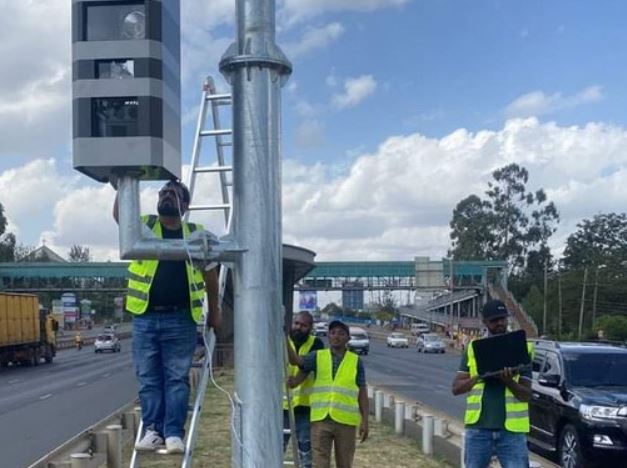
Prior to the court’s intervention, the NTSA had deployed a network of 1,000 smart cameras – comprising 700 fixed and 300 mobile units – across major Kenyan highways, urban roads, and known accident blackspots.
Under the system, once a camera detects an infraction using automatic number plate recognition and AI technology, the software automatically generates a penalty and sends an SMS notification to the registered vehicle owner.
Motorists are subjected to a strict seven-day window to settle the fine via KCB Bank. Failure to pay within this period triggers automatic penalties and blocks the vehicle owner from accessing critical NTSA digital services, such as license renewals.
Where Are the Cameras?
The cameras feed into a National Command and Control Centre. While the NTSA plans to scale up to cover six major cities, the initial deployment heavily targets high-traffic corridors and major arteries.
| Highway / Route | Surveillance Focus |
| Mombasa Road (A8) | 10 designated speed enforcement stretches; lane discipline. |
| Thika Superhighway | Fixed and mobile units monitoring speed limits and pedestrian paths. |
| Southern Bypass | Fixed cameras targeting extreme speeding and illegal stops. |
| Major Urban Hubs | AI-assisted monitoring for red-light running, obstruction, and parking. |
And many more highways..
The Cost of Infractions: Instant Fines Breakdown
The system is programmed to monitor 35 specific offenses. The controversial Ksh 42 billion public-private partnership zeroes in heavily on speed limit violations but also catches documentation and behavioral infractions without a police officer ever pulling a vehicle over.
| Traffic Offense | Penalty (Ksh) |
| Speeding: 16–20 km/h over limit | 10,000 |
| Driving without number plates | 10,000 |
| Causing road obstruction / illegal parking | 10,000 |
| Driving on a pedestrian footpath | 5,000 |
| Speeding: 11–15 km/h over limit | 3,000 |
| Using a mobile phone while driving | 2,000 |
| Failure to carry lifesaver triangles | 2,000 |
| Driving without a valid driving license | 1,000 |
| Speeding: 6–10 km/h over limit | 500 |
| Failure to wear a seatbelt | 500 |
Privacy and Due Process Concerns
The swift rollout of the technology triggered immediate legal and political pushback. Critics, including Kiharu MP Ndindi Nyoro, have publicly labeled the multi-billion shilling camera plan a “money scheme,” questioning whether the deployment is driven by road safety or commercial interests.
Petitioners argued that the heavy reliance on surveillance cameras violates the right to privacy under Article 31 of the Constitution and bypasses the strict data processing regulations set out in the Data Protection Act of 2019.
A central point of contention is the elimination of judicial discretion. Legal experts argue that by automatically declaring a driver guilty and issuing a summary fine via an algorithm, the system strips motorists of their constitutional right to a fair trial.
Additionally, the NTSA’s decision to bypass the Judiciary and contract a commercial bank to collect the fines has raised legal questions regarding the proper administration of statutory penalties.
For now, the automated cameras will cease issuing fines as the legal battle takes shape.