





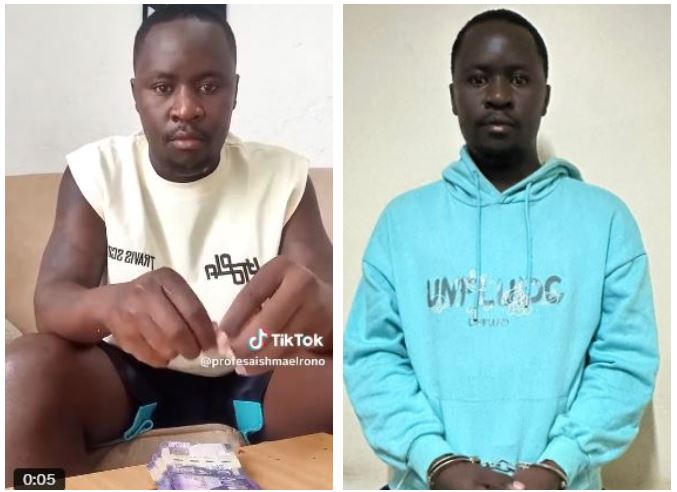
 The Directorate of Criminal Investigations (DCI) has arrested a TikTok user seen tearing Kenyan banknotes in a viral video.
In a 27-second clip shared on the popular social media platform, the internet user identified as Maximilian Motara places stacks of money on a table, specifically bundles of Sh100 notes, and tears them apart one by one.
The DCI confirmed the arrest in a statement on March 10. They noted that the Banking Fraud Investigations Unit (BFIU), a specialized division that fights financial crimes and protects the banking sector’s integrity, led the operation.
“Banking Fraud Investigations Unit (BFIU) detectives have arrested a man who was wanted for allegedly mutilating Kenyan currency notes and flaunting the acts on TikTok,” stated the DCI.
The DCI confirmed that the man is in custody as they prepare to take him to court.
There you go.
Law is law, I actually felt bad bana na hiyo siku niliuza tu nyanya ya 70 bob the whole day. Finya yeye qumamaye 😂😂 pic.twitter.com/s5qTF4a9pA— Barrack Gumba (@_gumba1) March 10, 2026
Under Kenyan law, it is a criminal offense to deliberately damage money. Wilfully tearing, cutting, defacing, or mutilating banknotes is illegal. According to Section 367A of the Penal Code (Cap. 63), anyone found guilty of these actions faces a fine of up to Sh2,000, a prison sentence of up to three months, or both.
The Penal Code also defines defacement broadly. Any intentional destruction, including writing on, stapling, or folding notes in a way that damages them, falls under this category.
The Central Bank of Kenya (CBK) holds the sole responsibility for protecting the nation’s currency. Due to this responsibility, the Central Bank of Kenya (CBK) frequently implements enforcement measures against any actions that misuse Kenyan money.
The arrest comes barely a month after the CBK banned the growing practice of folding banknotes into flower-like bouquets and using cash as decorative gifts, saying the trend damages currency and disrupts circulation.
In a statement released on February 2, the regulator said it had noted an increase in the use of Kenyan shilling banknotes for celebratory and ornamental purposes, including cash flower bouquets, decorative displays, and similar arrangements popular at weddings, birthdays, and graduations.
The CBK warned that damaged notes interfere with the smooth operation of cash-handling systems across the banking sector. It explained that adhesives, pins, staples, and tape affect the performance of automated teller machines (ATMs), cash-counting machines, and sorting equipment used by banks and businesses.
“This results in increased rejection of banknotes during processing and leads to premature withdrawal and replacement of currency, at an avoidable cost to the public and store of value,” the bank added.