




- Somalia’s President Hassan Sheikh Mohamud’s term ends amid election disputes and increasing Al-Shabaab threats
- Al-Shabaab surrounds Mogadishu, controlling 30% of Somalia’s territory and threatening regional security
- Urgent intervention is needed to prevent Somalia from becoming a stronghold of extremist movements
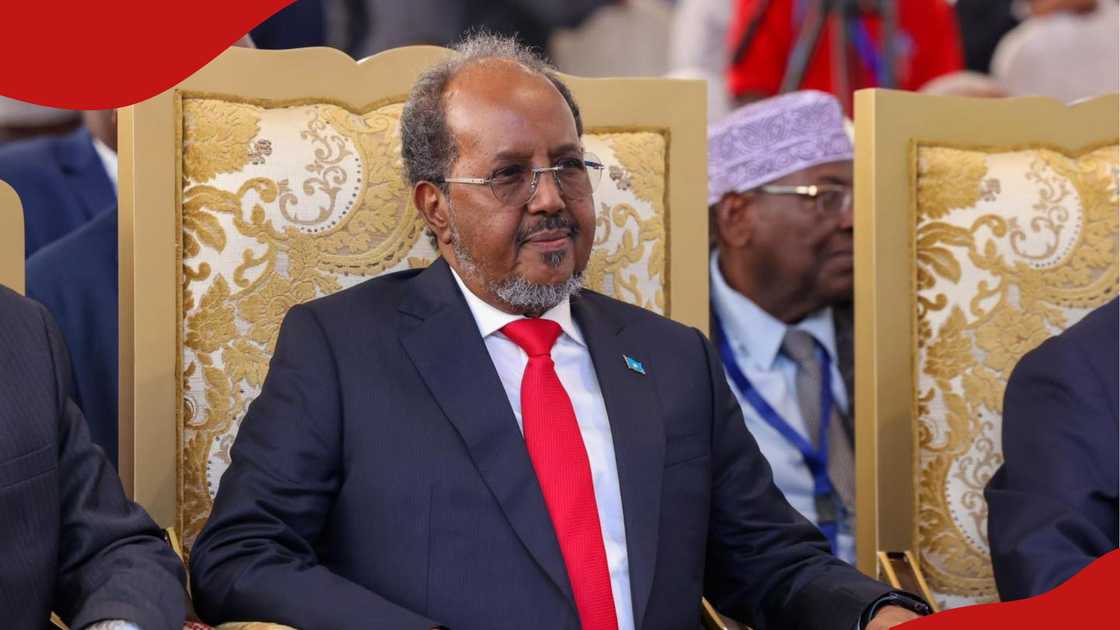
Somalia – Only a few weeks remain before the term of Somali President Hassan Sheikh Mohamud expires next April, followed by elections that are still full of unresolved disputes.
Source: Facebook
However, the greatest danger lies in the resurgence of the terrorist movement Al-Shabaab, linked to Al-Qaeda, with warnings from observers that it is encircling Mogadishu, the capital of Somalia, threatening to seize control and cause dire consequences for the Horn of Africa.
A report by the African Center for Strategic Studies states that “significant security challenges surround the upcoming elections in Somalia.
The attack launched by Al-Shabaab in 2025 has put the armed group in a position that could enable it to capture Mogadishu. In the northeast of the country, the international terrorist network ISIS continues to use Puntland State as a base.”

Several months earlier, the center anticipated “the continuing threat of attacks in the Gulf of Aden and the Red Sea by the Houthis and Somali pirates disrupting maritime navigation along one of the world’s most important shipping lanes. In short, the outcome of Somalia’s electoral process will have major regional and international implications.”
Weak Army
An analysis published by the African Defense Forum magazine claims that: “President Hassan Sheikh Mohamud’s attempt to amend the constitution, establish a new electoral system, and redraw the federal map shows his desire to remain in power beyond the end of his term in May 2026.”
“This situation has divided the political class of Somalia and made it impossible to create a single force to defeat the terrorist movement of Al-Shabaab. The big city of Mogadishu with a diplomatic corps and an army without ambition and strength,” Analyst Matt Bryden said while explaining the current challenges of Mogadishu.
Lieutenant General Odowaa Yusuf Rage, Somalia’s Chief of Army Staff, admitted before parliament last November that “between 10,000 and 15,000 soldiers have been killed or injured in the war in the past three years, most of them fighting against Al-Shabaab and ISIS-Somalia.”
The newspaper’s analysis cites as an example the use by Al-Shabaab in early October of what appeared to be a military vehicle to detonate a car bomb that had been planted in a branch of the Somali National Intelligence and Security Agency.

The attack succeeded in destroying valuable intelligence records and freeing several prisoners; It happened near the presidential palace.
The group also carried out another attack on a military base in Mogadishu. It now has checkpoints around the outskirts of the capital and controls about 30% of Somalia’s territory.
Bryden insists that “absent radical change, the federal government is on the verge of collapse, and Al-Shabaab taking over the capital would spell disaster for regional security and stability.”
The African Defense Forum further suggests that “Al-Shabaab’s takeover of Mogadishu may only be a matter of time, whether achieved through diplomatic maneuvering or negotiations.
Inevitably, this would usher in a new round of armed conflict between a strengthened Al-Shabaab – with consolidated control over Mogadishu and its four million inhabitants – and its sworn rivals in other parts of the country.”
It emphasizes that “neighboring states would also face increased risk through new terrorist attacks within their borders.
The era of optimistic half-measures is over. Only swift, decisive, and coordinated intervention can prevent Somalia from turning into an extremist state, especially as the risk increases in areas where government authority is absent.”

The analysis of the magazine explains that “rescuing Somalia from the abyss, despite all the previous successes, has been more of a political challenge than a military one. Defeating Al-Shabaab requires simultaneous military operations on many fronts, with the strategic goal of demolishing its strongholds in the Juba River Basin and southwest Somalia. This can only be achieved through the coordination of security forces owned by the member states of the federation, supported by selected units from the federal government – an attempt based on trust between the federal government and the political leadership of the federal states. That trust does not exist at the moment.”
However, the analysis notes that “Hassan Sheikh Mohamud’s administration seems to be more busy isolating and subjugating the member states of the federation than using their power in the fight against Al-Shabaab.”
Furthermore, it has been revealed that Mohamud has clashed with the states of Puntland and Jubaland over his insistence on holding elections under the one-person, one-vote system, with the two states preferring an indirect electoral system that has been based on clan structures since 2000. They also reject any attempt to extend Mohamud’s presidential term, which is expected to end next May.
A Global Threat
For its part, the Counter-Terrorism Center states that “in August 2023, Somali President Hassan Sheikh Mohamud promised government plans to rid the country of Al-Shabaab or reduce its influence to small pockets within five months.
However, the promise met with major obstacles that cast a shadow over the goals of his administration. By January 2024—the deadline set by President Mohamud—Al-Shabaab remained alive and able to exert influence, especially in its southern strongholds.” The Al-Azhar Organization for Combating Terrorism emphasizes that “countering the terrorist movement Al-Shabaab is a war with regional and international dimensions, due to the group’s ability to carry out cross-border attacks and threaten navigation in the Red Sea and the Gulf of Aden. The organization’s activities have expanded to Kenya, Ethiopia, and Uganda.”

Also read
Vihiga: A neighbor turned on the deputy chief, attacked him with a sword in a bright light
It explains that “the movement controls large areas of central and southern Somalia and carries out bombings, ambushes, and armed attacks targeting government institutions, government headquarters, security and military forces, civilians, public markets, foreign missions, and diplomatic buildings.”
As a radical global movement, global maritime traffic—especially between Asia and Europe via the Red Sea and the Gulf of Aden, which accounts for between 12% and 15% of total world trade—continues to be at risk.
A report by the African Center for Strategic Studies confirms that “through its relationship with the Houthis, Al-Shabaab acquires advanced military equipment, including armed drones and ballistic missiles, and receives training. At the same time, the group expands and strengthens the criminal enterprises that finance its activities. This cooperation expands the leverage of these armed groups on both sides of the Bab al-Mandab Strait.”
On the contrary, the center notes that “the Houthis benefit from Al-Shabaab’s support for disruptive piracy activities in the Gulf of Aden and the western Indian Ocean, as well as from various supply lines. This increases the Houthis’ ability to threaten maritime traffic in the region while strengthening their power against the UN-backed government of Yemen.”

In conclusion, “this cooperation expands the ability of these two armed groups to operate on both sides of the Bab al-Mandab Strait and increases the challenge of monitoring the 1,800 miles of vulnerable territory along the coast of the Red Sea, the Gulf of Aden, and the western Indian Ocean.”
Read ENGLISH VERSION
Do you have an exciting story that you would like us to publish? Please contact us via news@tuko.co.ke or WhatsApp: 0732482690.
Source: TUKO.co.ke