



- The National Transport and Safety Authority has revealed the full list of 37 traffic offenses that will be subject to instant fines ranging from KSh 500 to KSh 10,000 under a new automated enforcement system set to be rolled out on Kenyan roads
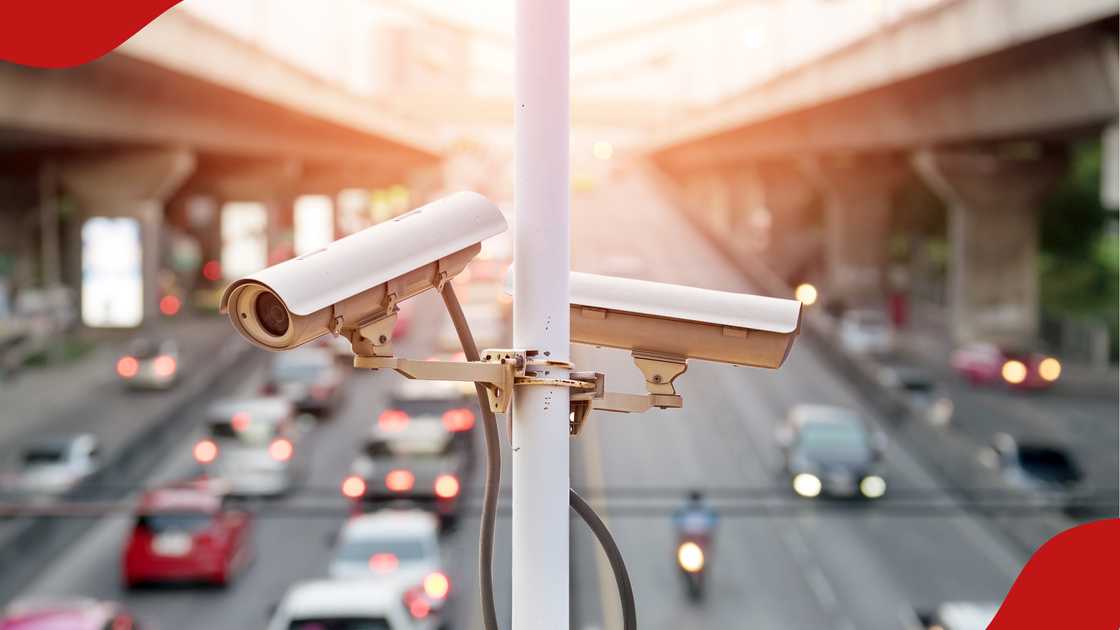
- The fines, imposed under the Traffic (Minor Offenses) Rules 2016, will be enforced through a network of 700 fixed cameras and 300 mobile units operated under a KSh 42 billion public-private partnership.
- The 21-year-old project aims to reduce road misconduct which has seen deaths rise from 3,875 in 2019 to over 5,100 in 2024
The National Transport and Safety Authority has published the full schedule of traffic offenses that will be subject to instant fines under the new automated enforcement system.
Source: Getty Images
The penalties are designed to target common violations ranging from speeding and careless driving to PSV driver misconduct and pedestrian offences.

Which traffic offenses attract the highest penalty?
The on-the-spot fine regime is aimed at most road users, with penalties proportionate to the severity of the offence.
Larger fines of KSh 10,000 apply for serious offences, including driving without identification, operating without a valid inspection certificate, exceeding speed limits by 16-20 km per hour, causing obstruction, and employing unlicensed PSV drivers or conductors.
Other significant penalties include KSh 5,000 for driving on roads or footpaths, KSh 5,000 for advertising, and KSh 5,000 for failing to stop when required by a uniformed police officer.
Exceeding the speed limit attracts severe penalties, with drivers exceeding the limit by 1-5 km per hour receiving warnings, while those exceeding the limit by 6-10 km per hour face a fine of KSh 500, 11-15 km per hour attracts KSh 3,000, and 16-20 km per hour or more receives a maximum penalty of KSh 10,000.

This applies to class-specific speed limits with a general limit of 50 kilometers per hour or speeds set by traffic signs.
PSV operators face very strict enforcement, with a fine of KSh 10,000 for owners or operators who employ unlicensed drivers or conductors. Unlicensed persons operating or acting as a PSV conductor attract a fine of KSh 5,000.
Failure of PSV drivers or conductors to wear special badges and uniforms results in a fine of KSh 2,000, while motorcyclists riding without protective equipment face a penalty of KSh 1,000.
How will the automated traffic enforcement system work?
The enforcement infrastructure includes 700 fixed cameras strategically placed along highways and high-risk corridors, supplemented by 300 mobile units targeting high-speed and accident-prone areas.
All the cameras will be connected to the National Command and Control Center which will deal with violations in real time and issue instant fines related to the new Second Generation Smart Driving Licenses (e-DL).

The system includes a driver qualification and demerit points system that will track each driver’s history and lifecycle management.
Fines can be paid through multiple channels, including the Digital Mobile Driving License Wallet, USSD, mobile money platforms, and banking systems.
The integrated fine payment system aims to eliminate cash transactions at enforcement points, addressing the widespread corruption identified in EACC’s annual reports as a major challenge in the enforcement of traffic laws.
What is the full list of offenses and penalties?
|
Number. |
Type of error |
Article of Law |
Fine (KSh) |
|
1 |
Driving without identification plates affixed or improperly affixed |
Section 12(1) and 14 Rule 7 of Traffic Rules |
10,000 |
|
2 |
Driving without a valid inspection certificate |
Section 16(2) and 17A(3) |
10,000 |
|
3 |
Driving without a valid driver’s license endorsement for the class of vehicle |
Section 30(1) and (7) |
3,000 |
|
4 |
Not having a valid driver’s license |
Section 30(4) and (7) |
1,000 |
|
5 |
Driving a PSV without qualification |
Section 33(1)(c) and 41 |
5,000 |
|
6 |
Not carrying and issuing a driver’s license when required |
Section 36(1) and (3) |
1,000 |
|
7 |
Exceeding the speed limit set for the type of vehicle |
Section 42(1) and 43(1) |
Warning to 10,000 |
|
8 |
Exceeding the speed limit of 50 kilometers per hour or as directed by a traffic sign (qualified) |
Section 42(3), (4) and 43(1) |
Warning to 10,000 |
|
9 |
Driving on or through a pavement or pedestrian walkway |
Section 45A(1) and (2) |
5,000 |
|
10 |
Failure to obey directions given by police officer in uniform |
Section 52(1)(a) and (2) |
3,000 |
|
11 |
Failure to conform to indications given by any traffic sign |
Section 52(1)(b) and (2) |
3,000 |
|
12 |
Failure to stop when required by a police officer in uniform |
Section 52(1)(c) and (2) |
5,000 |
|
13 |
Causing obstruction by allowing vehicle to remain in obstructing position |
Section 53(1) and 67 |
10,000 |
|
14 |
Failure to display reflective triangles or lifesavers when the vehicle remains on the road |
Section 53(3) and (4) |
3,000 |
|
15 |
Motorcycle rider carrying more than one pillion passenger |
Section 60(1) and (2) |
1,000 |
|
16 |
Driving a vehicle on a footpath |
Section 90(2)(a) and 94 |
5,000 |
|
17 |
Pedestrian willfully obstructing free passage of vehicles |
Section 90(2)(c) and 94 |
500 |
|
18 |
Unlicensed person driving or acting as conductor of a PSV |
Section 98(1) and 104 |
5,000 |
|
19 |
Owner or operator of PSV employing unlicensed PSV driver or conductor |
Section 98(1) and 104 |
10,000 |
|
20 |
Failure to refund fare paid for incomplete journey |
Section 101(2) |
3,000 |
|
21 |
Touters |
Section 103(1) and (2) |
3,000 |
|
22 |
Failure of PSV driver or conductor to wear special badge and uniform |
Section 103A(1) and (7) |
2,000 |
|
23 |
Motorcycle rider riding without protective gear |
Section 103B(1) and (7) |
1,000 |
|
24 |
Person not designated driver driving a PSV |
Section 103C(1) and (3) |
3,000 |
|
25 |
PSV driver letting unauthorized person drive the vehicle |
Section 103C(2) and (3) |
3,000 |
|
26 |
Learner failing to exhibit ‘L’ stickers on front and rear of vehicle |
Rule 12(1)(b) |
1,000 |
|
27 |
Failure by owner to have seat belts in motor vehicle as prescribed |
Rule 22A(1) and (2) |
1,000 per unfitted seat |
|
28 |
Failure to fasten seat belts while driving |
Rule 22A(3) and (4) |
500 |
|
29 |
The PSV conductor failed to ensure the seat belts were clean and lockable |
Rule 22A(5) and (6) |
500 |
|
30 |
Vehicle lacking emergency warning devices (life savers) |
Rule 25 |
2,000 |
|
31 |
Failure to install speed control devices in PSVs and commercial vehicles |
Rule 41A |
10,000 |
|
32 |
Driving a PSV with tinted (tinted) windows or windscreen |
Rule 54A |
3,000 |
|
33 |
PSV lack fire fighting equipment and emergency service equipment |
Rule 56(1) and (2) |
2,000 |
|
34 |
A driver using a mobile phone while driving |
Rule 59A(1) |
2,000 |
|
35 |
PSV driver picking up or dropping off passengers at an unauthorized place |
Rule 65(f) and 69 |
3,000 |
|
36 |
Passengers alighting or boarding at an unauthorized station or bus stop |
Rule 66(1)(x) and 69 |
1,000 |
|
37 |
Traveling with part of body outside moving vehicle |
Rule 80 |
1,000 |

The project responds to Kenya’s deteriorating road safety record, with fatalities expected to increase by more than 30% between 2019 and 2024.
Current challenges include a lack of adequate speed enforcement cameras, red light cameras, and detection systems, as well as widespread corruption and corruption in enforcement agencies.

Source: UGC
NTSA encourages vehicle registration
In other news, NTSA directed buyers of old government, county, public and diplomatic vehicles to complete the mandatory re-registration process to obtain full legal ownership.
The authority warned that buying such vehicles alone is not enough, as failure to re-register could leave the previous institution or diplomatic mission listed as the official owner, putting buyers at legal and administrative risk.
NTSA outlined detailed documentation requirements for ex-government vehicles, including signed transfer forms, original GK plates, log books, auction documents where applicable, verification of DCIand tax compliance records.
The re-registration process is done through NTSA’s online service portal, where applicants upload documents, pay the required fees, and schedule a physical inspection before new registration numbers and logbooks are issued.

The NTSA further warned drivers against driving vehicles that are not registered in their names, saying that the current user bears full legal responsibility for traffic offenses and accidents.
Read ENGLISH VERSION
Do you have an exciting story that you would like us to publish? Please contact us via news@tuko.co.ke or WhatsApp: 0732482690.
Source: TUKO.co.ke