
- Mandera Governor Mohamed Adan Khalif was blamed by senators for the purchase of KSh 55.9 million seedlings
- Senate PAC pressed Khalif to explain the KSh 12 million cash transfer and the type of seedlings purchased, raising concerns about transparency
- The Auditor General confirmed that only part of the expenditure on seedlings of KSh 55.9 million was confirmed
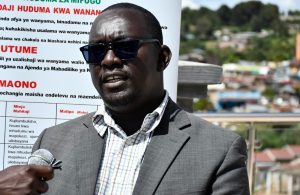
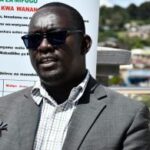
Mandera Governor Mohamed Adan Khalif faced tough questions from senators regarding the purchase of seedlings worth KSh 55.9 million.
Source: Facebook
Khalif’s tough questions came on Friday, January 30, amid concerns about transparency and accountability in the drought-stricken region.
Why was the governor of Mandera questioned?
The speech was held during a meeting of the Senate County Public Accounts Committee (PAC), where the county executive was called to explain the figures highlighted in the report of the Auditor General of Government Accounts (OAG) for the financial year 2024/2025.
The meeting, chaired by Homa Bay senator Moses Kajwang’, sought to clarify many expenditures, including KSh 32.8 million on water monitoring, KSh 349 million on relief food, and KSh 12 million in cash transfers for the elderly.

Senators expressed serious concern about the use of seedlings, and put the OAG on the spot to confirm whether a large amount of money was spent on seedlings.
“You have also told us that KSh 55.9 million was spent on saplings in a county that has a permanent drought. Can you assure us that these saplings can be traced, and tell us the test that was done?” Kajwang’ asked.
Nandi Senator Samson Cherargei he increased the pressure, asking about the transfer of cash and the type of seedlings purchased.
“Can he give us the details of how the cash transfer of KSh 12 million was obtained? And to add seedlings, what kind of seedlings are these?” Cherargei asked.
Did the Auditor General confirm the purchased Mandera seedlings?
The OAG confirmed that verification of samples had been done, saying that teams had visited some farms and projects where seedlings were produced.
“The issue of saplings, the one confirmed on the saplings, which were planted on the side of the road, that was confirmed,” said the auditor general.
However, the sample covered only KSh 3 million out of the total expenditure of KSh 55.9 million, leaving a large amount unverified.

The questions increased when the senators pressed the governor about the type of saplings bought.
Khalif explained that the seedlings were intended for farmers along the river, including corn, potatoes, and other crops.
However, Senator Edwin Sifuna disputed the claim, saying that “corn does not come from seedlings,” insisting that the county provide clarification on the actual products purchased.
Kajwang’ noted that in terms of accounting, seeds are classified as biological assets and would not fall into the same group as seedlings, indicating the possibility of incorrect classification in the records.
Cherargei reiterated the call for accountability, insisting that KSh 55.9 million could fund important infrastructure projects such as classrooms or water monitoring systems.
“But in accounting, we don’t deal with probabilities. We deal with facts. Governor, I just asked you a simple question. How many acres did you say this is? Is it in all your sub-counties? How do you track the KSh 55.9 million that you can count today?” Cherargei asked.
How did Governor Khalif defend his actions?
The governor claimed the seedlings were distributed to more than 6,000 registered farmers along rivers and rainfed fields in Mandera, including various agricultural schemes.

“We have it in our list. Farmers all over Mandera county, along the rivers and rain fields. But seeds and seedlings, let me put it that way. I am not a farmer, so forgive me. We gave them all the plans. They grow maize, they grow potatoes, all kinds of farming along the river,” he explained.
However, senators were not convinced, citing past incidents where expensive seedlings could not be traced, leaving public funds unaccounted for.

Source: Facebook
Kajwang’ urged the OAG to conduct a more thorough verification.
“Well, it doesn’t need to be 100%. The audit has never been 100%. This is not a free conversation because KSh 55.9 million plus another KSh 32.8 million, that is KSh 90 million, if it was used for things that cannot be monitored and the county is still facing drought, then we will be irresponsible as the Senate to continue talking,” he said.
The session also highlighted KSh 349 million spent on food aid, with senators demanding the same level of verification.
While the OAG accepted the initial review, the senators insisted on full verification to ensure public funds directly benefit the intended recipients.
Why did Sifuna and Mbarire fight?
Earlier, Embu governor Cecily Mbarire faced investigation before the Senate Public Accounts Committee over audit concerns raised by the Auditor General, including the transfer of KSh 10 million to an unplanned boda boda empowerment project.

Also read
Yoweri Museveni asked the High Court of Uganda to dismiss the case challenging his victory
Mbarire told the senators that the money was meant to be returned and admitted the use was illegal.
When Kajwang praised his honesty, he claimed it showed his integrity before Sifuna quickly intervened, reminding him that truth under oath was mandatory, not commendable.
The conversation escalated with Mbarire insisting that he was honest, Sifuna emphasizing duty instead of praise, and the chairman intervening frequently to restore calm while laughing.
Read ENGLISH VERSION
Do you have an exciting story that you would like us to publish? Please contact us via news@tuko.co.ke or WhatsApp: 0732482690.
Source: TUKO.co.ke