


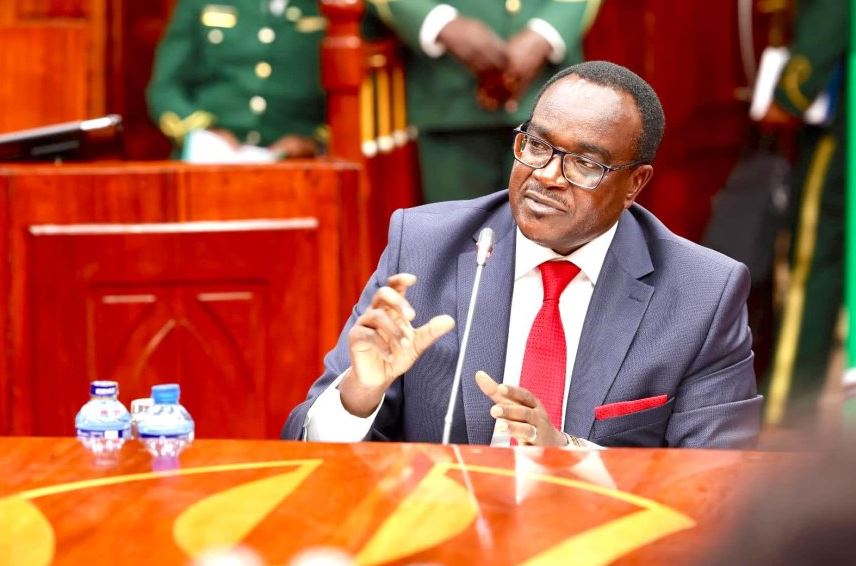
 Education Cabinet Secretary Julius Ogamba came under fire from Members of Parliament after he publicly admitted that the government lacks clear data on how much it costs to educate a child in Kenya from Grade One through university.
Ogamba made the startling disclosure on Wednesday during an intense parliamentary session held at Lake Naivasha Resort in Nakuru County, on the sidelines of an ongoing National Assembly retreat themed “Securing Parliamentary Legacy.”
“As a country, we don’t know how much it costs to educate a child from Grade One to university. No actuarial analysis has been done to know how much exactly,” Ogamba told MPs.
The admission triggered immediate backlash from lawmakers, with Ugenya MP David Ochieng’ leading criticism of the Education Ministry’s funding and budgeting framework. Ochieng’ questioned how the government determines capitation for primary and secondary schools, as well as funding for universities, without knowing the true cost of education.
“The question asked by Kathiani MP Robert Mbui is everything you would want to know about education and school fees, so the minister cannot tell us. He doesn’t know how much a kid costs to teach in this country,” Ochieng’ said.
“So on what basis do they give capitation in primary, secondary, and on what basis are they giving school fees for universities?” he added.
Ochieng’ went further to cast doubt on the credibility of the ministry’s budgeting process, arguing that Ogamba’s responses showed a worrying lack of preparedness.
“If the CS says he doesn’t know how much it costs to educate a child in Kenya, how does he budget for them then? And who does the minister expect to do that analysis?” he asked.
“The handling of the questions reeks of a lack of knowledge of what the minister is supposed to do.”
In his defence, CS Ogamba acknowledged that the absence of reliable data on the cost of education was not new, saying the gap had existed for years despite increasing pressure on the sector. He maintained, however, that the government must now confront the issue head-on.
“This analysis has never been done. Nobody has done it, and it is something that as a country today, because of the challenges we have, we need to face and do so that we have a clear picture,” Ogamba said.
“We have an X number of students. We need to know how much money is allocated to each of those children,” he admitted.
As MPs reacted angrily to the response, Deputy Speaker Gladys Boss attempted to restore order, suggesting that Ogamba’s admission could open the door to accountability.
“The good thing is that the minister has said he doesn’t know. What we should be doing in the follow-up questions is giving him a timeline to present that before the committee,” she said, prompting loud chants of “No” from MPs.
National Assembly Speaker Moses Wetang’ula later stepped in, urging the Education CS to rely on his technical team, who were present at the session, to provide accurate figures.
“Waziri, you have your technical team here. You are at liberty to ask them to assist you and give you the numbers so that you satisfy the House,” Wetang’ula said.
He appealed to MPs to allow the proceedings to continue, reminding them that they would have another opportunity to seek further clarification.
“Please listen. Even if the answer falls short of your expectations, you have another round to ask questions,” he said.
The heated exchange has reignited debate over education funding in Kenya, transparency in government budgeting, and the long-standing lack of data guiding policy decisions in one of the country’s most critical sectors.