



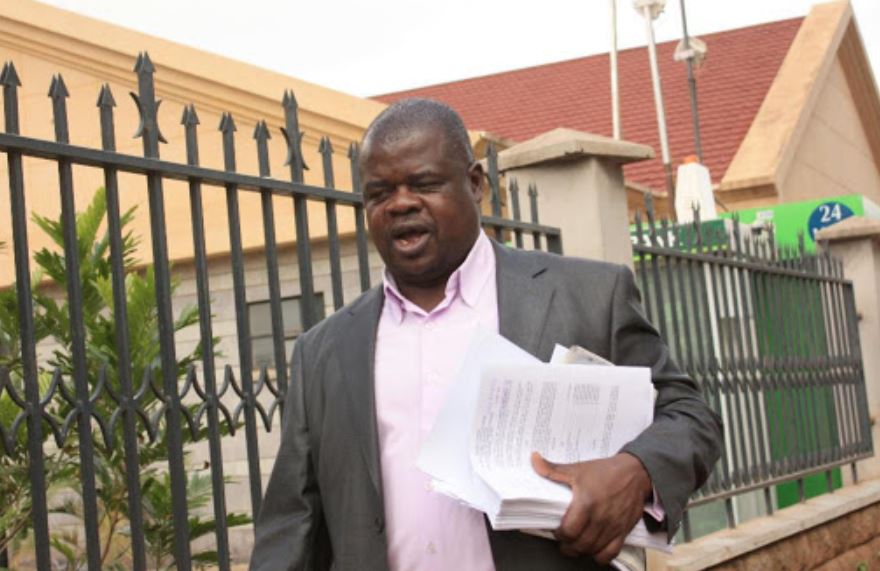
 Busia Senator Okiya Omtatah has filed a court petition seeking to suspend and stop the implementation of the Cooperation Framework on Health between the governments of Kenya and the United States, signed on December 4, 2025.
In his application, Omtatah is also requesting a temporary order to prevent the respondents from “implementing, operationalising, and executing” the agreement.
The Senator argues that the $2.5 billion framework, which will see the U.S. channel Ksh.208 billion directly into Kenya’s health institutions over the next five years, violates constitutional principles of public participation because it was signed without consulting the public or securing parliamentary approval.
“Unless conservatory orders issue, there is a real risk of the violation of express provisions of the Constitution as the respondents implement the Framework,” Omtatah submits.
He further states, “The Constitution mandates that all state organs and actions affecting the public must involve meaningful public participation. No consultations were held with health stakeholders, civil society, or affected members of the public prior to the signing.”
Omtatah claims the Framework also threatens Kenyans’ constitutional right to health, arguing that “Kenyans were denied a voice, rendering the process arbitrary and exclusionary.”
He adds that authorities rushed the signing of the health agreement, bypassing key legal processes.
“International agreements like the Framework qualify as treaties under Section 2 of the Act, requiring negotiation by the Executive, followed by parliamentary ratification before entry into force. The rushed signing, bypassing Parliament, usurps legislative authority and undermines the sovereignty of the people who delegated sovereign power to Parliament,” the court documents read.
The Senator further warns of potential mismanagement of the funds expected from the U.S. government.
“The Framework’s direct channelling of funds through government institutions, while eliminating ‘third-party intermediaries,’ lacks safeguards against mismanagement. Kenya’s commitment to match U.S. funding (estimated at US$850 million in additional health spending) burdens the national budget without independent fiscal modelling. This contravenes principles of sustainable public finance and risk-informed decision-making, potentially exacerbating debt and diverting resources from grassroots health needs,” Omtatah states.