

Raila Odinga, Kenya’s veteran politician and longtime opposition leader, has died, aged 80.
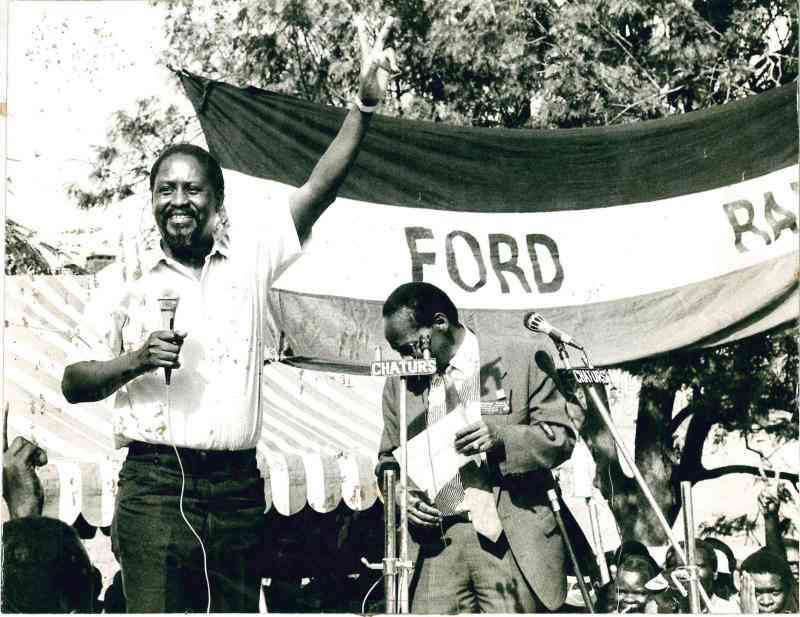
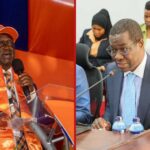
Raila Odinga addressing the FORD Kamukunji rally 1992.[File, Standard]
Odinga’s death occurred on Wednesday, October 15, in India, while undergoing treatment.
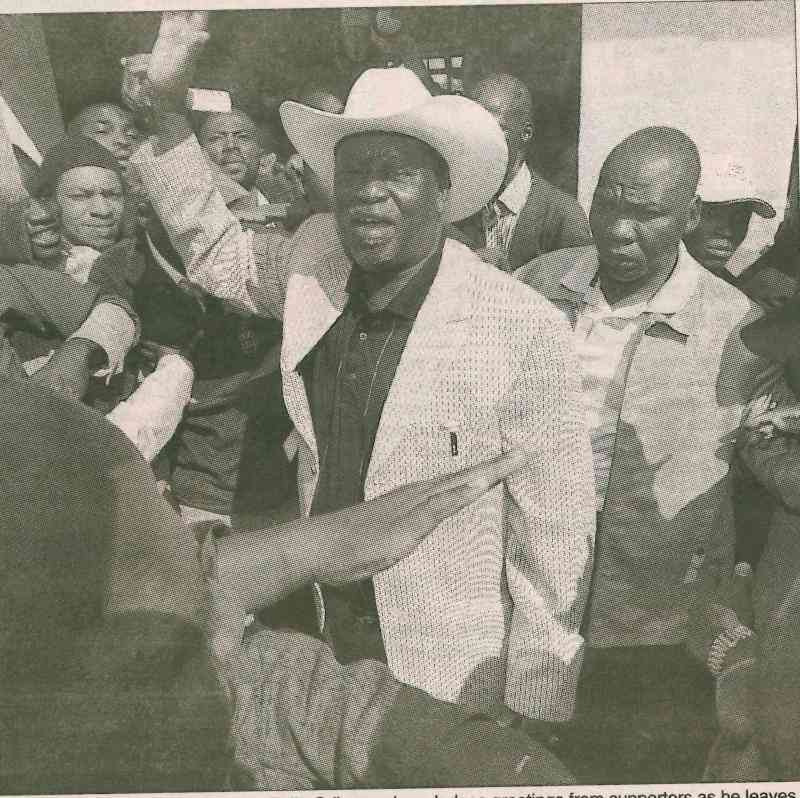
Raila Odinga greeting his supporters after voting at Old Kibera Primary School in December 2007.[File, Standard]
The standard revisits his political journey through pictures in our archives.
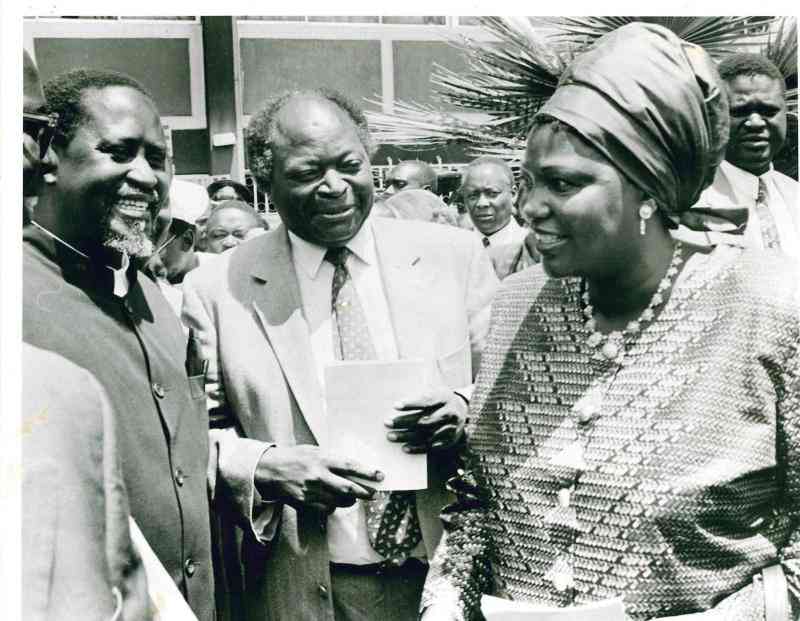
Raila Odinga, as Langata MP, and Mwai Kibaki meet with Mama Ngina Kenyatta at the end of Kenyatta Day celebrations at Nayyo Stadium, 1995[File, Standard]
Born on January 7, 1945, Odinga was the son of Jaramogi Oginga Odinga, Kenya’s first vice president.
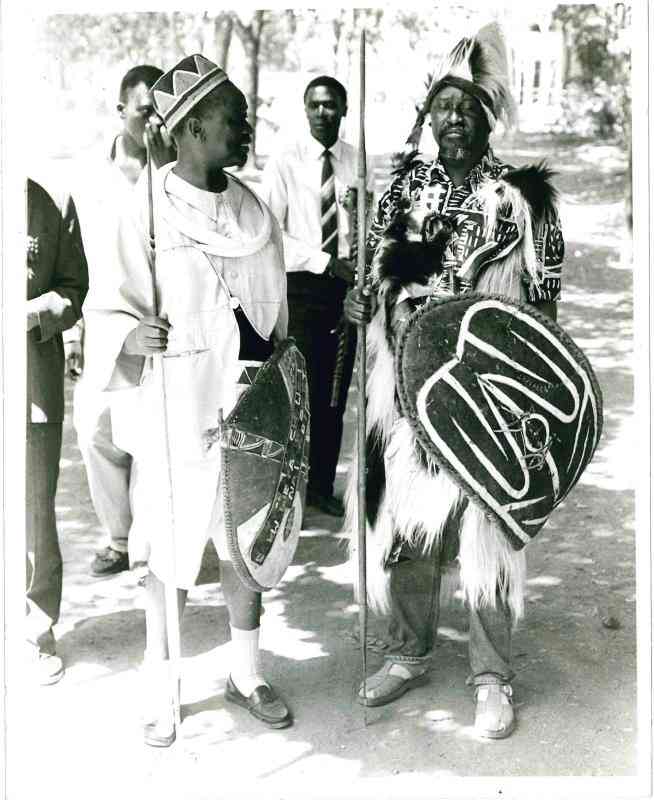
Raila and Oburu Odinga are ready to perform the tero buru ritual at their father’s home, 1995.[File, Standard]
The man from Opoda Farm in Maseno, Siaya County, was married to Ida Odinga and is survived by three children and five grandchildren
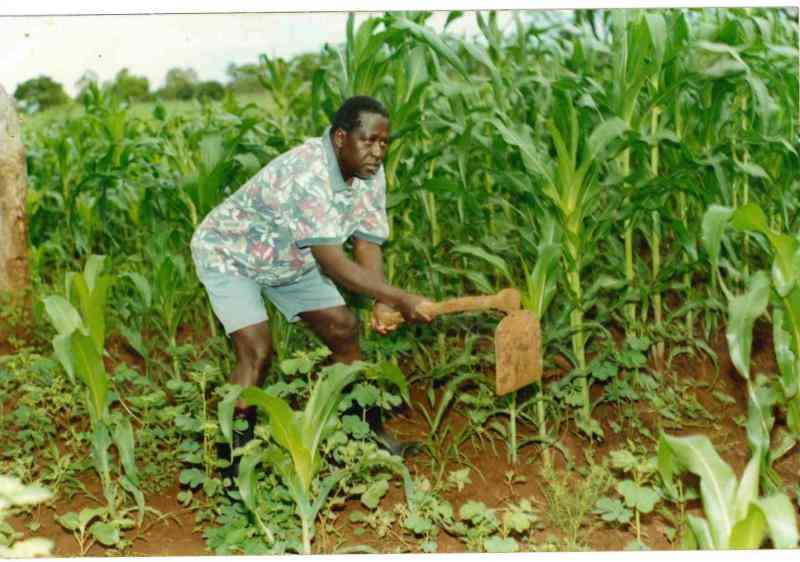
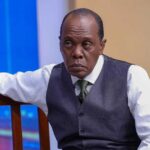
Raila Odinga at his Opoda farm in Bondo.[File, Standard]
Following in his father’s footsteps, Odinga joined politics in the late 1970s.
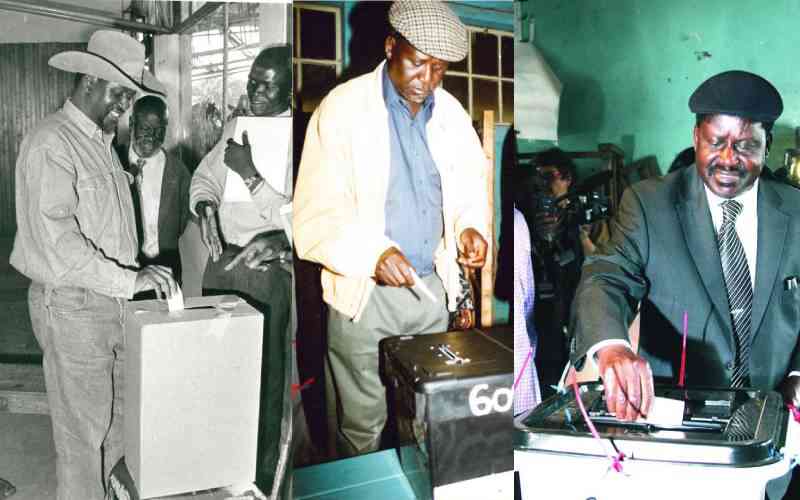
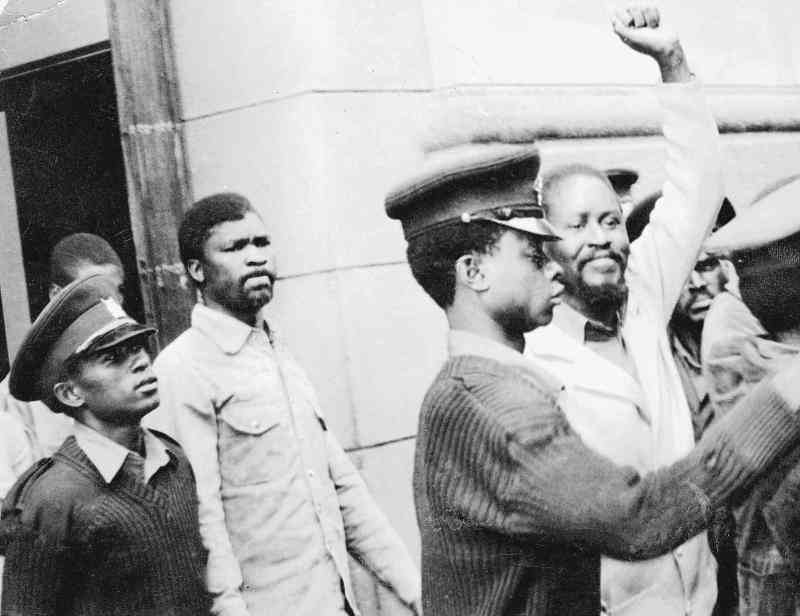
Between 1982 and 1988, he endured imprisonment and periods of exile as he campaigned for democracy under former President Daniel Arap Moi’s regime.
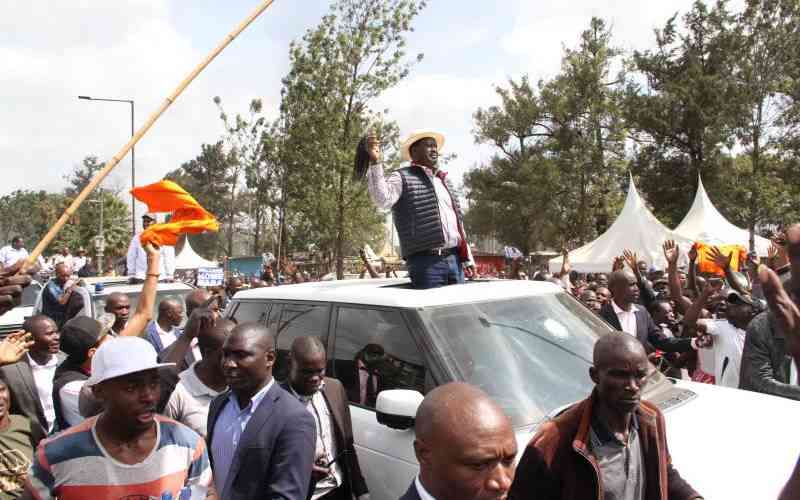
Odinga served as a Member of Parliament and later as Kenya’s first Prime Minister from 2008 to 2013 under the Grand Coalition Government, formed after the disputed 2007 presidential election that he and his supporters maintained he had won against incumbent Mwai Kibaki.
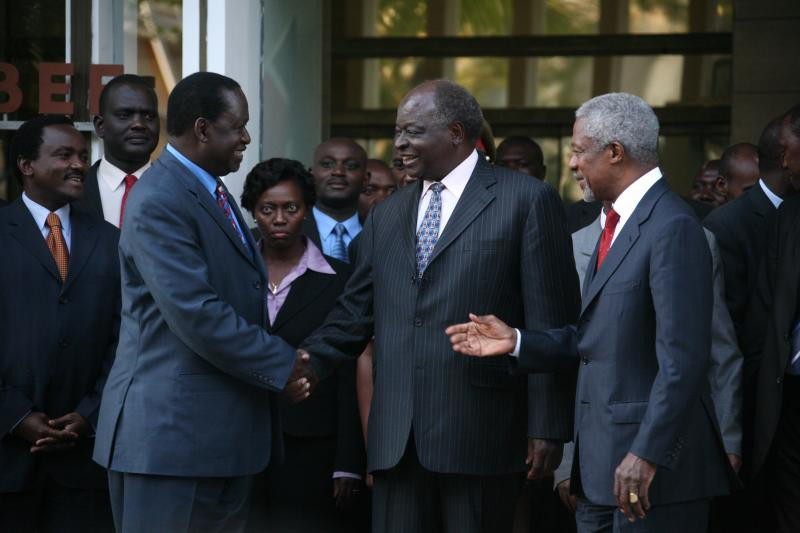
Kenyan President Mwai Kibaki (R) Opposition leader Raila Odinga (L), as former UN Chief Kofi Annan (2R) 24 January 2008 after the two met as part of the former United Nations chief’s mediation efforts. They called for the end of violence which has seen weeks of deadly unrest since the re-election of President Mwai Kibaki on December 30.[File]
His influence went beyond politics, symbolising Kenya’s decades-long struggle for multiparty democracy, justice, and equitable governance.
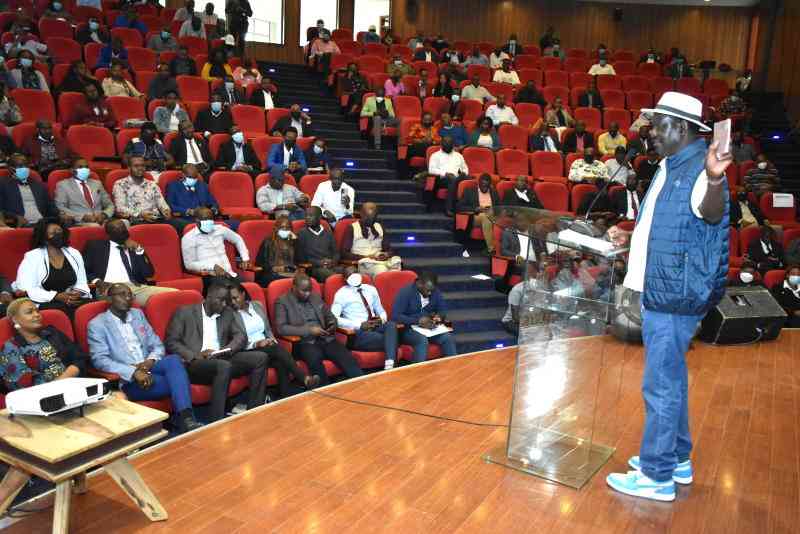
Over the years, he became one of Africa’s most resilient opposition figures and a perennial presidential contender, losing five consecutive elections.
Stay informed. Subscribe to our newsletter
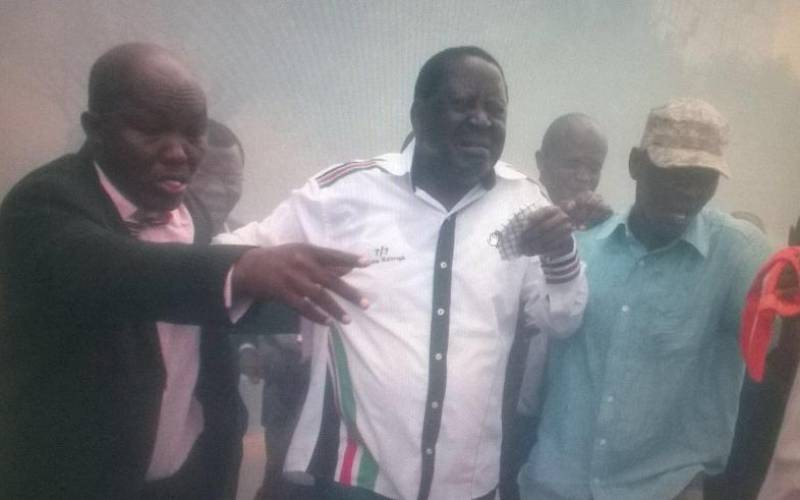
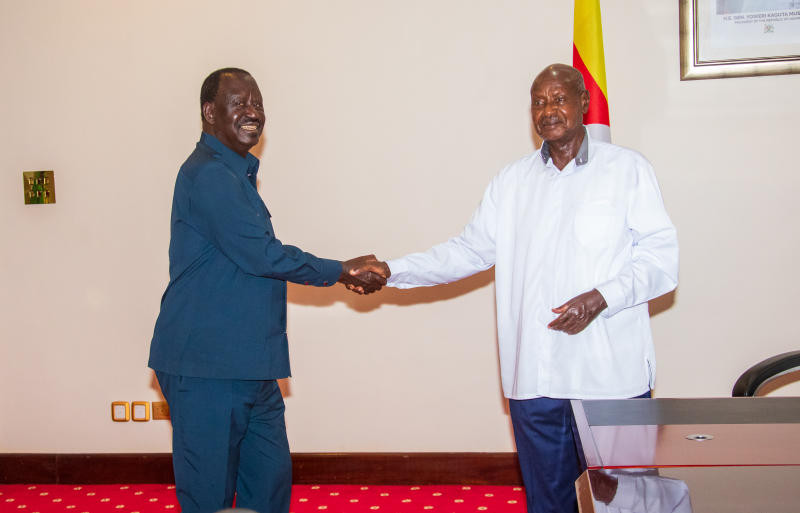
In 2018, following the fiercely contested 2017 election, Odinga and then-President Uhuru Kenyatta struck a surprise truce through the now-famous “handshake,” launching a national reform agenda known as the Building Bridges Initiative (BBI).
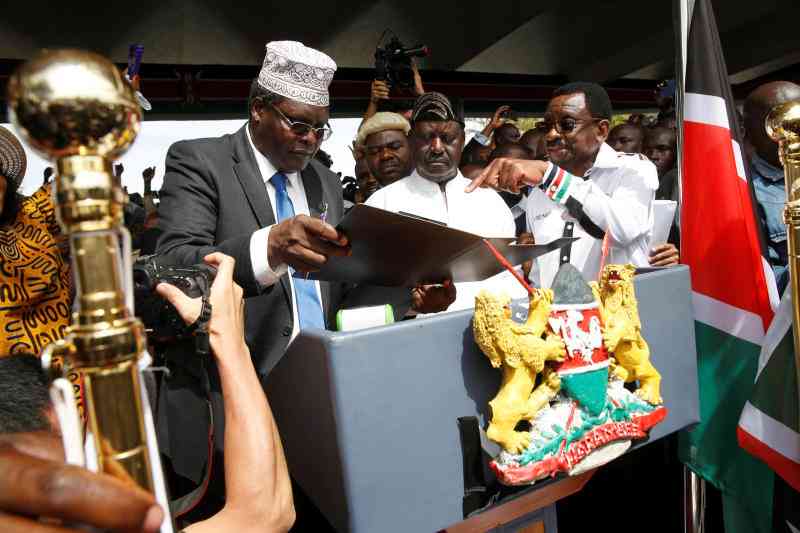
Odinga made his final bid for the presidency in 2022 under the Azimio la Umoja coalition, an alliance of more than 26 parties, including his Orange Democratic Movement (ODM) and Kenyatta’s Jubilee Party.
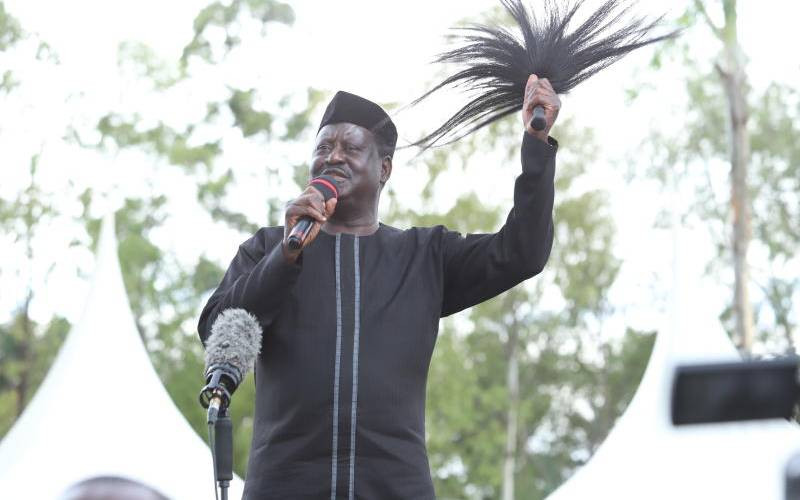
ODM leader Raila Odinga addresses mourners at Langi village in Ndhiwa, Homabay county on October 19, 2018.[File, Standard]
After narrowly losing to William Ruto, Odinga remained a central figure in national politics.
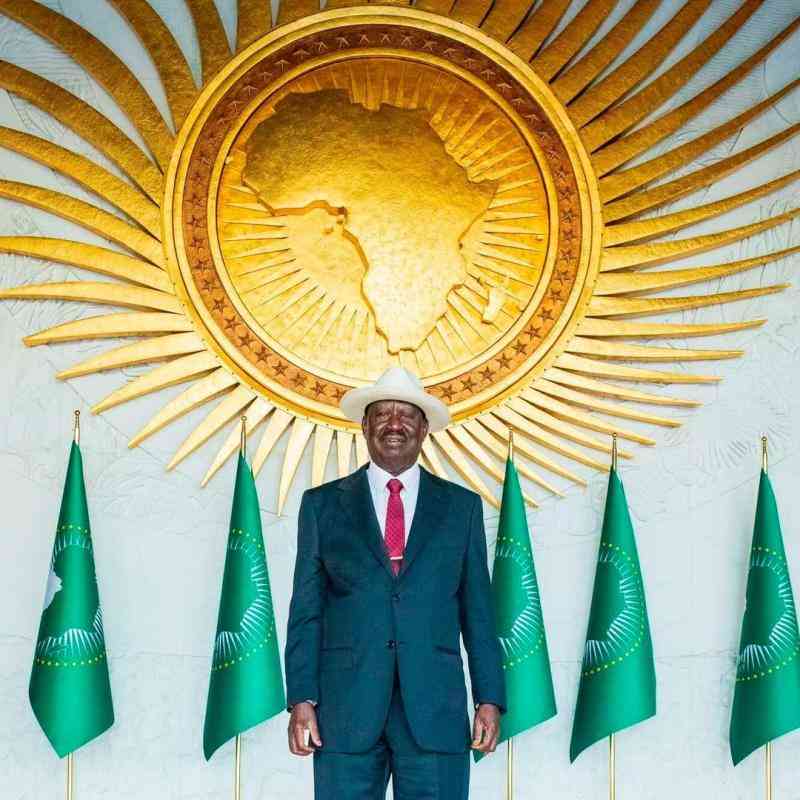
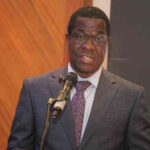
Raila Odinga loses the African Union Commission chairmanship in Addis in February 2025.
By the time of his demise, Odinga was widely regarded as a statesman, evolving from opposition firebrand to joining the government of the day.
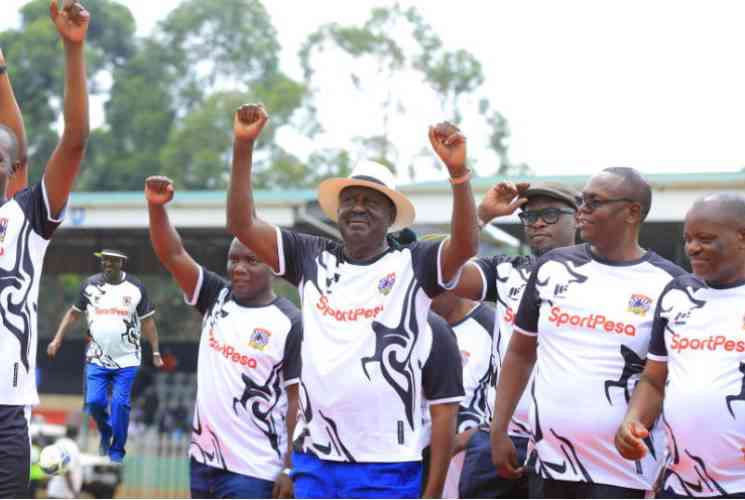
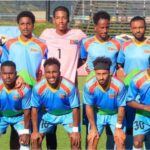
Raila Odinga at Gusii stadium during the unveiling of Shabana FC new kit by their sponsor Sportpesa in March 2025. [Sammy Omingo, Standard]