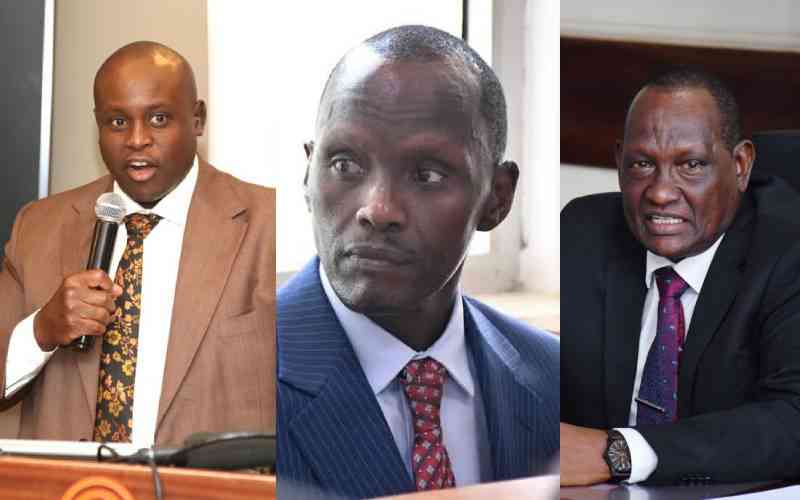






- The Ministry of Education has excavated 50,000 students in secondary schools following an ongoing review exercise nationwide
- Primary Education Minister Julius Bitok revealed that only half of the institutions have been dealt with, which created a fear that the actual figure could be greater
- The disclosure signifies billions of public funds to be lost due to increased registration data, with MPs now claiming accountability from schools and officials
The education sector in Kenya is facing a serious problem of accountability.
Source: Twitter
This is after the Ministry of Education confirmed that more than 50,000 students have been found in high schools.
What did the Ministry of Education say about students in the air?
This was highlighted during a session by the Parliamentary Committee on Education, in which the Secretary -General of Primary Education Julius Bitok said the figures were based on an ongoing review exercise that has so far taken only half of all schools.
“In high schools, we found that over 50,000 students were on air students, and we are in only 50 % of the verification,” Bitok told MPs.

He explained that the Ministry is based on student enrollment records captured in the National Education Management Information System (NEMIS), as well as reports from school principals and minority directors.
However, the process exposed significant differences, with a large number of people being seen especially in high schools.
Bitok further revealed that although the scope of the problem in primary and secondary schools is still unknown, high schools have emerged as the most affected.
How much money does the government lose through students in the air?
The disclosure shows that the government has been spending more than KSh 1.1 billion annually to sponsor non -existent students, translated KSh 4.4 billion in four years of secondary education.
PS called on parliamentarians and education stakeholders to help plan a way to move forward, emphasizing that schools and convicted officers would face harm.
“We want the committees and other education stakeholders to help us decide what to do with these data,” He said.

He also suggested that the issue could be more widespread than students in the air, increasing the possibility of “air -conditioned” that could be benefiting from government funding.
According to him, the final report will be ready within one week as soon as the verification exercise is completed.
The findings have raised concerns in parliament, with lawmakers questioning how such registration data has not been identified for many years, calling for more strict monitoring of resources within the education sector.

Source: Twitter
How many schools were exposed by the Auditor -General?
In July, the audit revealed that 33 non -existent schools had been allocated more than KSh 3.7 billion as funding for the financial year of 2020/21 and 2023/24.
The shocking results emerged as public schools across the country continued to face a funding deficit estimated at KSh 117 billion, leaving primary, secondary and low schools.

According to a report by Auditor Nancy Gathungu, a special audit submitted to the Public Accounts Committee showed that most of the schools listed in Nemis They were not in the country but still received government money.
The audit further revealed how operating schools were linked together into joint accounts, thus undermining transparency and accountability.
Read English version
Do you have an exciting information that you would like to publish? Please, contact us via news@tuko.co.ke or WhatsApp: 0732482690.
Source: TUKO.co.ke