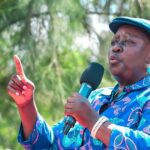

Busia Senator Okiya Omtatah has challenged President William Ruto to provide proof that the controversial church project underway at State House is being financed from his personal funds, as claimed
Omtatah demanded transparency, stating: “He should stop telling us that he can cough that money out. And if he can, can he explain how he earned the money?”
Speaking at a press conference on Sunday, July 6, 2025, Omtatah questioned the legality of constructing a religious facility, be it a church, mosque, or temple, on public land, insisting that State House is public property with constitutionally defined functions.
“State House sits on public land whose use is clearly defined in law. The land cannot be used at the whims of anybody, not even the President,” the outspoken lawmaker asserted.
The senator linked the construction to allocations under Supplementary Budget III, which Parliament approved in late June 2025.
He claimed the funds were hidden under a vague budget line labelled “other expenses,” raising suspicions that public money could be used to support a private religious initiative.
Ruto denies costing billions
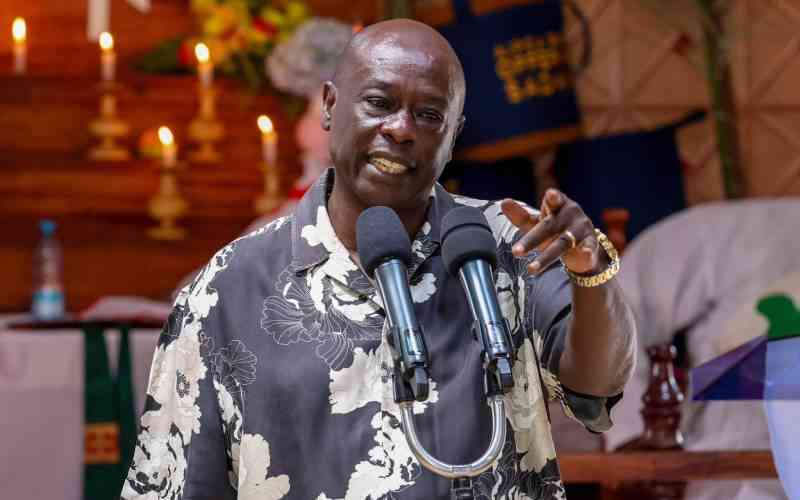
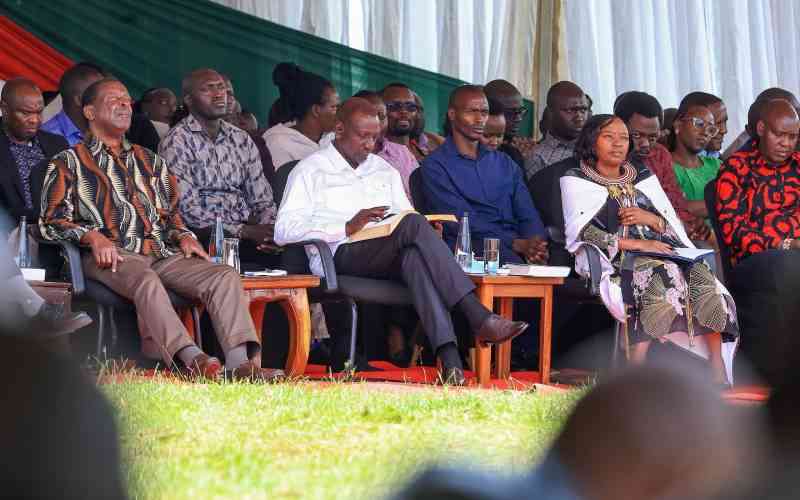
Omtatah’s remarks come just hours after President Ruto, speaking during the Anglican Church of Kenya Diocese of Embu’s 35th Anniversary service at Kigari Teachers Training College, denied reports that the church would cost taxpayers Ksh1.2 billion.
The president dismissed the amount first reported by a local daily as propaganda.

“The bishop has shown me the building we are constructing. It has eleven floors. It’s estimated to cost Ksh350 million. Let me ask if the church is big enough for 300 people, can it cost a billion shillings?” Ruto posed, questioning the credibility of the reported figures.
He went on to condemn what he described as unnecessary attacks on the church, branding them “gossip, propaganda, and hatred.”
But Omtatah is not backing down. Known for his legal activism, he hinted at taking the matter to court if the government fails to offer clear documentation proving that no public resources are being used.
“This is not just a religious issue, it’s about transparency, accountability, and upholding the Constitution,” he said.
The church’s construction has triggered a broader debate about the intersection of religion and governance, especially amid public concerns over spending priorities during tough economic times.