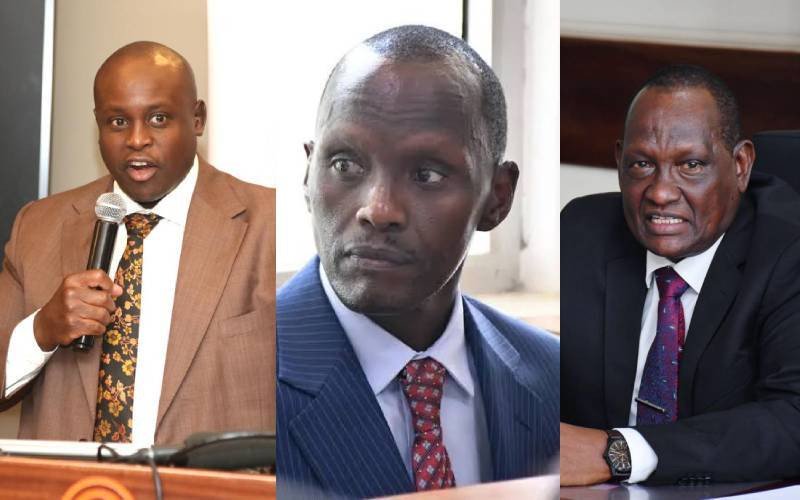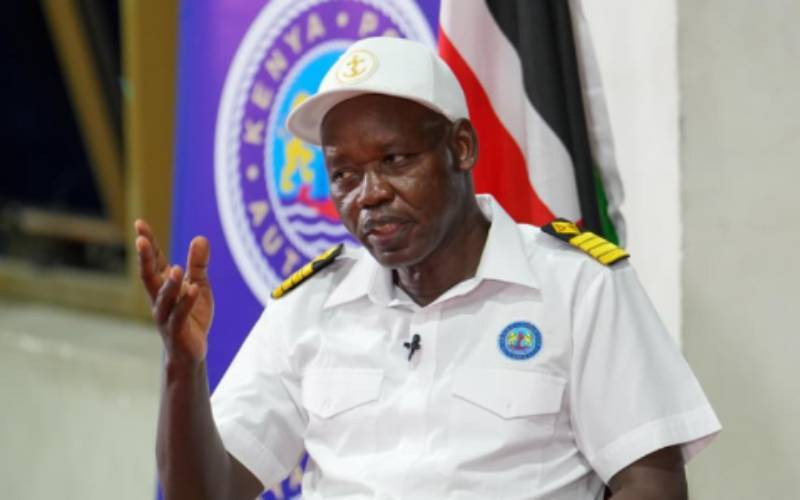




Former Nairobi Town Clerk Philip Kisia has strongly criticised President William Ruto over his decision to build a church within the State House compound, arguing that the move undermines the principles of constitutionalism and public accountability.
Speaking during a popular YouTube podcast aired on July 5, 2025, Kisia expressed concern that the president is using public land for personal religious interests.
He stated that while every Kenyan has the right to worship, the State House is public property and should not be used to advance the agenda of one particular religion. He questioned why the church could not have been constructed on private land instead.

“Ruto is a temporary occupant; this is not your personal property. Don’t treat it like personal property; build on your land,” Kisia said.
Kisia warned that the president’s actions risk setting a dangerous precedent. He posed a critical reflection on what would happen if a future Hindu or Muslim president decided to build a temple or mosque at the State House. He noted that such actions would invite division and confusion, as they could be interpreted as an attempt to establish a state religion.
“Supposing tomorrow we have a Hindu, then he says, ‘I also want a temple, a big one, and Hindus have money; they can build a big temple 10 times like Ruto’s church, then Muslims will come; they have money,’” he added.
He further pointed out that the construction of a church in the State House is a direct violation of Article 8 of the Constitution of Kenya, which explicitly prohibits the establishment of a state religion. According to the Constitution, the state must remain neutral and treat all religions equally.
Kisia maintained that using public resources and state infrastructure for a religious project contradicts this constitutional provision and undermines the secular nature of the state.
The church project
President William Ruto’s plan to build a Ksh1.2 billion church at State House, Nairobi, has sparked significant controversy in Kenya.
The project, intended to replace the existing iron-sheet chapel with an 8,000-seat, cathedral-like structure featuring stained-glass windows and twin crosses, is designed to serve the president, his family, State House staff, and large congregations for national prayer events.
Ruto insists the project is privately funded, stating, “I am using my own money, not public funds,” and defends it as a personal spiritual commitment. He argues that the current mabati (iron-sheet) structure is unfit for the stature of State House.