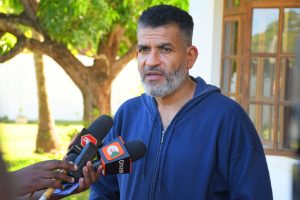






In the heart of Nairobi, where dreams of global opportunities simmer just beneath the chaos of matatu horns and endless queues, a quiet heartbreak is unfolding.
It’s not talked about in boardrooms or press briefings. There’s no hotline or support group for it. But ask any Kenyan youth with a packed suitcase and a denied visa, and you’ll hear it loud and clear.
Visa rejections are not just bureaucratic inconveniences. They are emotional landmines, especially for young Kenyans who’ve pinned their entire futures on a single embassy decision. Each “no” lands like a punch in the gut—cold, vague, and final. No explanation. No appeal. Just a shattered dream and a long, shameful walk back home.
And it’s happening more often than we admit.
Hope meets heartbreak
For many, studying or working abroad isn’t about chasing luxury—it’s survival. With youth unemployment hovering above 13% and the job market stalling, international opportunities offer an escape from economic stagnation. A master’s program in Germany, a nursing job in Canada, a tech boot camp in the U.S.—these aren’t pipe dreams; they’re lifelines.
But the visa system doesn’t see it that way.
Embassies, especially from the West, approach African applicants with suspicion. You’re assumed to be a flight risk. Guilty until proven innocent. It doesn’t matter if you have a scholarship, job offer, or a return ticket. If you can’t prove “sufficient ties” to Kenya, you’re denied. The irony? Those most in need of these opportunities are often the least likely to have land, steady income, or fat bank statements.
Scars no one talks about
The emotional toll is brutal. Imagine being 24, with an admission letter to a top university, a GoFundMe that raised your airfare, and the whole village cheering you on—only to get an email that reads, “You have not demonstrated strong ties to your home country.” That line alone has sunk hundreds of young Kenyan hearts.
There’s no aftercare. No debrief. No “Sorry, try again.” Just heartbreak.
Some fall into depression; others isolate. Social media is full of posts like “I feel like I failed my family” or “I wish I hadn’t told anyone I was leaving.” A few are even driven to suicidal thoughts. The silence around this trauma is deafening. We rally around KCSE failures and job losses—but not visa rejections. Why?
Kipkorir Sang, who once got a visa refusal, described it as worse than heartbreak; he recalls receiving his refusal mail notification while at the school office where he was currently an educator, and he swiftly walked out of the office with no utterance but a bleeding heart. He says he did not get too far, as his legs could not carry him; he had to sit by the roadside, confused and, of course, hopeless.
It’s time we stopped treating them like personal missteps and started recognising them as collective wounds.
Rich man’s system
Visa processes are rigged against the average African youth. Application fees alone can be Ksh20,000 or more, non-refundable of course. Then there’s transport to Nairobi for interviews, medicals, translations, and lawyer consultations. Many applicants spend up to Ksh 300,000 just to be told “no”—without ever understanding why.
And if you’re scammed by rogue agents (which happens more than we like to admit), you’re on your own.
Western countries preach global mobility and cross-cultural exchange, yet tighten borders with criteria clearly designed to exclude young people from the Global South. Meanwhile, citizens from those same countries enter Kenya with ease—often visa-free.
So who really benefits from globalisation?
The Kenyan government can’t control foreign embassy policies, but it can do much more for its youth. Why not create a national visa support desk that helps applicants prepare properly and avoid conmen? Why not partner with embassies to demand clearer rejection reasons and appeal mechanisms? And locally—why not invest more in youth jobs, innovation hubs, and scholarships that don’t require a passport?
It’s not enough to just wish youth “good luck” at the embassy. They deserve guidance, safety nets, and most importantly—respect.
Despite all this, Kenya’s youth are fighting back—in ways that inspire. Online communities on X, TikTok, and Telegram now share resources on navigating rejections, improving chances, and surviving the emotional crash. Some offer free visa mentorships. Others pool money to help friends reapply. This is the resilience the system constantly underestimates.
But resilience should never be the only plan. A nation that forces its brightest minds to crowdsource their dreams is already failing them.
Kakamega-born gospel artist Daddy Owen recently called upon Gen Zs to confront and address longstanding injustices surrounding the visa application process.
Owen has urged them not to inherit a system that quietly normalises mistreatment and financial exploitation.
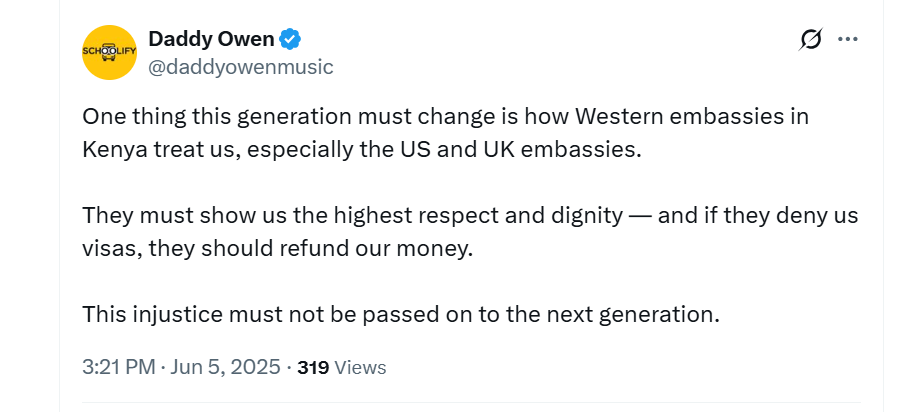
In a strongly worded statement shared on his official X account on Thursday, June 5, 2025, the singer expressed deep disappointment over the way applicants are often handled, particularly when their requests are rejected without accountability or recourse.
He stressed that those who apply for international travel documents deserve to be treated with utmost respect and fairness, noting that when their applications are denied, they should at the very least be compensated financially.
“One thing this generation must change is how Western embassies in Kenya treat us, especially the US and UK embassies. They must show us the highest respect and dignity — and if they deny us visas, they should refund our money,” Owen wrote.
Final word
To every young person reading this with a crushed dream and a denied visa: You are not the failure. The system is. You are not unwanted—you are simply trying to rise in a world stacked against you.
I still remember the day I got my rejection. I was braiding my niece’s hair when the email came. I didn’t cry. I couldn’t. There was no space for grief. But later, I realised the dream isn’t dead. It just needs another runway.
And you, too, will find yours.