





The Kenya Forest Service (KFS) has responded to growing public concern over a viral video circulating online that appears to show widespread destruction in Karura Forest.
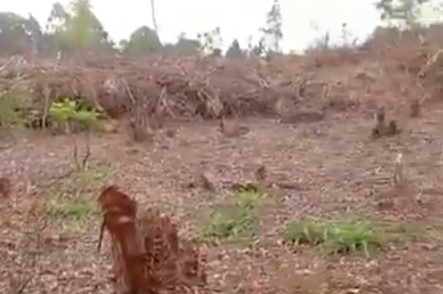
The video, recorded by a cyclist on June 2, 2025, sparked fears of deforestation and illegal activities within the protected urban forest.
In a statement on Thursday, July 3, 2025, KFS clarified that the areas shown in the video were designated harvesting zones for exotic tree species, a process that was legally sanctioned and completed in the 2024/2025 financial year.
“Kenya Forest Service seeks to make a clarification on a video circulating online, purportedly depicting a destroyed portion of Karura Forest. This video was recorded by a cyclist in two areas that were allocated for the harvesting of exotic tree species. The harvesting was undertaken and completed in the last financial year, 2024/2025,” read the statement in part.
KFS added that the harvesting is in line with its long-term strategy to transform Karura Forest into a fully indigenous urban forest that supports both ecotourism and recreation.
“Replacing the exotic trees with indigenous species has already commenced with the pitting of holes, and this will be followed by planting during the upcoming rainy season. The process being undertaken in Karura Forest will ensure it is restored to a fully indigenous urban forest for recreation and ecotourism.”
KFS also warned against the spread of misinformation, urging the public to verify claims through official channels before sharing content online.
“The public is advised to seek clarification from Kenya Forest Service offices before posting any misleading information.”
Karura’s biodiversity
Karura Forest covers approximately 1,000 hectares. The Kenya Forest Service manages it in partnership with the Friends of Karura Forest.
The forest is rich in biodiversity, featuring indigenous trees, wetlands, caves, and a 15-metre waterfall. It serves as a critical green space for recreation, conservation, and climate regulation in Nairobi.
Once threatened by land grabbers, Karura was saved through public advocacy led by the late environmentalist Wangari Maathai. Today, it symbolizes successful urban forest conservation.