





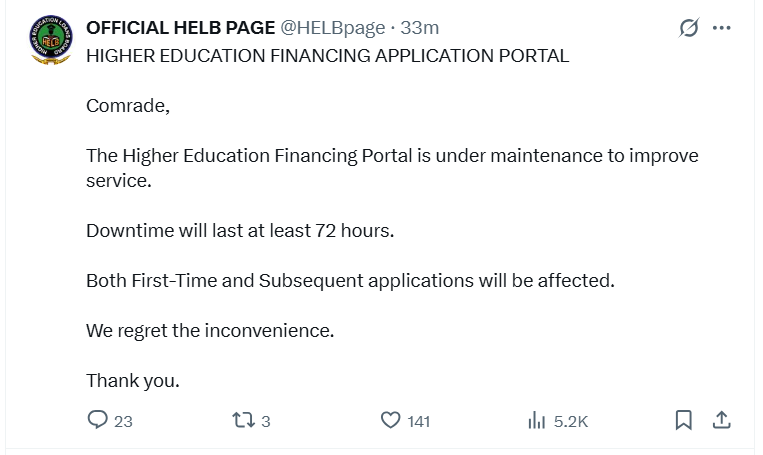
The Higher Education Loans Board (HELB) has announced a 72-hour maintenance window for its Higher Education Financing Portal, temporarily halting both first-time and subsequent student loan applications starting July 3, 2025.
In a notice shared on its official X account on July 3, 2025, HELB cited the need to improve service delivery after a 15% increase in application errors reported in 2024. The majority of these issues were attributed to system overload, as more students flocked to the platform seeking financial assistance.
“Comrade, the Higher Education Financing Portal is under maintenance to improve service. Downtime will last at least 72 hours. Both first-time and subsequent applications will be affected. We regret the inconvenience. Thank you.” Read part of the post addressing comrades.
The downtime comes at a critical time for students, as the 2025/2026 academic year application window had just opened following recent placement results by the Kenya Universities and Colleges Central Placement Service (KUCCPS).
The surge in traffic to the platform, combined with high expectations for financial aid, may have strained HELB’s digital infrastructure, prompting the board to take proactive steps to stabilise the system.
Last year, HELB disbursed over Ksh18 billion in loans and bursaries, supporting nearly 700,000 students across public universities, technical training institutes, and other institutions of higher learning.
The agency plays a pivotal role in facilitating access to tertiary education, especially for students from low-income households.
However, the pause in portal services has reignited concerns over HELB’s eligibility criteria. Currently, students enrolled in postgraduate, diploma, or privately sponsored degree programs are not eligible for government-backed loans through the portal. This has drawn criticism from education stakeholders, who argue that such exclusions are regressive and deny deserving learners the opportunity to complete their studies.
A 2023 study by the University of Nairobi found that nearly 30 per cent of self-sponsored students are locked out of HELB financing due to the current restrictions. The study called for a review of the board’s policies to reflect the diverse pathways Kenyan students now take to pursue higher education.
While HELB has not clarified whether the ongoing system upgrade will address these policy gaps, the agency is under increasing pressure from student unions and education advocates to broaden its coverage.
As more students turn to loans to finance their education, calls for a more inclusive, responsive, and tech-resilient financing model are growing louder.