



President William Ruto has called on African countries to reduce their overreliance on global financial aid and take the lead in mobilising domestic resources to fund critical sectors such as health.
Speaking during his European tour on July 1, 2025, the Kenyan Head of State said the international community alone cannot address the structural challenges facing Africa, especially in the context of dwindling global funding.
“The international arena cannot solve this problem alone. We have to be realistic. There are things that must be done in domestic jurisdictions,” Ruto said.
He noted that the link between poverty, conflict, health, and development makes it imperative for countries to strengthen their internal capacity to finance essential services.
“It has become increasingly clear to us that even as global resources go down, we must step up domestically mobilised resources to fill the gap. This is what we have done in Kenya,” he said.
Kenya’s health reforms
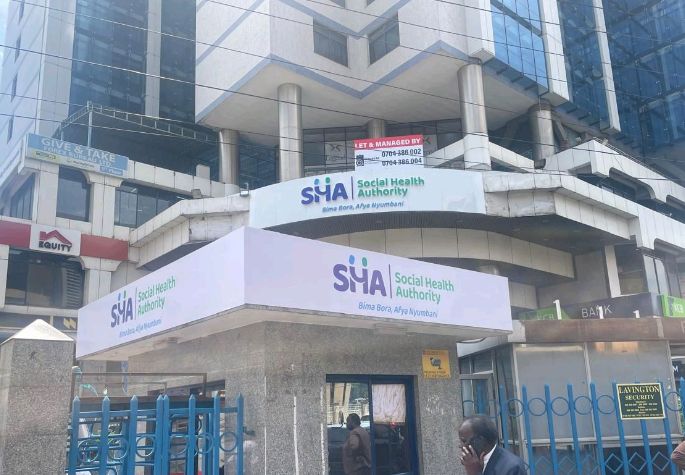
Ruto cited Kenya’s health insurance model, the Social Health Insurance Fund (SHIF), as a successful example of how domestic reforms can generate funding for universal healthcare.
He revealed that the country has raised Ksh 129.3 billion through the SHIF, funds that previously did not exist within the system.
“In Kenya, even when global resources were dwindling, we stepped in with domestic resources. We changed the infrastructure for health insurance from where we had zero point something per cent, and the poor were paying 10 per cent. We agreed on a standard 2.75 per cent for everybody to pay,” Ruto explained.
While affirming Kenya’s support for reforms in the international financial system to give Africa a stronger voice, Ruto maintained that solutions must also be homegrown.
“We are all in for proper interventions in the international financial architecture. But we will also step up as countries on local solutions, because we cannot wholly depend on external solutions to meet our challenges—whether they are financial or public in nature,” he said.
Public-private partnership
He also highlighted how Kenya has leveraged the private sector to deliver healthcare services through innovative partnerships.
He explained that instead of purchasing expensive medical equipment outright, the government has entered into leasing agreements where manufacturers supply and maintain CT scans and MRIs and are paid based on usage.
“We now have a fee-for-service program. They bring the equipment, and we pay for the service. Manufacturers have seen an investment opportunity, and it is a win-win,” Ruto said.
According to Ruto, this public-private collaboration has unlocked an additional Ksh193.95 billion in funding to strengthen Kenya’s healthcare delivery systems.
“As a result, we have mobilised close to another one and a half billion dollars from the private sector to fund our health delivery mechanism. So there is what can be done globally, and we are all in for making sure that there are proper interventions in making sure the international financial architecture has proper representation and voice from our continent,” he stated.