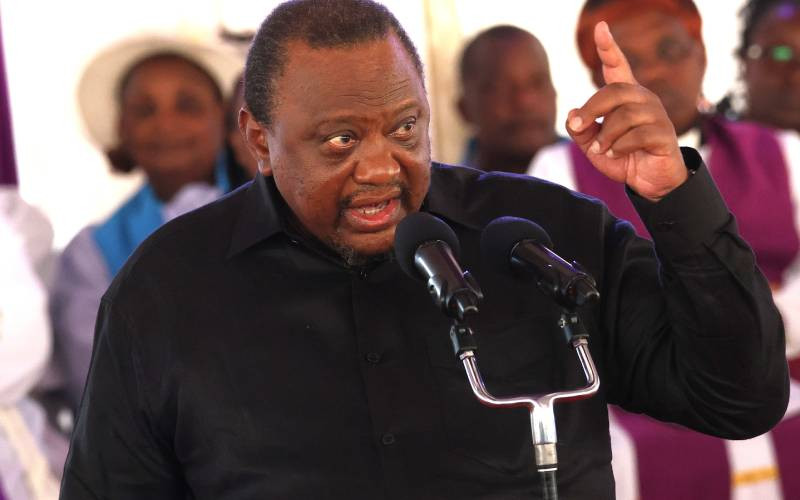






Presidential candidate and former Interior Cabinet Secretary Fred Matiang’i has refused to disclose his net worth, saying he is under no legal obligation to do so.
Speaking during an interview with a local TV station on Tuesday, July 1, 2025, Matiang’i dismissed calls for him to reveal his wealth, terming them unnecessary and misdirected. He emphasised that he is no longer a public official and therefore not bound by law to declare his assets to the public.
Matiang’i argued that unless a formal commission mandated by law requires such a disclosure, there is no justification for the public demand. He maintained that throughout his life, including during his time in government, he has never acted above the law and continues to respect legal boundaries.
“No, I don’t know how much I am worth, and even if I did, that is not for public consumption because I am not a public official, and you are not a commission to which I am supposed to declare my wealth. Since I was born, I have never been above the law, even when I was a minister, I was not above the law,” Matiang’i stated.
Wealth declaration history
Kenya introduced mandatory wealth declarations in 2003 through the Public Officer Ethics Act, under President Mwai Kibaki’s administration. The law was part of a larger effort to fight graft following years of high-profile scandals, including Goldenberg and Anglo Leasing.
Under the Act, all public officers are required to declare their income, assets, and liabilities within 30 days of assuming office, every two years while in service, and within 30 days after leaving office. The declaration also includes the wealth of spouses and children under the age of 18.
These records are submitted to designated authorities, primarily the Ethics and Anti-Corruption Commission (EACC), and must be retained for at least five years. Kenya’s commitment to this system followed its signing of the United Nations Convention Against Corruption, signalling its readiness to embrace accountability in public service.
While a few public officials voluntarily reveal their net worth during vetting or political campaigns, most declarations remain hidden from public view, shielding suspicious wealth from scrutiny.
Despite these challenges, the EACC reports that the wealth declaration system has led to the recovery of over Ksh3.8 billion in recent years through audits and investigations.