


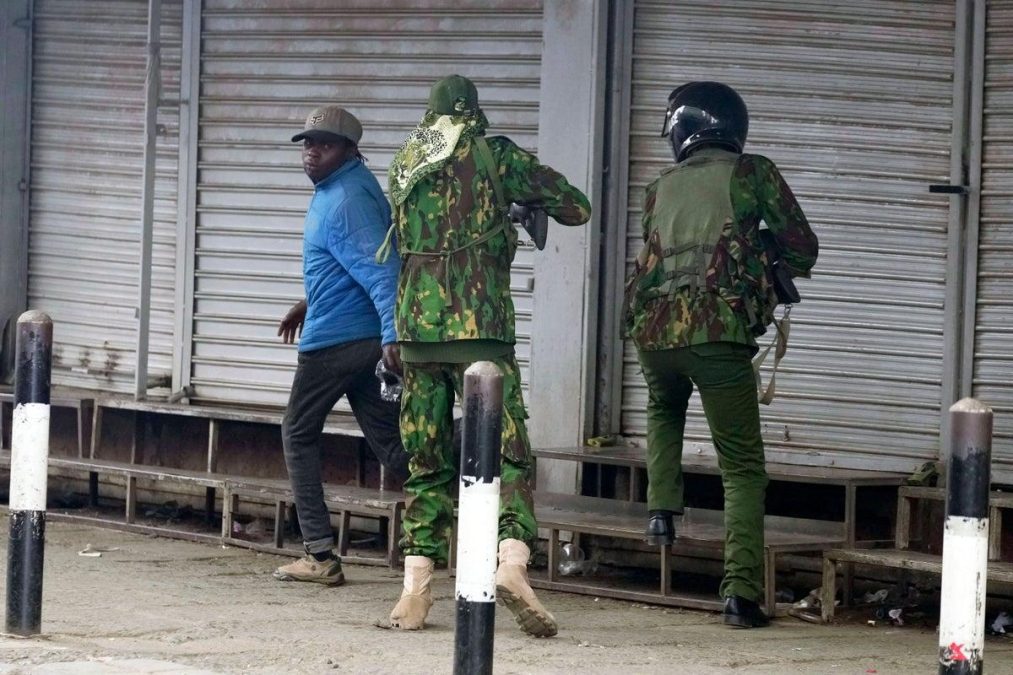
Former Chief Justice David Maraga has fiercely criticised the government in the wake of the tragic death of Boniface Kariuki, the 22-year-old mask vendor shot by police during the June 25 protests.
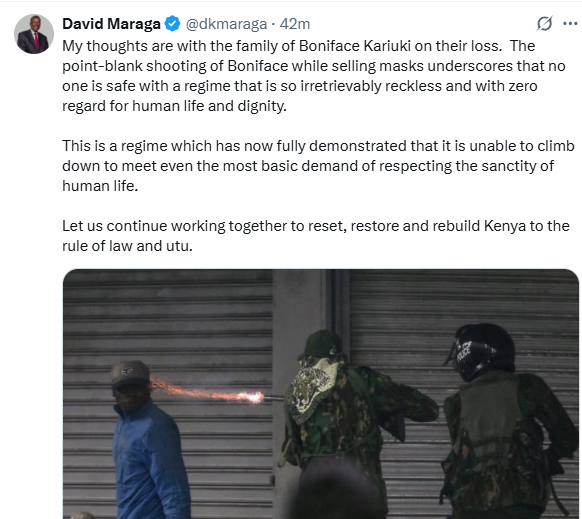
In a heartfelt post on X on Monday, June 30, 2025, Maraga said the fatal act exposed the administration’s alarming lack of regard for human life.
“The point‑blank shooting of Boniface while selling masks underscores that no one is safe with a regime that is so irretrievably reckless and with zero regard for human life and dignity,” he wrote, voicing the fears of many Kenyans shaken by the incident.
Maraga’s statement came as condolences were pouring in. “My thoughts are with the family of Boniface Kariuki on their loss,” he added, stressing the personal cost of the government’s failure to restrain violence during peaceful demonstrations.
He further pointed out a troubling shift in the nature of state power:
“This is a regime which has now fully demonstrated that it is unable to climb down to meet even the most basic demand of respecting the sanctity of human life.”
For Maraga, the killing of an unarmed young vendor in broad daylight was not just a tragic anomaly but a mounting pattern of state overreach. He urged Kenyans to unite for renewal:
“Let us continue working together to reset, restore and rebuild Kenya to the rule of law and utu,” he wrote, referencing the nation’s cherished values of dignity and solidarity.
Demands for justice
Maraga’s appeal echoes mounting calls from civil society, legal circles, and opposition figures demanding a thorough and independent inquiry into the day’s events.
Many observers see this as the moment for robust reform in policing and protest regulation.
Against this backdrop, the Kariuki family continues to face immense emotional and financial strain. Boniface’s father, John Kariuki, recounted the painful final hours on June 30.
The family spokesperson, Emily Wanjiru, has reiterated a plea for support: “We have lost him. What we are asking for now is justice for our child and help with the medical and funeral costs.”
As funds run low, the family remains in limbo, bereft of state assistance but buoyed by citizens’ compassion. Their struggle underscores the national reckoning Maraga described.
Boniface’s death has become more than a personal tragedy, it’s now a symbol of Kenya’s crossroads.
Maraga’s rallying cry: if the country is to honour its promise of justice, dignity, and humanity, this moment demands accountability, empathy, and real change.