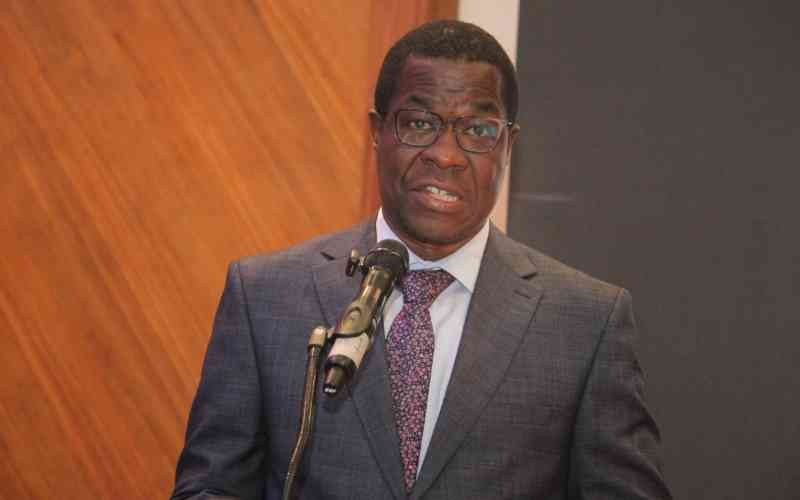






Former Kenya National Union of Teachers (KNUT) Secretary General Wilson Sossion has gone bare-knuckle at Gen Z protesters, blaming them for the chaos and violence witnessed during memorial demonstrations held on Wednesday, June 25, 2025.
The protests were organised to mark one year since the deadly anti-government tax protests of 2024 and to honour youths who lost their lives during that period.
Speaking during an interview on a local TV station on Thursday, June 26, 2025, Sossion criticised the nature of the demonstrations, saying the events were far from peaceful and accusing Gen Z of hypocrisy. He argued that what unfolded on the streets was more of political violence than a solemn remembrance.
“It is wrong and hypocritical if we baptise violence and call it demonstrations. What we witnessed yesterday is not what is in the Constitution. We witnessed political violence, we did not see peaceful processions,” he stated
According to Sossion, those involved in the protests wrongly labelled violence as a peaceful demonstration. He said if the intention was to mourn fallen youth, then the protests should have been conducted quietly and respectfully.
He questioned the logic behind honouring lives lost while endangering others, saying that the protests had instead led to more deaths and injuries.
Sossion claimed the demonstrations did not deliver any clear message and were not in line with what the Constitution describes as a peaceful protest. He pointed out that there was no known memorandum presented to any official authority, and that instead of achieving impact, the protest caused destruction and confusion.
“We didn’t see any submission memorandum to any office. If it was a reflection of the lives of Gen Zs that died last year, it should have been done peacefully in a solemn manner. You cannot celebrate when you are taking 8 more lives. You are injuring hundreds of other Kenyans. You can’t mourn by looting, harming, or destroying property,” Sossion added..
Despite growing concerns over police brutality, Sossion went on to defend the police. He urged the public to allow the Independent Policing Oversight Authority (IPOA) to investigate claims of police misconduct, and cautioned against what he called flying statements that label police as criminals.
“We should allow IPOA to do its work and investigate police excesses. We must avoid making flying statements that condemn and portray the police as super criminals,” the former nominated MP stated.
Chaotic scenes
On Wednesday, thousands of young Kenyans turned up in cities and towns across the country, including Nairobi, Mombasa, Nakuru, Eldoret, and Kisii. They gathered to remember those killed or missing from last year’s anti-tax protests and to demand justice, accountability, and change in leadership.
In Nairobi, protesters marched through key roads like Moi Avenue, Kenyatta Avenue, Harambee Avenue, and City Hall Way. Many paused outside Parliament and State House, where they held candlelight vigils and chanted slogans such as “Bado Mapambano,” “Ruto Must Go,” and “Wantam.”
Although organisers and opposition leaders had called for peaceful demonstrations starting from 10:00 am, tension quickly rose. Around 11:14 am, police officers began dispersing the crowds with tear gas along Kenyatta Avenue and Kimathi Street. Businesses shut down, public transport was disrupted, and Nairobi’s central business district was engulfed in chaos.
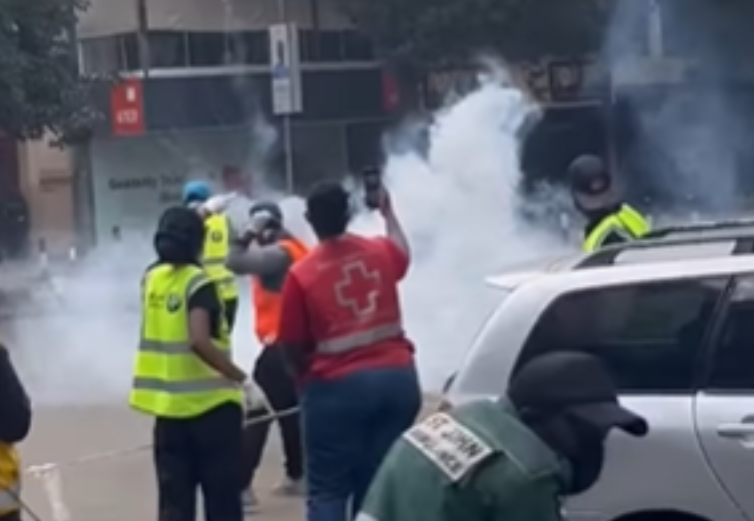
In the aftermath, human rights groups, civil society organisations, and victims’ families have continued to call out the police for the excessive use of force. They accuse law enforcement of using rubber bullets, tear gas, and in some instances, live bullets on unarmed demonstrators.
Eight people have been reported dead, and many more have been injured, prompting widespread outrage across Kenya and beyond. Videos shared on social media show officers beating protestors, launching tear gas into medical tents, and targeting journalists. These scenes have only intensified public anger and renewed calls for police accountability.