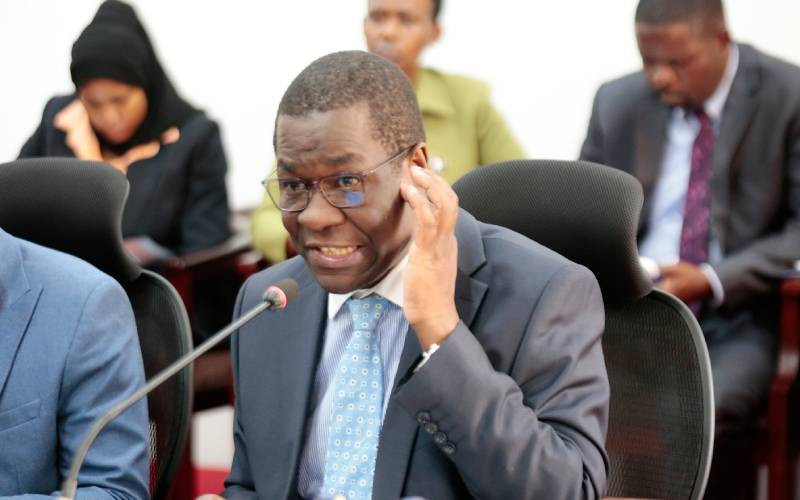




Lawyer Ndegwa Njiru has revealed that the People’s Restorative Justice Commission has been created out of necessity, citing the state’s failure to uphold human rights and constitutional values.
Speaking during the launch of the commission at Ufungamano House on Tuesday, June 24, 2025, Njiru said the new body was formed in direct response to rising incidents of state brutality, enforced disappearances, and extrajudicial killings.
“This is a commission that has been created as a result of necessity,” he stated, “because of the inability of the state to enact or execute its respective functions.”
According to Njiru, the commission draws its foundation from the preamble of Kenya’s Constitution, which affirms the supremacy of God and outlines the country’s aspirations to be governed by the rule of law, social justice, and equity.
“These values—equity, social justice, democracy, and respect for human rights—are now under serious threat,” he added. “The very institutions created by the Constitution to safeguard these values have abdicated their responsibility.”
Njiru criticised the state for neglecting its constitutional duty to protect human rights, noting that many Kenyans have continued to suffer in the face of state violence and failed accountability mechanisms.
The People’s Restorative Justice Commission, he said, seeks to restore public trust and provide an alternative platform for victims and families to pursue truth and justice where formal state institutions have fallen short.
Commissioners sworn in
During the same event, three commissioners were formally sworn into office in a ceremony presided over by a Supreme Court Commissioner.
Former Attorney General JB Muturi, Makueni County Senator Dan Maanzo, and political activist Fred Ogolla took their oaths, pledging to faithfully serve in their new roles.
Muturi, the first to be sworn in, vowed to uphold the truth and ensure the commission remains committed to justice for all.
The commissioners are expected to lead public hearings, document abuses, and issue non-binding recommendations aimed at advancing national healing and justice.
The launch comes amid growing concerns over police excesses, especially during protests, and public demands for alternative justice mechanisms beyond conventional legal channels.