




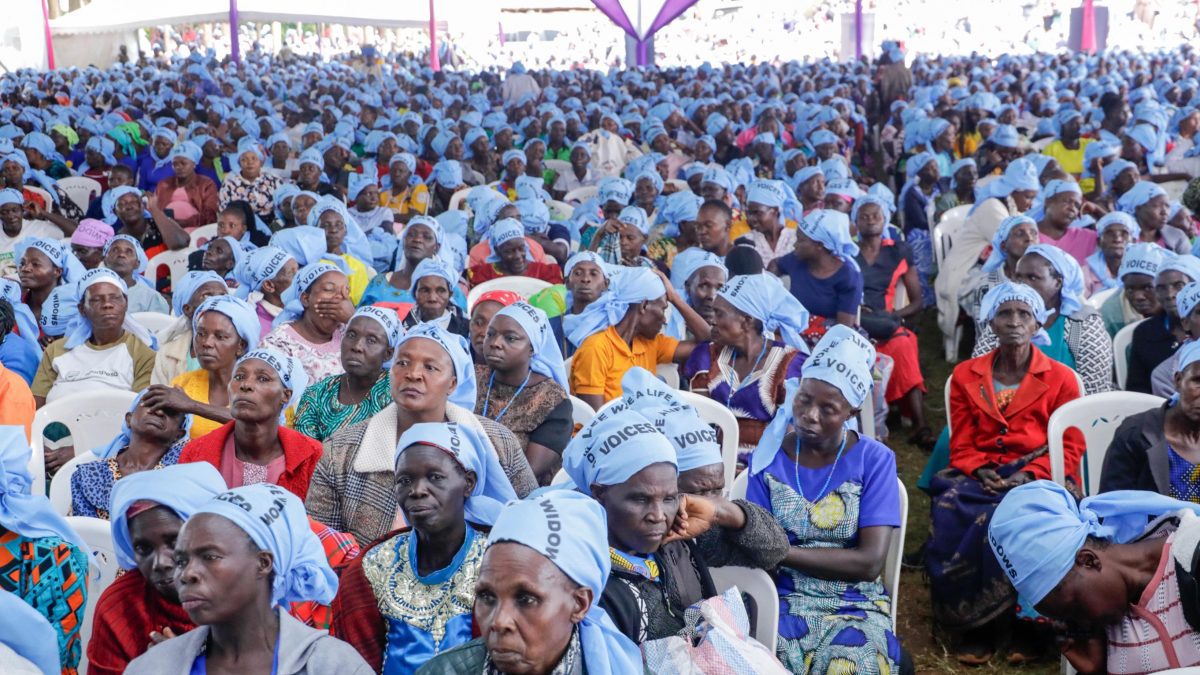
Over 7,000 widows gathered in Nyamira County on Monday, June 23, 2025, to mark International Widows Day in an event graced by Kenya’s First Lady, Rachel Ruto.
The commemoration spotlighted the systemic injustices and discrimination many widows face, with a renewed call to protect their rights and dignity.
Call to action
In her keynote address, she urged Kenyans to break the silence and stigma surrounding widowhood.
“Let’s support what the government is doing to uplift widows and orphans. Let’s give, and let’s end the stigma,” she said, highlighting the urgent need for both cultural and legal reforms to address the plight of widows across the country.
International Widows Day, designated by the United Nations, aims to shed light on the plight of widowed women globally. According to a 2011 UN study, there are 258 million widows worldwide, with nearly 38 per cent living in poverty.
The day laid bare persistent and systemic challenges faced by widows: harmful cultural practices continue to deny them access to land and property, while gaps in economic empowerment expose them to poverty and marginalisation.
Despite the presence of devolved funds, many widows remain unable to access these lifelines. Orphaned children face barriers to education, and the absence of organised widow networks has limited their ability to collectively advocate for their rights.
In Kenya, many widows continue to suffer under harmful cultural practices, including widow inheritance and sexual cleansing rituals that not only violate their rights but also endanger their health.
Kangaroo courts and injustice in succession
A worrying rise in kangaroo courts also threatens widows’ access to justice, often bypassing legal procedures in matters of inheritance and succession. There is an urgent need for structured interventions. Chiefs and other national government administrative officers must play a more proactive role in ensuring that widows are protected, especially during succession processes. She noted it was time to dismantle discriminatory systems and ensure that widows live with dignity, equality, and full access to justice.
Nyamira leaders, including local administrators and clergy, echoed the First Lady’s sentiments, condemning the rise of “kangaroo courts” in resolving succession disputes. These informal setups often rob widows of their rightful inheritance, bypassing the formal justice system. Critics say the trend mirrors historical extrajudicial practices like the infamous WWII-era Star Chamber trials, pointing to deep-rooted governance failures.
“As a country, we must empower our women to claim what is rightfully theirs—land, dignity, and equal treatment under the law,” said Nyamira Governor Amos Nyaribo.
The event also featured testimonies from widows who have benefited from government empowerment programs, including table banking, agribusiness support, and skill-building initiatives championed by the Office of the First Lady.
Stakeholders called for a multi-sectoral approach—blending legislative action, grassroots education, and community-based economic support—to transform widowhood from a life sentence of exclusion to one of resilience and opportunity.