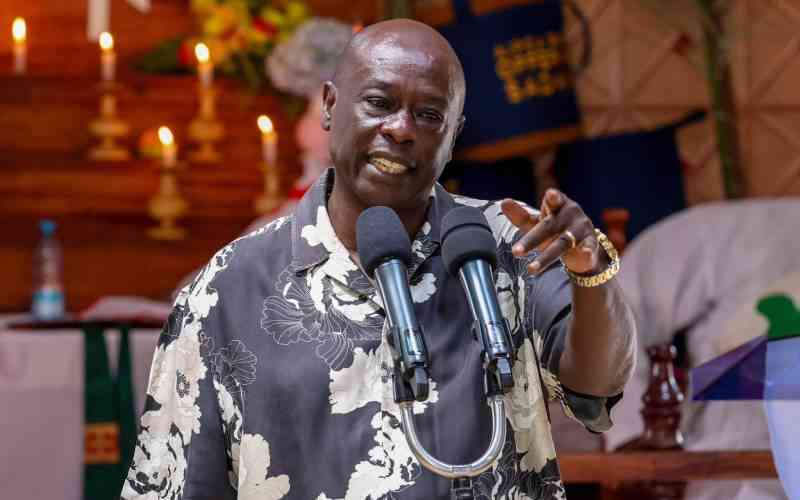





President William Ruto has announced that the Kenya Kwanza administration will build 1600 laboratories in the country to enhance accessibility to quality education.
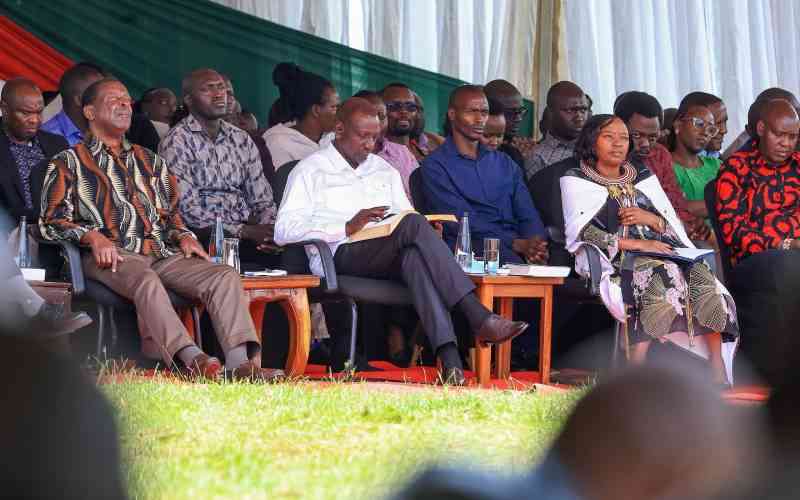
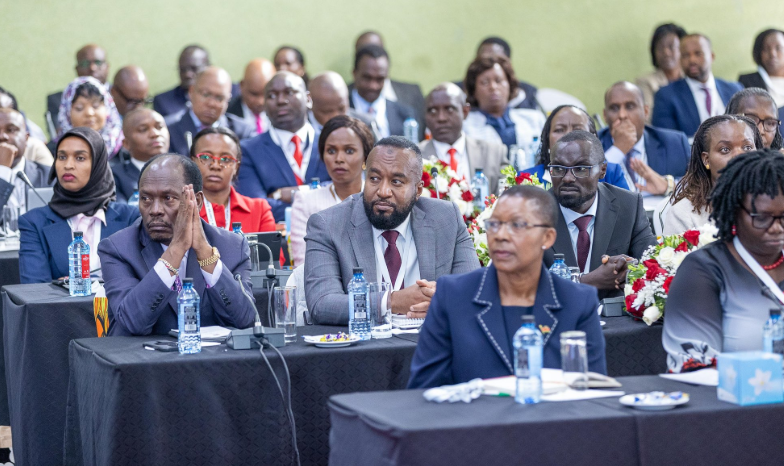
Speaking during the Third National Executive Retreat at the KCB Leadership Centre in Kajiado County on Thursday, June 19, 2025, he highlighted the plight of students who lack access to laboratories for practical work in schools.
“We still have schools without laboratories; some of our students engage with a Bunsen burner for the first time during exams. We are going to build 1600 new laboratories in schools, especially in rural areas and schools that do not have a laboratory today,” he announced.
Furthermore, he stated that the government plans to employ 24,000 teachers by January 2025 to enhance the education sector.
“We are going to hire another 24,000 teachers; the money is in the budget this year. By January, they will be in class, and next year we will hit the balance of the teachers so that we get to the 116,000 that we committed ourselves to the people of Kenya,” he stated.
Additionally, the head of state has promised to streamline the means-testing process for placing university students in the new university funding model.
“We will streamline and enrich the means testing instrument so that every child is placed in the right band so that we don’t disadvantage any child in Kenya,” he stated.
The new university funding model introduced in 2023 is based on the concept of “means testing”, where a student’s specific financial situation determines financial support.
This represents a significant departure from the previous system, in which all students who met the academic threshold received government funding, regardless of their financial background.
The most critical aspect of the new university funding model is categorising students into five funding bands based on their financial need. These bands are designed to ensure that financial aid is distributed equitably, with students from the most disadvantaged backgrounds receiving the highest level of support.
The bands
Band 1 is reserved for students from the most financially disadvantaged backgrounds. These students may come from households with limited income, significant financial burdens, or other socio-economic challenges that make it difficult for them to afford higher education. 95 cent of the total university costs are covered by government funding.
Similarly, Band 2 is designed for students from families with moderate financial difficulties. While these families may have some financial resources, they still require significant assistance to manage the costs of university education. Approximately 90 per cent of the university’s total costs are covered by government funding.
On the other hand, Band 3 caters to students from families with a slightly higher financial capacity but who still require considerable assistance to afford university. These families can shoulder more of the financial responsibility, but the government still plays a significant role in subsidising. Eighty per cent of the total university costs are covered by government funding.
Band 4 is intended for students from middle-income families who have a greater ability to contribute towards their education costs. Although the government provides substantial support, these families are expected to assume a greater share of the financial responsibility. 70 percent of the total university costs are covered by government funding.
Finally, Band 5 is for students from more affluent families who have the financial capacity to cover a significant portion of university costs. The government still provides some support, recognising that even wealthier families may face financial challenges, but the expectation is that these families will bear the bulk of the financial burden. 60 percent of the total university costs are covered by government funding.